

👋 Hello friends,
Happy Wednesday! This is a big one for me (well, technically tomorrow will be): Brainwave’s third birthday.
Instead of the traditional bi-weekly deep dive into the factors shaping tomorrow, I’m taking today off to write exclusively about myself, this platform, and the journey we’ve been on.
It’s been a wild year, so get cozy in your chair of choice and come along for the recap (I promise it’ll be better than an annual 10-K filing).
Before we dive in, I want to say a huge thank you. Nothing in this story would have happened without you reading every week, sharing, and supporting the platform. Every time I publish an article, I’m always flabbergasted by the outpouring of views, positive thoughts, and good vibes.
Quick Context: New to Brainwaves? We explore the forces reshaping our world across venture capital, energy, space, economics, intellectual property, and philosophy. Subscribe here for bi-weekly deep dives plus weekly current events.
Reading Time: 17 minutes for full analysis + key takeaways highlighted throughout
Refer a Friend - Earn These Rewards
Let’s dive in.
Building Now For A Better Tomorrow
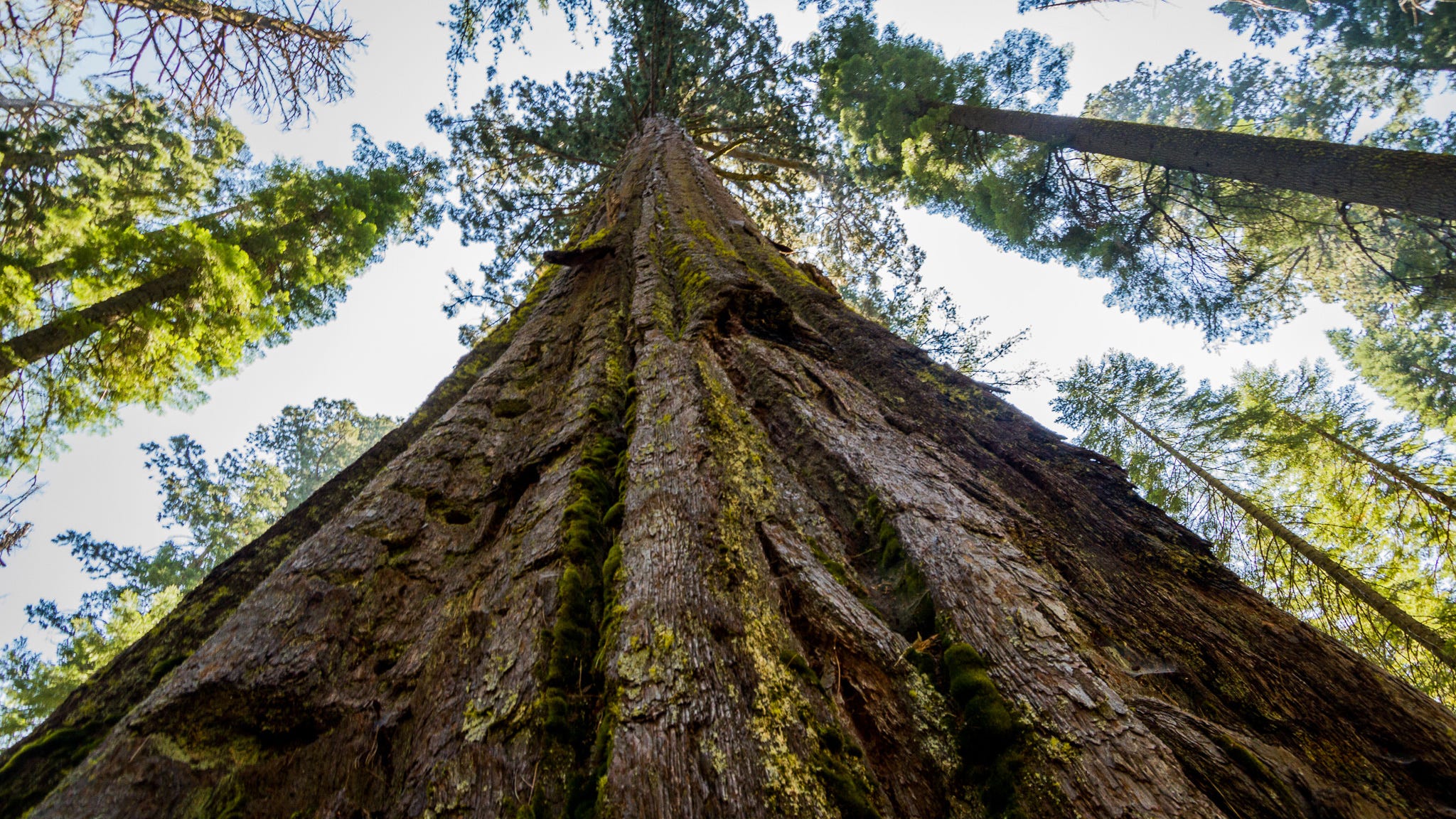
Our goal in every circumstance should be to leave things better than we found them, pay it forward, give back to those who need it more, follow the semi-misunderstood law of karma (what goes around comes around), and invest now for greater returns in the future.
Credit PBS
Every year, I look for themes that run through many of the articles I’ve written, as a way to summarize the major points I’ve deemed necessary in my life and in the lives of others.
This year, a clear standout, running through discussions from intellectual property to the climate to spirituality to space and much more, is the idea of investing in the now to make the future better than the present.
When you were a little kid, did you ever go through the exercise where you collected items that were important to you at that time, relevant to the world around you, current fads (e.g., fidget spinners, slime, etc.), or otherwise notable, and put them into a vessel called a “time capsule”
The simple premise behind these random collections is that, at some point in the distant future, you will go through and revisit it—usually through the form of digging it up from the backyard or out of some dusty, buried box in the attic—and see what a tiny slice of life was like “back then.”
When viewed at a distance, like so, changes (or the lack thereof) over time are highly evident. It’s easy to see how one fad ended, and the next began, and so on. You see yourself grow up, get older, and become more established in the world.
In a similar way, many older folks cherish those thick, bound books and binders full of pictures from times past. They work the same way, letting people say things like, “Look at how cute you were back then,” and “Don’t you remember this?” Often, parents do this naturally with their kids, reminiscing about the “good old days” when they didn’t talk back, did all their chores, and were more like close buddies.
This parenting example is particularly interesting and relevant. My parents consistently describe their “great goal” as raising children to be better than them—smarter, more athletic, more successful in the world, more knowledgeable, etc. For instance, my parents were extremely proud (and also incredibly disheartened) when I started consistently competing and/or beating them at family games we would play.
Their goal, at the highest level, was to plant seeds—to do everything in their power to give their children a better life than they had. In many ways, they built then for a better life today.
I’ve heard the story of them surviving on happiness and $20 for a week when they were initially married so many times; it warms my heart. Underlying this story was the fact that they were doing everything they possibly could to optimize their lives so their children could succeed.
This principle doesn’t just apply to the small subset of my household growing up. In fact, it has, at times, been a universal motto that civilizations have striven to live by.
For instance, the Greatest Generation (those born roughly 1901 to 1924) is widely credited with building the foundational institutions, global stability, and economic infrastructure meant to secure a better tomorrow. Now, in 2026, this factor shows up in many facets of life.
In a spiritual context, the widely accepted Eastern (and also Western, believe it or not) belief in reincarnation could not be more literally depicting the ideal of building today for a better tomorrow. Those who believe understand that your actions today directly and measurably affect the life you will live after this one. In other words, if you are a “bad” person in this life, you will reincarnate as something “worse” than a human. Vice versa, if you are a “good” person in this life, you will reincarnate as something “better” than a human.
For more secular-focused individuals, winning the battle for a circular economy (a more advanced version of reduce, reuse, and recycle) is critical to stop the ongoing effects of climate change. If we don’t make changes today, as humans saw with the ozone layer crisis, the world will be measurably worse off for those (including us) who will come later.
In other parts of science, particularly in the space sector, public and private space entities are collaborating and innovating like never before. Why? They realized that by teaming up today, they have a much better chance of landing a human on the moon again, reaching Mars, and going out into the vast beyond.
The pursuit of intellectual property—by any means necessary, including assassinations, threats, cover-ups, greed, and more—shows an opposite but equally potent solution: people are incentivized to compete, undercut, and innovate today by the promise of short-term exclusivity tomorrow. In the end, once those inventions enter the public domain (and often before then), humanity is better off because of this incentive structure.
Often, in startups based on intellectual property and those that aren’t, key people (usually the core founder or founding team) are critical to the company’s success. Losing them can be the difference between success and complete failure. As such, measures such as training programs, diversifying customer and product relationships, key-man insurance policies, and more can help the business set itself up for a more diverse future.
In nature, we learned that it is better to let some small wildfires burn today (counter to many current firefighting and public-awareness practices) to prevent fires of greater magnitude in the future. Creating practices that secure our future, potentially at the expense of short-term pain today, can drive exponential long-term growth.
To summarize succinctly, a major factor in building now for a better future is the value of the options we create for ourselves. Called real options, these investments we make today (such as buying the rights to drill oil in the future, investing in true financial options, investing through corporate venture capital entities) are intended to potentially provide larger value in the future when exercised.
My advice is to build today for a better future tomorrow.
Unfortunately, stark examples show that when people aren’t building today, the future isn’t respected and upheld, and it can create lasting negative change that affects hundreds of millions of lives. As I recently touched on, generations are continually being propped up, despite their best efforts to create more tragedy and hardship for those coming after them.
Lesson: Invest in today to realize dividends tomorrow
Achieving Your Bucket List
Over the last 5 years of my life, I’ve been compiling a bucket list of things I hope to achieve at some point. Most of these are highly aspirational (hike up Iceland volcanoes), while others are more near-term achievable (go to a massive march in Washington, DC).
This year, I was lucky enough to check off a few bucket-list items.
First, and entirely on a whim, one of my coworkers mentioned early that morning that they had a relative who had seen the Northern Lights in northern Washington the night before. I was hooked when they said they would be there again that night but likely wouldn’t see them again for the rest of the year.
I left work early, packed up my car, and drove out to see them that night. I drove about an hour north to a pier with minimal light pollution and waited. And waited. And waited.
It took a while to realize they were only visible through your phone flashlight (because it picks up light we don’t see). I took some amazing pictures of the Northern Lights, and it was incredible. I don’t know how to describe it beyond saying it was gorgeous.
A few months later, the United States had the wonderful opportunity to host the global FIFA World Cup. Luckily, Seattle hosted a few games, along with a few other key cities across the United States, Canada, and Mexico.
I snagged tickets to the Belgium v. Egypt group-stage game. It was a fantastic experience, surrounded by thousands of passionate Belgian fans. Everyone was so excited to be there; the fan atmosphere was off the charts, and it was an amazing time.
These, and more, are wishes that I’ve had for a while. In the meantime, I’ve been working to build up my life so I can pursue opportunities like this now and in the future.
That’s just one development that’s happened in my life this year. Here’s a bit more:
I entered my running era again (running like all that fiber is kicking in!)
I watched Seattle win the Super Bowl (on TV) and saw the crazy parade (in person)
I went to my first (and second) NHL game
I dove deep into work and found a good balance that I really enjoy
I officially became a Washington resident
I hit the 300 and 400 subscriber marks for the newsletter
I made a ton of new food (highlights include: Magnolia Bakery banana pudding, Moroccan tagine, lasagna roll-ups, pineapple upside-down cake, and more)
I turned 23 - only ~42 years to retirement
I was integral to the success of a college dune buggy team
I was part of ~6 college graduates needed to change a dead car battery
Woke up way too early most days
Lesson: Take opportunities to realize some investments today, while continuing to build for tomorrow
Brainwaves: 3 Years In
The second year running Brainwaves was smooth sailing, from calculated, consistent content creation to beginning interviews with CEOs, reassessing my marketing, diving deep over the summer, professionalizing and personalizing the newsletter, and broadening, deepening, and impacting people through the work I was doing.
The second year was great, but arguably, this year was better!
Today, I want to share the third year of the Brainwaves story as honestly as possible, as it often looks way easier from the outside. I’ll add in lessons I’ve learned on writing, growth, content creation, philosophy, and the world around us. We’ll cover:
Recurring Referrals
Tracking Success (And Failures)
Entering My Crumbl Cookie Era
Introducing The Sunday Morning Newsletter
Worldwide Reach & Breadth
Recurring Referrals
A major initiative to kick off the year after last year’s muted subscriber growth was establishing a referral program.
Introducing the Brainwaves referral program!
I was inspired by Packy at Not Boring (who has over 200,000 subscribers currently), who started a referral program when he had around 4,000 subscribers.
In my quick chats with Gemini on how to grow my newsletter, given what I had tried up to that point, it suggested starting a referral program. It estimated that for each newsletter, about 1-3 in 100 subscribers would be “power referrers” who would spread the word and be incentivized by the referral rewards.
And so the referral program was started (a quick reminder below):
For each person who subscribes using your unique link, you’ll receive credit.
Once you get to 3, you’ll receive two (2) exclusive Brainwaves and The Saturday Morning Newsletter stickers to deck out your gear. Plus, we’ll give you a personal shoutout in the next newsletter, including your name and a link to your company or personal site (if you’d like!).
At 10, you’ll get two (2) limited-edition Brainwaves squishy brains. These stress-relief tools are perfect for sparking breakthrough ideas when you need a moment of focus. You’ll also get access to a curated list of my favorite books, articles, music, and other resources that fuel differentiated thinking.
At 25, you’ll get a guaranteed, verified pre-order/order of my upcoming book, Futures Thinking. This is my most exciting project yet, and you’ll be among the very first to get your hands on it.
The results? So far, we haven’t gained any subscribers through the referral program.
Why hasn’t it worked?
I’ve had close to a year to think deeply about this point. For every new subscriber I gain, I check the source and hope it’s via referral. Unfortunately, we haven’t gotten one yet.
My leading hypothesis at this point is that Gemini was correct: referral programs rely on scale and size - at <500 subscribers, we still don’t have the size required to achieve the network effect.
Over the next year, we’ll continue to incentivize and encourage people to subscribe to and refer others to the newsletter, in hopes of beginning to achieve these network effects.
Lesson: Success isn’t guaranteed; struggle is also part of the journey. Just keep getting up and trying again
Tracking Success (And Failures)
Since I was a young child, I’ve been fascinated by numbers, data, and statistics. I especially enjoyed all of the math classes I took throughout school (even my ACT prep courses were interesting from this lens).
Since founding Brainwaves, this journey has stayed the same. I strongly believe every problem or situation is best viewed from many angles—including qualitative and quantitative factors.
I began by tracking my Substack metrics within Substack and in a simple accompanying spreadsheet. This worked for a short period before I wanted to go deeper.
As I spun up social media accounts and began posting consistently, I continued expanding my analytics suite. At this point, I consistently reported on an analytics package as part of the quarterly review.
This year, I’ve taken this to a new level by rolling out a much more in-depth suite of tracking and analytical tools.
One major effort to expand tracking and analysis focused on website and SEO performance.
Google provides a robust set of tracking tools you can easily access through its Analytics program. These have helped us better understand how many viewers read each article, where people spend the most time, and where the user experience may be creating friction.
Additionally, I’ve tapped into Google’s Search Console to understand where impressions are coming from, how they are converting, and how to optimize keywords for higher traffic. This platform also tracks which of your pages are being scraped and shown to the public in search results, and which are not (for a variety of reasons provided).
Interestingly, and something I haven’t fully figured out yet, many of my published website pages can’t be picked up in search results. My initial hypothesis is that this is due to perceived duplicative content with the Substack page—I’ll need to triage further.
A notable measure taken this year to improve trackability and SEO was moving the Substack newsletter to newsletter.brainwaves.me. This lets me see all my stats in one place, which is critical for running a growing platform.
Lastly, the newest feature I implemented (and am still gathering enough data to make statistically significant predictions) is measuring scroll depth. This tracks how far people get through my articles, which gives me a better understanding of what content is more engaging than other content.
Lesson: How do you know how far you’ve gone if you don’t know where you started?
Entering My Crumbl Cookie Era
It was a nice, sunny morning on January 17th. I got to sleep in a bit, but I finally got out of bed. One of my coworkers had told me about a local donut shop I needed to visit, so I put on my shoes and walked over. Insert Voodoo Doughnuts.
Besides making fantastic donuts (I can confirm I ate way too many), one of their main features is that everything is pink. It’s a bit aggressive, in all honesty, but it definitely made an impression on yours truly.
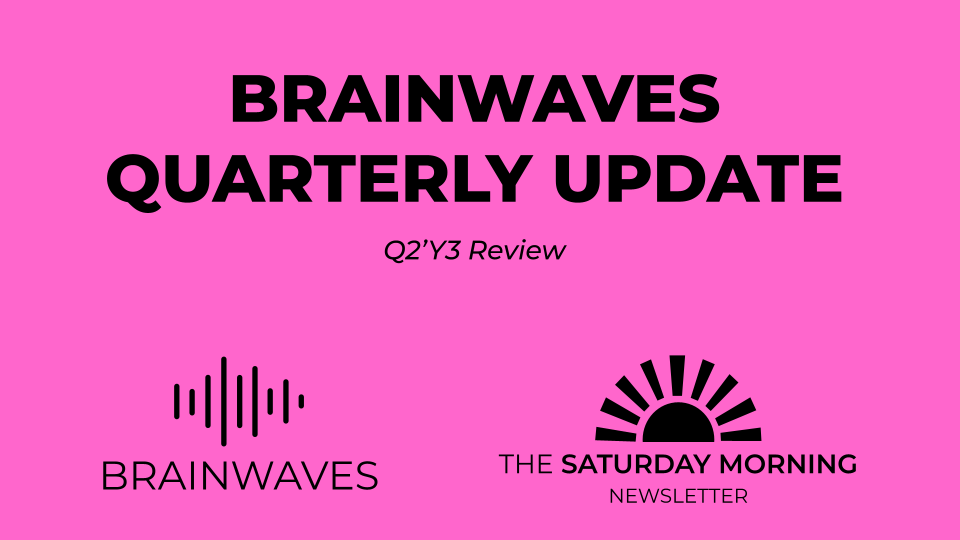
I was pretty set on the rebrand in Y1’Q4 and the color addition (yellow), but I had never thought about pink as a new color. I think it complements the blues and yellow very well. And so… pink Brainwaves was born.
In my opinion, pink provides many benefits to the platform. First, it adds contrast so the entire content portfolio isn’t just blue. Second, it adds playfulness and casualness to a platform that can often feel overly formal.
Pink is often associated with peace, tranquility, warmth, joyfulness, creativity, and more.

I haven’t had the opportunity to truly spread pink throughout the website and branding, but it’s top of mind as I continue to make updates.
Lesson: Don’t be afraid to be bold!
Introducing The Sunday Morning Newsletter
This update is honestly hard for me to make, as it requires vulnerability and change.
Over the last year, my bandwidth has been pulled in so many directions that I’m stretched thin everywhere. As a result, I’ve had to reevaluate what is a priority in my life vs. what isn’t.
I can’t say it’s been easy. How do you choose between work, personal life, friends, family, chores, and more?
Running this newsletter has always been something I’ve enjoyed (at varying levels). At some points it’s been some of the highlights of my week/month; at others it’s been more of a chore.
That said, I want to keep going with the newsletter, because I think it’s a net positive in my life and something I’m proud of.
But I’m going to make some changes to create a bit more balance.
Weekly Cadence Changes: As someone who’s been publishing every Saturday and every other Wednesday for the last two years, this feels weird, but it will bring much more balance to my life.
Starting this coming week, The Saturday Morning Newsletter becomes The Sunday Morning Newsletter. It will be published on Sunday mornings instead of Saturday mornings.
Additionally, the regularly scheduled bi-weekly long-form Brainwaves newsletter will also be moving to Sunday mornings.
The Sunday Morning Newsletter will switch to bi-weekly, complementing the weeks when there is not a bi-weekly long-form deep dive
Content Updates:
Regularly scheduled bi-weekly long-form content will stay in the same format
For The Sunday Morning Newsletter, instead of mini bites on the top 10-15 current events across all subsectors, I’m going to target the 5 more important news items and dive a bit deeper into them each
I’m proud to say nothing else is changing.
The net result: you have one less newsletter every 2 weeks, and you have to wait until Sunday mornings to read each one. I don’t think that’s too bad of a gig after all.
Lesson: Invest in yourself, build balance so you can more easily make it to the future
Worldwide Reach & Breadth
To put the last year in perspective, I’ve:
Had my content read over 9,200 times
Written and published 173,000 words. For reference, that’s around 2.3 Harry Potter books.
Grown from 238 subscribers to over 430
Published 84+ posts on an extensive list of subject matter
Had the website viewed over 7,400 times
Expanded my audience to ~50 states and 75+ countries
The best is yet to come!
I’ve had so much fun writing content and publishing it over the last three years. Uncontrollable events aside, I hope to continue writing and publishing content as long as it remains fun and insightful (and as long as my schedule permits).
As I write this, I have over 200 ideas in my pipeline, so I could sustain this platform for at least 8 years.
The future, while uncertain, will certainly continue to offer worldwide reach and breadth.
I plan to keep expanding the newsletter with the goal of someday reaching 1,000 subscribers. It’s a lofty goal, but with consistency and quality content, I believe I can get there eventually.
I’ll continue reiterating it until I quit: My goal is, and always will be, to impact at least 1 person meaningfully through my content each week. Meaningful impacts are critical to this journey—impacts upon myself and upon the readers. I hope you’ve enjoyed this last year (or however much of it you were here for), and I can’t wait for another!
To go full circle (after a brief 14-page tangent), I believe this quote from Dan Millman summarizes the journey so far and the future vision of the platform going into this next year:
“The secret of change is to focus all of your energy not on fighting the old but on building the new”
Lesson: Each day is part of the journey; the outcome is ahead - don’t forget, but enjoy each step along the way. That’s where the value lies.
Thank You
As we wrap up this fantastic year, I want to express my sincere gratitude to each of you. Your consistent support, thoughtful feedback, and willingness to share the newsletter with your network have meant the world to me.
Whenever you open an email, leave a comment, visit the website, or forward an essay to a colleague, you help build this community.
I’m especially grateful for the following individuals who have been integral to this journey over the past year:
Jasmine, for crushing our social media outreach and helping us reach our goals
Lauren, for continued emotional support and quoting random concepts occasionally
My dad, for great advice on websites, life, and business concepts
My mom, who’s too busy to read everything now but occasionally likes a post
My friends, for always hyping up the content whenever it releases
Packy at Not Boring for continual motivation and inspiration
Noah at the Secular Buddhism Podcast for inspiration
The following creators for their inspiration and content: Danny @ Innovate Disrupt or Die, Tina He @ Fakepixels, Patrick Tanguay @ Sentiers, Simon Hoher @ Permutations, Michael Tefula @ VC Mastery, and many more
Whether you’ve been here since day one or joined us recently, thank you for being part of this journey.
So what’s next for Brainwaves?
The answer is, just like the last two years, I have no idea. I have a ton of ideas and interesting pieces of content planned for you to enjoy. I’m excited to see where the journey leads us over the next 365.
That’s a wrap on this deep dive.
Found this analysis valuable? The best way to support Brainwaves is to share it with someone who’d benefit from these insights.
Drew Jackson
Founder & Writer
Refer a Friend
Building this community has been one of the most rewarding parts of writing Brainwaves. If you know someone who’d enjoy these weekly deep dives, I’d love it if you could share your unique referral link with them. You’ll earn tangible rewards for growing our community, and they’ll get content worth their time. Win-win.
Keep Exploring
Next Deep Dive: Rapid Consumerism - December 9th, 2026
This Saturday: Weekly roundup of breaking developments across energy, space, venture capital, economics, intellectual property, and philosophy
Previous Editions: View the archive here
Stay Connected
New to Brainwaves? Join hundreds of readers getting bi-weekly deep dives into the forces reshaping our world.
Sponsor This Newsletter: Reach an engaged audience of forward-thinking readers. Email us for details.
Disclaimer: Views expressed are personal opinions, not financial advice. This content is educational only. Investment decisions carry risks - always consult professionals and do your own research. All sponsorships are clearly disclosed.
© 2026 Brainwaves. All rights reserved.