



Credit Nerdist
When Gerald Cotten died unexpectedly in 2018, he took the passwords to $215 million in customer crypto to the grave. His death didn’t just end a life; it nearly destroyed a company. This is the high-stakes reality of key man risk.
This Week’s Focus: Economics
What You’ll Understand: How companies almost inevitably face key man risk and various strategies to mitigate it.
Reading Time: 11 minutes for full analysis + key takeaways highlighted throughout
Key Question: What is key man risk?
My Take: Key man risk is found in companies of all shapes and sizes. In the moment, it can lead to outsized outcomes, but it often ends in catastrophe. When businesses try to mitigate this risk, they can fall into 3 failure pits: reversion to the mean, becoming a copy of a copy, and undergoing a succession war. Navigating these complexities is key to long-term business success.
Quick Context: This deep dive connects to my work on personnel economics. New to Brainwaves? We explore the forces reshaping our world across venture capital, energy, space, economics, intellectual property, and philosophy. Subscribe here for bi-weekly deep dives plus weekly current events.
Refer a Friend - Earn These Rewards
Let’s dive in.
Thousands of books have been written studying the world’s most successful entrepreneurs, refining the list of qualities they believe drive that success. These include passion, drive, vision, innovation, leadership, calculated risk-taking, and many more.
Some of the greatest of all time would be considered mad and unhinged today. There’s a fine line between greatness and too good to be true. We’ve seen this played out in seemingly “great” entrepreneurs like Bernie Madoff and Elizabeth Holmes, who were eventually unmasked for what they truly were. Recently, Gerald Cotten became another infamous name to add to this list.

Credit CBC
Gerald Cotten was involved in Ponzi schemes as a teenager in the online forum TalkGold. Cotten would promote high-yield investment programs that “promised very high returns but were unregulated and anonymous, disclosing little or no details about the investment or who was behind it.”
After learning about Bitcoin in his 20s, Cotten founded Quadriga with his co-founder, Michael Patryn. Patryn’s involvement in historical Ponzi schemes had caught the authorities’ attention, making Cotten the perfect front man for Quadriga.
Quadriga was an online exchange that allowed users to store, buy, and sell various cryptocurrencies by depositing cash or other cryptocurrencies with the exchange. As advertised externally, Quadriga made money by charging users a per-transaction fee.
In 2016, Cotten became the sole director after the other directors resigned. At this point, the company had no employees, offices, or bank accounts and was simply (although the public didn’t know it) relying on external payment processors to run their business.
Throughout 2017 and 2018, Bitcoin prices rose and fell, with around $1.2B in Bitcoin exchanged on the platform. Quadriga became one of Canada’s biggest cryptocurrency exchanges, attracting significant prestige.
However, some fundamental issues began surfacing. The spike in volume increased commissions, but caused a cash flow problem due to the exchange’s reliance on external payment processors. In 2017, Quadriga announced it lost $14M in Ethereum due to a smart contract error. Additionally, customers reported delays when attempting to withdraw funds, and when directed to the physical location to pick up their money, they found a windowless office building with no money or employees.
Not surprisingly, some of the payment processors Quadriga used were found guilty of fraud, including WB21 and Crypto Capital. Undiscovered at the time, the business was primarily being run from Cotten’s encrypted personal laptop.
Cotten unexpectedly died during a volunteer trip to India in 2018. His wife only announced his death via a Facebook post one month later—meanwhile, for that month, the platform had been accepting money but returning none. After this news, the market panicked, losing confidence in Quadriga’s viability, which eventually ceased operations.
Once the dust settled, it was determined that over 76,000 customers were owed $215M, most of which was in the form of cryptocurrency held in Quadriga’s cold wallet on Cotten’s laptop—no one knows the passwords.
There are many question marks surrounding his death. For instance, why did he have no backup plans for his crypto passwords? Why was his name misspelled on the death certificate, especially given that the former chairman and managing director of the hospital had been convicted of financial fraud two months earlier?
Subsequent investigations have failed to find records of these wallet holdings on the blockchain, leading some to speculate whether Cotten faked his own death to defraud customers in true Ponzi-like fashion. Quadriga likely never invested the funds it received, and it is unclear where the money went.
Often, the circle of trust for founders engaging in Ponzi schemes is incredibly small—they can’t risk the secret getting out. Granted, these are acute examples, but nevertheless, they are great examples of key person risk.
Key person risk, while singularly defined, refers to one or more people who are critical to a project or a company’s operations. If the key person or people were lost, the long-term viability of the project or company would also be lost.
Most often, key man risk is highest in smaller businesses: one person owns the majority of the relationships, one person designed and built the technology and knows it intimately, and one person sees the “vision” for the long-term platform.
However, key man risk can also be present in larger enterprises (as we’ve seen with Quadriga and Thernos). In the entertainment industry, no better example of key man risk is the magical persona of Walt Disney.
Credit TheCollector
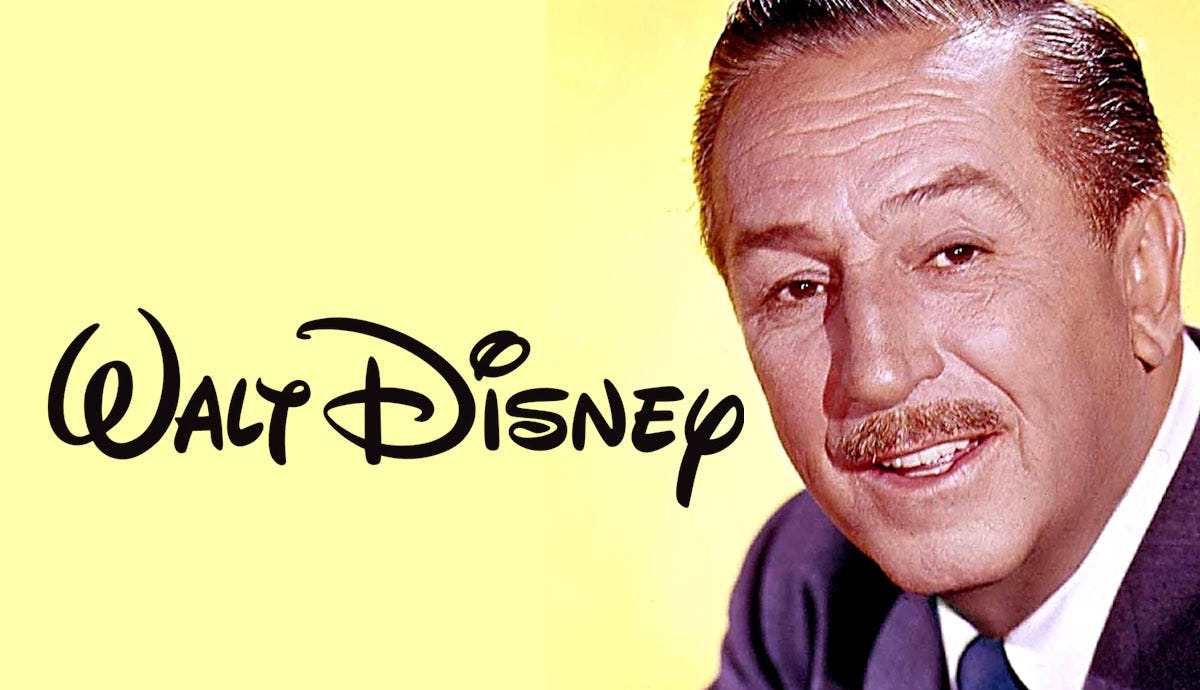
Founded in 1923, Walt Disney envisioned and created a captivating set of figures that inspired and entertained generations of children and adults. Walt Disney operated a hub-and-spoke management style. He was the hub, with every creative department (animation, imagineering, live-action) reporting directly to him.
Walt didn’t just approve ideas; he shaped them from the beginning. Because Walt’s taste was so specific and usually commercially successful, the staff stopped trusting themselves and instead focused on predicting Walt’s next big idea—a form of creative mimicry rather than original creation.
Thus, when Walt Disney died in 1966, the company lost its creative director and visionary. This effect was so acute that, for the next two decades, the studio’s mantra was literally “What would Walt do?” This created a stagnant culture, characterized by two main aspects.
Firstly, this mindset prevented the studio from adapting to the changing culture and consumer preferences of the 70s and 80s. While films like Star Wars were revolutionizing cinema, Disney was stuck making safe, often recycled-feeling content.
Secondly, to deviate from “The Walt Way” was seen as heresy. Innovation required the risk of being labeled “un-Disney.” Without Walt there to give permission to change, the company chose the safety of the past.
This period only ended when a new wave of leadership and a new generation of animators arrived in the mid–80s. They righted the business, stopping asking what Walt would do and started asking what a modern audience needed.
Small, medium, and large enterprises can easily face key man risk when they over-rely on a single creative visionary, leading to institutional paralysis once that North Star is gone.
Besides a creative vision or holding all the keys to a Ponzi scheme, there are numerous ways key person risk can threaten a business. In fact, it doesn’t even need to be them leaving, dying, or getting fired for the business to be at risk; it can be something simple, like a scandal or a small news story.
In traditional businesses, a brand like Coca-Cola, Nike, or GMC is built on an abstract logo and a set of lifestyle associations. Virgin Group is different; it’s built on a human narrative.

Credit Space
Sir Richard Branson, an English-born business magnate, co-founded the Virgin Group in 1970 as a mail-order record business. He opened a chain of record stores, Virgin Records, in 1972, which grew rapidly. In the 1980s, Branson started Virgin Atlantic Airlines and expanded the Virgin Records music label. In 1997, Branson founded the Virgin Rail Group for passenger rail travel across Britain, with InterCity train franchises operating for subsequent decades. In 2004, he founded the space tourism company Virgin Galactic.
Branson’s personal history—his rebel ethos (fighting the British Airways “dirty tricks” campaign), his hot-air-balloon records, and his casual, confident demeanor—is the product Virgin sells.
On a company’s balance sheet, goodwill is an intangible asset that represents the value of a company’s brand and reputation. Financial analysts suggest that Virgin Group’s assets are highly volatile because it is closely tied to Sir Richard Branson.
For instance, if Branson were to face a catastrophic personal scandal, the “Virgin” name could transform from an asset into a liability overnight. As a result, Branson and the Virgin leadership have spent the last decade attempting to de-risk the brand.
Interestingly, Virgin Galactic has recently re-entangled the brand with Branson’s adventurous personality. By being on the first fully crewed flight to space in 2021, he successfully boosted the brand’s adventurous credentials. Still, experts estimate that a “post-Branson” Virgin will likely face a significant value correction as it transitions into a standard lifestyle brand.
Brands and companies are increasingly recognizing the potential risk associated with key people and taking steps to mitigate it, as evidenced by the Virgin example above.
To mitigate key-person risk, companies must transition from “personality-driven” to “process-driven.” This involves decentralizing knowledge, institutionalizing values, and building a deep breadth of leadership talent.
This often involves implementing a succession plan that identifies and develops internal and external replacement candidates for every C-suite role. Knowledge is transferred from person to groups, and standard operating procedures are documented.
As seen in the Disney example, a great risk is the loss of a specific taste or philosophy. Instead of relying on a leader to create and/or approve every design, companies create brand images or design languages that outline the leader’s principles (e.g., simplicity over features) so the team can make decisions autonomously.
For companies like Virgin, where the risk is tied to brand equity, the strategy is to shift the spotlight. Other executives are introduced in press releases, keynotes, and interviews. This signals to the market that the “magic” of the brand is a team effort, not just a solo performance.
Credit Fast Company
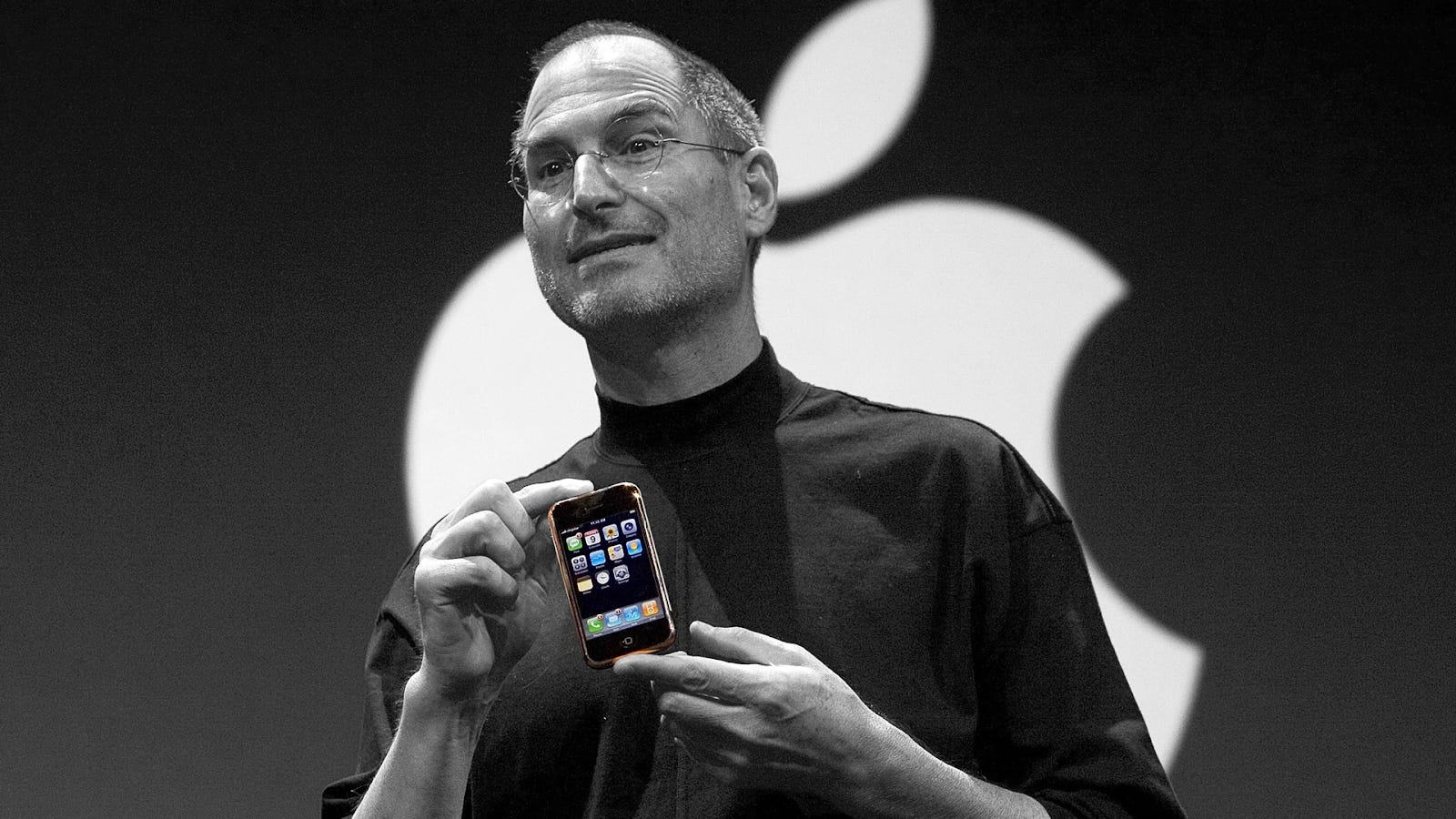
The case of Steve Jobs and Apple is a gold standard example of succession planning and key person risk mitigation.
Most CEOs focus on resource allocation and strategy. In contrast, Steve Jobs focused on the intersection between liberal arts and technology. Famously, Jobs didn’t believe in market research. He believed that “people don’t know what they want until you show it to them.” This created a massive risk at Apple. If the man with the vision is lost, who decides what the next “great product” is?
This was exhibited during the development of the iPhone and iPad. Jobs, like Disney, acted as the final filter. Every curve of the hardware and every pixel of the UI had to pass his personal taste test. This created a significant bottleneck, tethering innovation to a single human brain.
Between 2004 and 2011, Apple’s stock price became a proxy for Steve Jobs’ health. Because the market believed, as it had been led to expect to this point, Apple’s future product pipeline lived inside Jobs’ head, any visual change in his weight or suggestive phrase during a keynote resulted in billions of dollars in market cap decreases. Investors feared that without Jobs, Apple would revert to the struggling, directionless company it had been in the early 1990s.
Apple’s survival was not an accident; it was a deliberate engineering project. Early on, Jobs realized that for Apple to survive him, his subjective intuition that powered product development had to be converted into broad, objective processes available to all.
In 2008, Jobs established Apple University, which taught high-level employees how Apple makes decisions. They analyzed past successes and failures to codify the “Apple Way” of thinking—focusing on the simplicity and minimalism the company is known for today.
Additionally, Jobs picked a partner in an area he understood the least: supply chain and operations. His partnership with Tim Cook and other leaders created a modular leadership structure, which decentralized authority and de-risked the brand.
In 2011, Steve Jobs passed away from a pancreatic neuroendocrine tumor. At this point, Apple was perfectly positioned to continue, entering a new era of growth and development. Fast forward to today. While critics will argue Apple hasn’t launched a “category-defining” product on the scale of the iPhone since 2007, the company’s valuation has increased from ~$300B at Jobs’ death to over $3T. Apple is the second-largest company in the world and has an incredibly diversified leadership bench, expansive product development characteristics, and no official ties to any one key person.
Mitigation tactics, as showcased by Virgin and Apple, can cushion the fall. However, they often fail to account for the intangible qualities that a founder or key leader brings, which cannot be easily codified into a manual or university curriculum. I imagine you’ve been a part of organizations where these types of people exist. Even with the best mitigation strategies, companies often face three specific failure modes.
Firstly, these companies revert to the mean. When you institutionalize a visionary’s taste into a process (as seen at Apple University), you often create bureaucracy. Once the visionary is gone, the new group in charge tends to rely on data, consensus, or safe bets. This leads to a slow slide into mediocrity. The company remains profitable, like Apple, but it stops being truly revolutionary.
Secondly, these companies can become a copy of a copy. Codifying a leader’s values in a brand bible is like making a photocopy of a painting. This set of rules can tell you what the leader did, but it can’t always tell you what they would have done in a completely new, disruptive context (e.g., what would Steve Jobs have done in the rise of AI?). The team becomes excellent at executing what the key person did, but loses the ability to invent the future. This is perfectly exhibited by the atmosphere at Disney immediately after Walt’s death.
Thirdly, these companies undergo a succession war. Sometimes, the act of naming a successor or grooming a deep set of leaders backfires by creating internal friction. In an attempt to mitigate the risk of losing the CEO by identifying and grooming candidates, the company might accidentally trigger the secondary leadership layer to jump ship upon the founder’s leave.
Ultimately, key person risk represents the delicate tension between a visionary’s unique soul and an institution’s need for stability. While the singular intuition of a leader like Walt Disney, Sir Richard Branson, or Steve Jobs can catapult a company to legendary status, it also creates a single point of failure.
Mitigation strategies—such as institutionalizing taste through internal universities, diversifying brand equity, and grooming operational successors—can successfully preserve a company’s market value and functional survival.
However, as history shows, no amount of insurance or documentation can perfectly replicate the “unreasonable” spark of a founder; the true challenge for any maturing organization is learning how to honor its original North Star without becoming paralyzed by its absence.
That’s a wrap on this deep dive.
Found this analysis valuable? The best way to support Brainwaves is to share it with someone who’d benefit from these insights.
Drew Jackson
Founder & Writer
Refer a Friend
Building this community has been one of the most rewarding parts of writing Brainwaves. If you know someone who’d enjoy these weekly deep dives, I’d love it if you could share your unique referral link with them. You’ll earn tangible rewards for growing our community, and they’ll get content worth their time. Win-win.
Keep Exploring
Next Deep Dive: Fluctuat Nec Mergitur - June 24th, 2026
This Saturday: Weekly roundup of breaking developments across energy, space, venture capital, economics, intellectual property, and philosophy
Previous Editions: View the archive here
Stay Connected
New to Brainwaves? Join hundreds of readers getting bi-weekly deep dives into the forces reshaping our world.
Sponsor This Newsletter: Reach an engaged audience of forward-thinking readers. Email us for details.
Disclaimer: Views expressed are personal opinions, not financial advice. This content is educational only. Investment decisions carry risks - always consult professionals and do your own research. All sponsorships are clearly disclosed.
© 2026 Brainwaves. All rights reserved.