


Credit The Sun
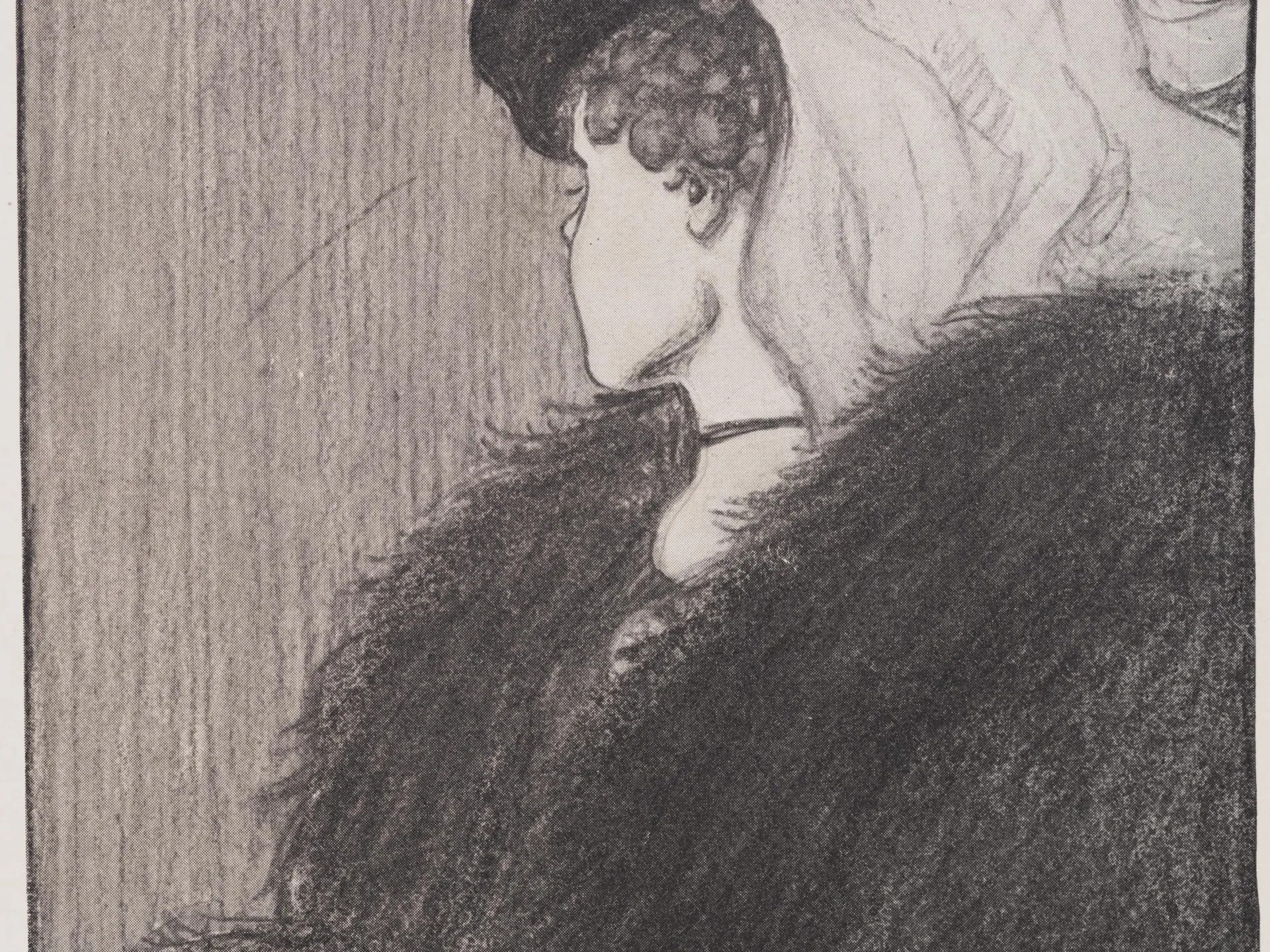
The younger generation is in a Sisyphus-like situation, where the harder they work and the more they push, the older generations become increasingly wealthy by comparison. Why?
Reading Time: 8 minutes for full analysis + key takeaways highlighted throughout
Key Question: Why is it that the older generations continue to get wealthier and wealthier, despite younger generations’ efforts?
My Take: Older generations seem to keep succeeding, often largely due to factors present at birth. Despite their failures and flaws, members of this generation continue to receive promotions, accumulate wealth, and make decisions in government. These factors prevent upward mobility for younger generations and lead to long-term negative outcomes as meritocracy-based hierarchies break down, creating a downward spiral.
Refer a Friend - Earn These Rewards
Let’s dive in.
Some people can only fail upwards. Others get shot down at the slightest infraction—cripling careers and kneecapping generations.
Michael Ovitz is a perfect example of this in practice. After attending UCLA and bouncing around a bit, Michael and a small team co-founded Creative Artists Agency, which became the world’s leading talent agency. Ovitz leveraged this success to become the President of the Walt Disney Company in October 1995.
The goal was to help CEO Michael Eisner with relationships and corporate growth. His 16-month tenure was marked by cultural friction and power struggles, resulting in his eventual termination. Ovitz was not a good fit for Disney’s corporate culture and struggled to establish authority, leading to a breakdown in his relationship with Eisner.
He was fired in January 1997 after only 14–16 months, walking away with a severance package totaling around $140 million in cash and stock.
In contrast to $100 million-plus exit packages, low-level employees are frequently terminated for minor violations of company policy, often involving nominal monetary values. In 2015, Thomas Smith, a 52-year-old Walmart employee, was fired for redeeming $2 worth of cans he collected while gathering shopping carts in the store’s parking lot.
These cans were left empty in a shopping cart just inside the store’s entrance, which Walmart deemed “company property,” and thus, Smith’s actions were unacceptable. The Walmart representative said Smith was guilty of “gross misconduct” by redeeming them.
While an executive like Ovitz can cost a company millions in lost productivity and still receive a fortune to leave, a worker can lose their entire livelihood over a literal handful of change.
The Generation That Can Only Fail Upwards
In 2026, younger people are reporting lower levels of happiness than their elders. A recent World Happiness Report found that the United States ranked 23rd out of 147 countries. What’s more concerning is the state of happiness for young people aged 15-24. The United States, Canada, Australia, and New Zealand each ranked between 122 and 133 in terms of young people’s happiness.
Why might this be?
There’s a wide variety of factors cited, from the proliferation of smartphones and social media, the consumption of ultra-processed foods, lack of social ties, lack of close family ties, weaker social support networks, and anxiety around the future (work, climate change, affordability of housing, rising cost of education, and political polarization).
It’s this last factor that I want to dive deeper into today, which I think is more important than people realize.
Having been around young people for many years now, I’ve heard a common sentiment: they’re complaining about the situation they’ve been brought into. They often feel as if they have inherited a broken system.
While every generation faces challenges, the current sentiment is that the social contract—in this case, the idea that if you work hard and go to school, you will be rewarded, if not more rewarded than your parents—has been voided. Education is no longer a path to wealth but a prerequisite for entry-level work, often coming with five- or six-figure debt.
In the past, if you were struggling, the advice was “work more hours; work harder.” Today, that often doesn’t prove correct. The gig economy and the passion economy mean that income is often dictated by algorithms rather than a direct boss or employment agreement. In addition, large corporations and private equity firms are buying up single-family homes, making the barrier to entry for homeownership a moving target that outpaces wage growth.
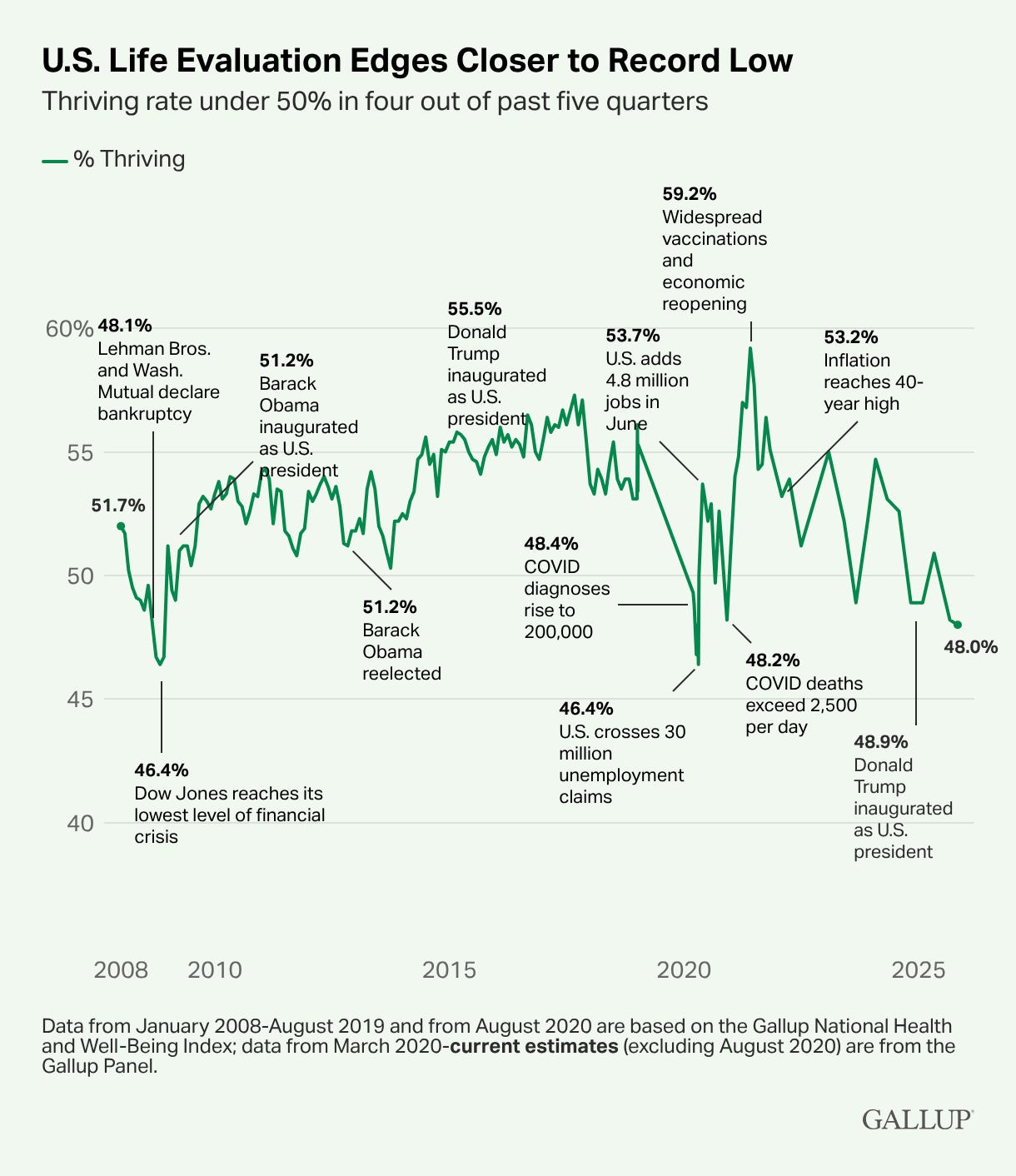
Younger generations have lived through a rapid succession of once-in-a-lifetime events that were once thought to be historical anomalies but have become the norm. The 2008 Financial Crisis hit right as Millennials were entering the workforce, followed by the COVID-19 pandemic as Gen Z entered the workforce.
Credit Gallup
A series of polls by Gallup illustrates this mindset, showing that current and future sentiment (categorized by respondents as “thriving”, “struggling”, or “suffering”) has fluctuated wildly over the last two decades and is currently near a 20-year low.
To be clear, the argument isn’t entirely that previous generations had it easier (they had the Cold War, stagflation, civil unrest, civil rights issues, etc.). Rather, the argument is that the math has changed. Median housing prices in the 1970s and 80s were around 3-4x a householder’s annual income; now, in the 2020s, it’s around 7-10x. Tuition was often fundable with a part-time summer job; now it requires decades of structured payments. There used to be high potential for upward mobility; now wages are stagnant relative to the cost of living.
In many ways, we’ve entered an era in which an older generation can only fail upward.
What does that mean?
Failing upwards refers to a phenomenon where individuals, usually those already in positions of power or established wealth (Boomers control 51% of U.S. wealth, followed by Gen X (26%), the Silent Generation (12%), and then Millennials and Gen Z (10.5% combined)), face few consequences for mistakes and continue to receive promotions, bailouts, or accolades. It’s often born of the belief that the safety net for older generations is much wider and stronger.
For many in older generations, the sheer timing of their lives acted as a massive hedge against personal failure. For example, an older individual could make poor career choices or experience job loss, but if they bought a home in the 70s-90s, the unearned equity in that home often grew faster than their actual salary. Even a “mediocre” financial landscape was bailed out by the massive appreciation of assets, allowing them to retire comfortably, despite mistakes that would bankrupt a member of the younger generation today.
In many corporate and political structures, years of service often outweigh current performance. Older generations usually hold the power to admit who they choose into the inner circle. Because they control the hiring and promotion cycles, they may favor peers with similar backgrounds, creating a cycle where high-level mistakes are handled with lucrative exit packages (termed “golden parachutes”) rather than simple termination.
Credit Politics News / FiveThirtyEight
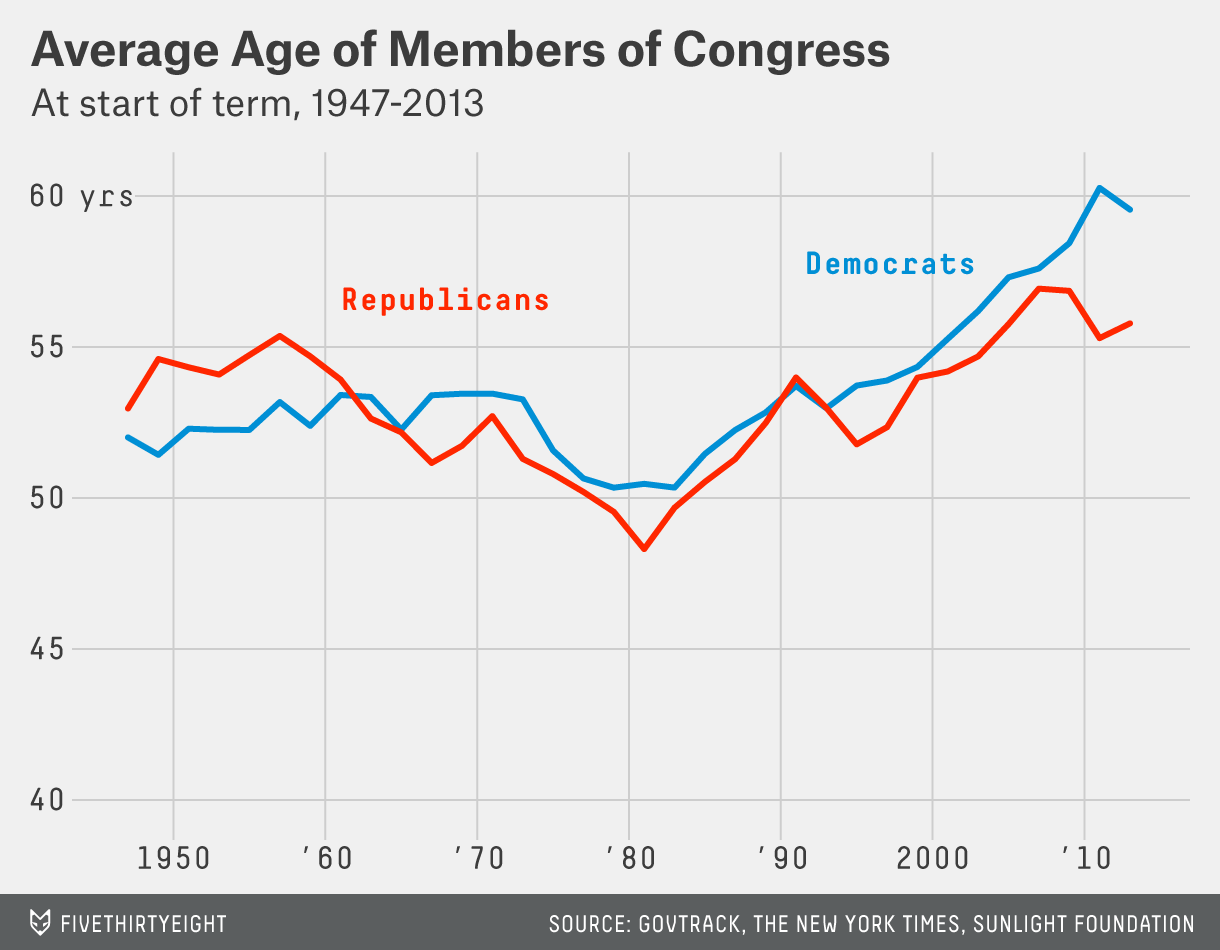
We see this in government, where the average age of leadership is at a historic high. Younger people see leaders remain in power despite clear policy lapses, cognitive decline, scandals, and more, leading to the perception that once you reach a certain level, you are “too big to fail.”
This is a classic example of the network effect. For these individuals, it’s often not what they know, but who they grew up with. If they fail at Company A (or Government position A), their father’s roommate hires them at Company B to give them a “fresh start.”
To provide another example, the 2008 Financial Crisis is often cited as a case study of failing upwards, serving as a foundational memory for Millennials: socialized losses and privatized gains.
The core of the 2008 crisis was the belief that certain financial institutions were so interconnected that their collapse would trigger a global cascade of failures. The government’s response was an injection of $500B+ into the banking sector. The very institutions that triggered the crisis through subprime mortgage speculation were given a lifeline to prevent bankruptcy.
The primary frustration lay in the government’s asymmetrical assistance. Banks received direct liquidity, whereas the people actually holding the mortgages faced a much harsher reality. As a result, millions of Americans lost their homes due to foreclosure. A bank executive whose firm collapsed due to risky bets could keep their career and wealth, while a family that lost their home faced a credit score destruction that would take a decade to repair.
This feeling that older people fail upwards is magnified by the fact that younger people feel they have zero or very minimal margin for error. For a Gen Z or Millennial, one bad medical bill, one month of unemployment, one car crash, or one poorly chosen degree can lead to decades of debt.
They see older generations who may have struggled with substance issues, job hopping, or financial mismanagement in their youth, but were still able to recover because the cost of living was low enough to enable a second try.
This phenomenon can lead to a significant brain drain, in which talented individuals from less privileged backgrounds stop trying to climb the ladder when they realize the rungs are greased. This is happening in small ways in the United States currently, as younger generations continue to see the once-captivating American Dream as little more than a hopeless catastrophe rather than the captivating trophy it once was.
Additionally, there is a psychological element at play. Younger people primarily see the successful members of the older generation who are still in the workforce or in the news (silent evidence). They don’t see the millions of older individuals who failed and are now struggling in poverty.
Despite this, the median wealth of older households has soared, while that of younger households has remained relatively stagnant or declined—leading to the collective image of a generation that succeeded regardless of individual ability.
When a society experiences a generation that can only fail upward, it erodes the foundational principle of meritocracy. When competence is decoupled from advancement, it creates a systemic crisis among the truly skilled.
Over time, high-potential individuals who lack adequate social safety nets or institutional backing become disillusioned, leading them to either leave the workforce or disengage entirely. This stagnation of talent ensures that leadership roles are occupied by those prioritized for their pedigree or risk aversion rather than their ability to innovate, effectively capping a society’s capacity for growth and problem-solving.
In the long term, this cycle institutionalizes mediocrity and poses a significant threat to social stability. When a specific demographic or class is perceived as immune to failure, it fosters deep-seated resentment and a sense of profound injustice among the rest of the populace.
Society is perceived as a rigged game, undermining trust in public and private institutions. Without the corrective pressure of accountability, organizations become fragile, prone to catastrophic errors, and unable to adapt to external shocks. Ultimately, a society that rewards failure at the top while punishing it at the bottom risks total institutional decay and the eventual collapse of the social contract.
That’s a wrap on this deep dive.
Found this analysis valuable? The best way to support Brainwaves is to share it with someone who’d benefit from these insights.
Drew Jackson
Founder & Writer
Refer a Friend
Building this community has been one of the most rewarding parts of writing Brainwaves. If you know someone who’d enjoy these weekly deep dives, I’d love it if you could share your unique referral link with them. You’ll earn tangible rewards for growing our community, and they’ll get content worth their time. Win-win.
Keep Exploring
Next Deep Dive: Real Options - July 22nd, 2026
This Saturday: Weekly roundup of breaking developments across energy, space, venture capital, economics, intellectual property, and philosophy
Previous Editions: View the archive here
Stay Connected
New to Brainwaves? Join hundreds of readers getting bi-weekly deep dives into the forces reshaping our world.
Sponsor This Newsletter: Reach an engaged audience of forward-thinking readers. Email us for details.
Disclaimer: Views expressed are personal opinions, not financial advice. This content is educational only. Investment decisions carry risks - always consult professionals and do your own research. All sponsorships are clearly disclosed.
© 2026 Brainwaves. All rights reserved.