


Credit AZoOptics
Space innovation has one key rule: In the research phase, break everything. In the deployment phase, don’t break anything.
This Week’s Focus: Space
What You’ll Understand: The complex dynamic between public and private space entities
Reading Time: 9 minutes for full analysis + key takeaways highlighted throughout
Key Question: Is the current dynamic between public and private space entities better than it has been historically?
My Take: The shift from producer to customer has enabled the space industry to accelerate rapidly, as entities now own IP, fiercely compete, and drive innovation at every step. This enables rapid prototyping, where failure provides tremendous information and isn’t the end of the world. Historically, NASA and other entities were too rigid, causing delayed timelines and cost overruns. However, they did make it to the Moon, which this new system hasn’t accomplished yet—meaning the historic model may still be superior.
Quick Context: This deep dive connects to my prior work on space commercialization. New to Brainwaves? We explore the forces reshaping our world across venture capital, energy, space, economics, intellectual property, and philosophy. Subscribe here for bi-weekly deep dives plus weekly current events.
Refer a Friend - Earn These Rewards
Let’s dive in.
In 1969, history was made when humans walked on the moon for the first time. This mission was accomplished through a tremendous effort of NASA engineers, rocket builders, and scientists across the United States.
In 2027 and 2028, this milestone may be achieved again as commercial space giants collaborate with NASA in a public-private partnership. This will be the first time humans have reached the moon in over 50 years.
Public and private space entities have collaborated closely to achieve some of the largest space milestones to date. They’ve also competed fiercely for resources, technology, know-how, and orbital space. Over the years, the dynamics have shifted from financier to partner to purchaser, and from contractor to partner to innovator.
As the space commercialization movement continues, the spotlight on public and private space entities grows. Understanding and analyzing the dynamics, both historically and going forward, will enable space players to maximize their collaborative and competitive initiatives.
Credit NASA
Pivot from Producer to Customer
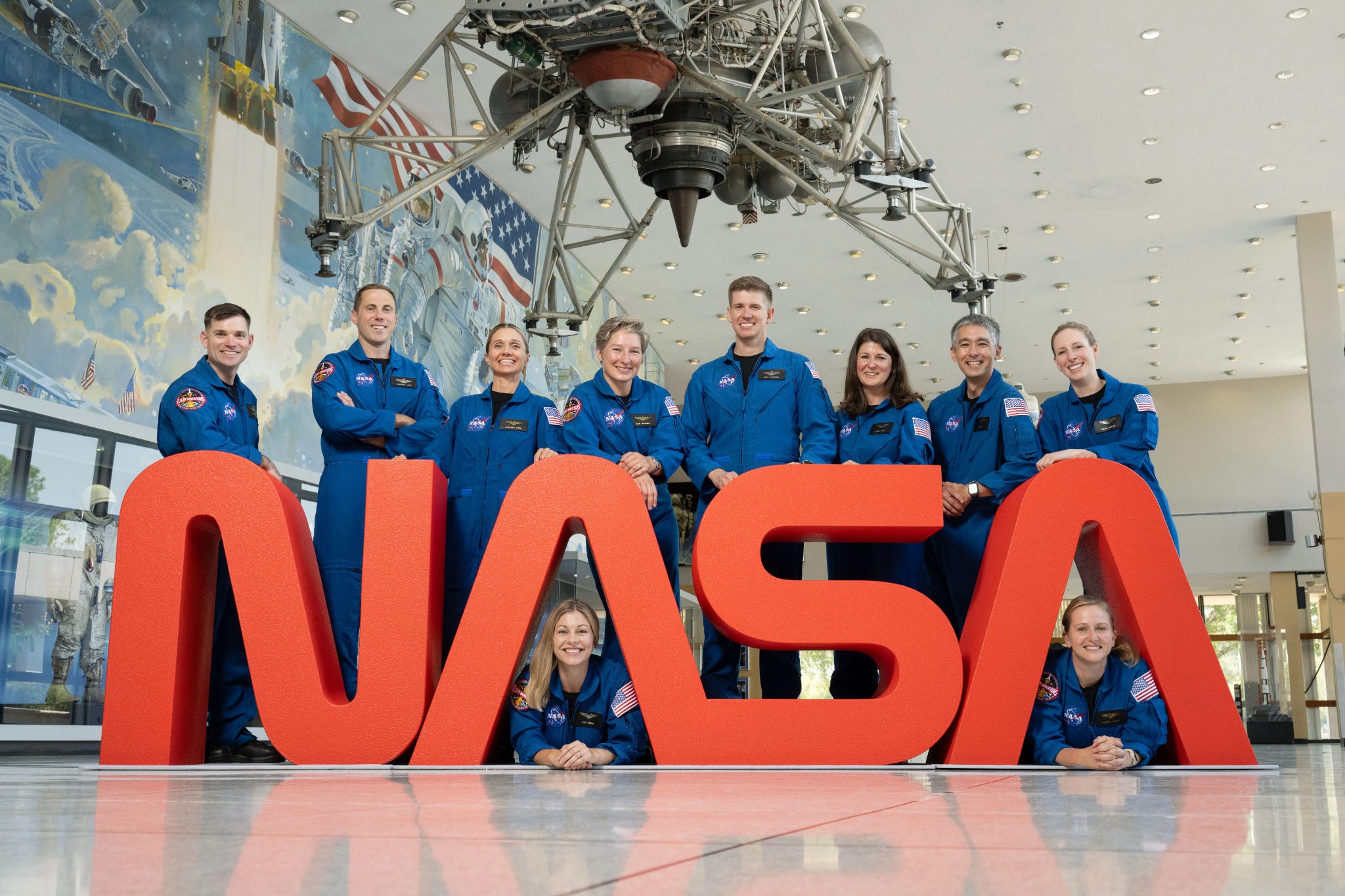
During the Space Race, NASA often used cost-plus contracts. In this scenario, NASA would design the rocket, pay a contractor to build it, and cover all costs plus a guaranteed profit margin. If the project went over budget or took longer than planned, NASA (and technically the taxpayer) picked up the tab.
For instance, following President Nixon’s January 1972 directive to develop and build a reusable space transportation system, NASA designed the Space Transportation System (commonly known as the Space Shuttle). The reusability of the shuttle’s components was expected to provide easier access to space while reducing costs.
NASA fully funded and managed the program, contracting private aerospace companies to build the components for the reusable transportation system. After 10 years, the development phase ended, with the total bill to the taxpayers costing $10.6B (equivalent to around $49B in 2026).
However, this business model had some large flaws. Today, NASA operates under a service-based model using fixed-price contracts. Many projects are based on milestones and funded accordingly. NASA says, “We need to get 500kg of cargo to the ISS. We’ll pay you $XXM when you prove the rocket can launch and another $YYM after the mission is complete.”
In this model, private companies own the hardware and the intellectual property; NASA is simply buying a seat or cargo space. Previously, NASA owned the hardware and the intellectual property. Now, if a private company wastes money, it eats the cost. This creates a massive incentive for low-cost, efficient, reusable solutions, and NASA can penalize for missing timelines.
In essence, NASA has gone from being a producer to being a large customer.
By becoming a customer, NASA creates a more modular and redundant system. If NASA owns one “mega rocket” (e.g., the Space Shuttle) and it fails, the entire space program is grounded. By being a customer of multiple providers (SpaceX, Boeing, Blue Origin, Virgin Galactic), the system gains redundancy. If one provider experiences a technical failure, NASA can pivot to another provider.
Additionally, under the historical model, building a NASA-owned, designed, and operated rocket could take years, if not decades. This means the program is vulnerable to cancellation when a new presidential administration takes office. In 2026, buying space on other rockets creates shorter-term commitments that are harder to kill and easier to scale.
Some problems are unavoidable in both solutions. When the Space Shuttle program was delayed and overspent, NASA had no option but to wait and either invest more in a sunk cost or shutter the program. Similarly, today, if Boeing’s Starliner is delayed by years, NASA doesn’t have its own backup rocket ready.
There remain operational dependencies, with only a few players capable of designing and developing the products NASA needs for its missions. Granted, there’s more than one currently, providing some redundancy, flexibility, and optionality, but the system isn’t perfect. Additionally, a private company’s goals aren’t always aligned with NASA’s. Most are billionaire-founded and -funded, so profit isn’t the primary goal, but they are still at the whim of the billionaire’s vision, which may not align with NASA’s broader scientific goals.
This isn’t an isolated occurrence in the space sector alone. We’ve seen this producer-to-consumer pivot across many large industries over the last few decades. For instance, companies no longer build their own server rooms; instead, they rent compute space from AWS or Azure. Governments are increasingly buying commercial drones for military use rather than developing them in-house. Public-private partnerships for toll roads or bridges develop infrastructure faster, although the state lacks full operational authority.
Credit Space
Rapid Iteration vs. Mission Assurance
There are many ways to manage and mitigate risk. Two popular versions have been showcased throughout space history—one treating failure as a cost of information, while the other treats failure as an unacceptable catastrophe.
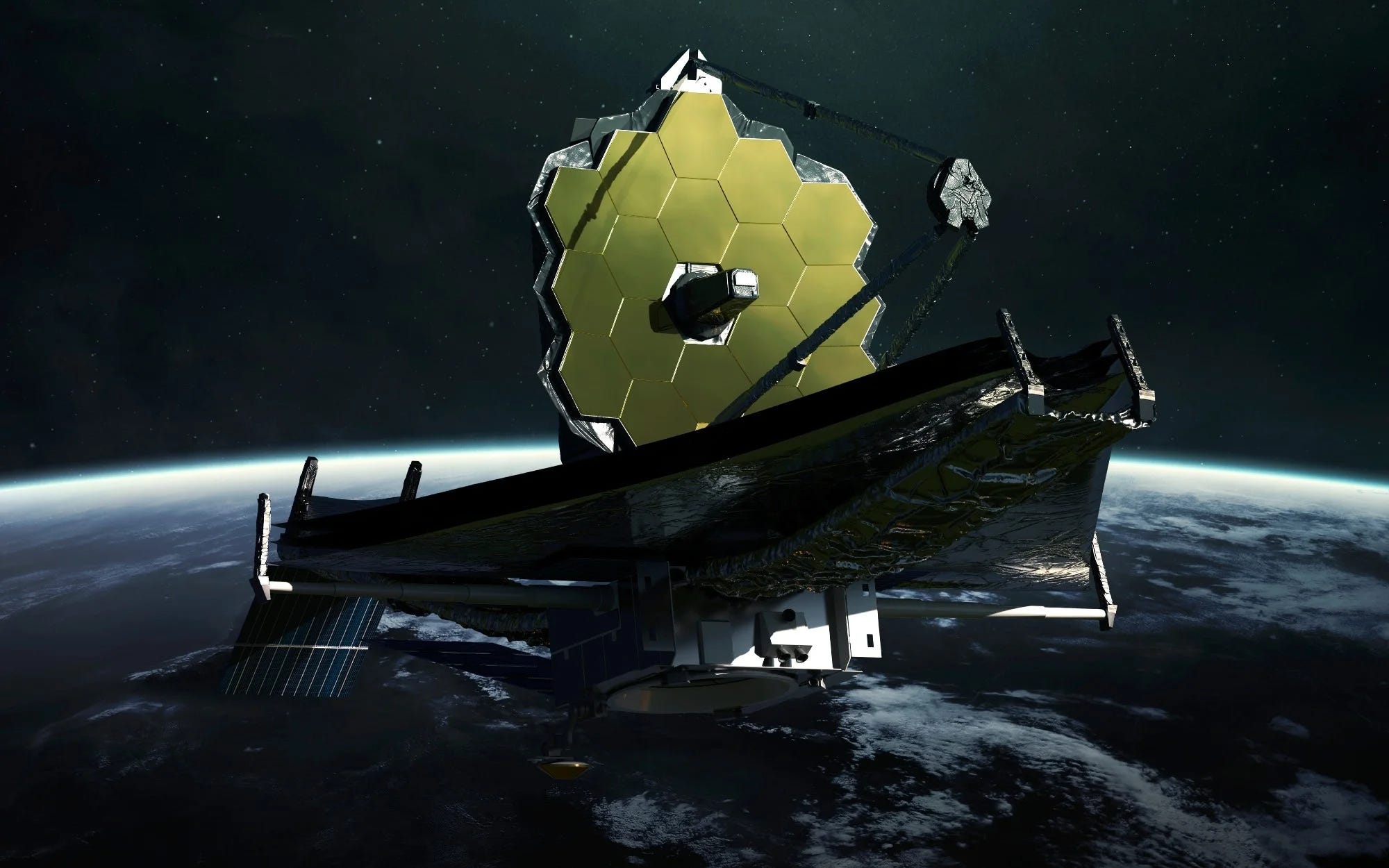
NASA was founded on a mission of robustness and mission assurance. Their goal is extreme reliability, making sure there are no points of failure. When you’re designing the $10B James Webb Space Telescope (JWST) that you’re sending out millions of miles into space, there is no option for repairs. It must work the first and only time. They spend thousands of hours on computer modeling and testing so every single component is documented, tested, and verified, ensuring failure isn’t an option. Failure represents a generational setback for science and a massive blow to national prestige.
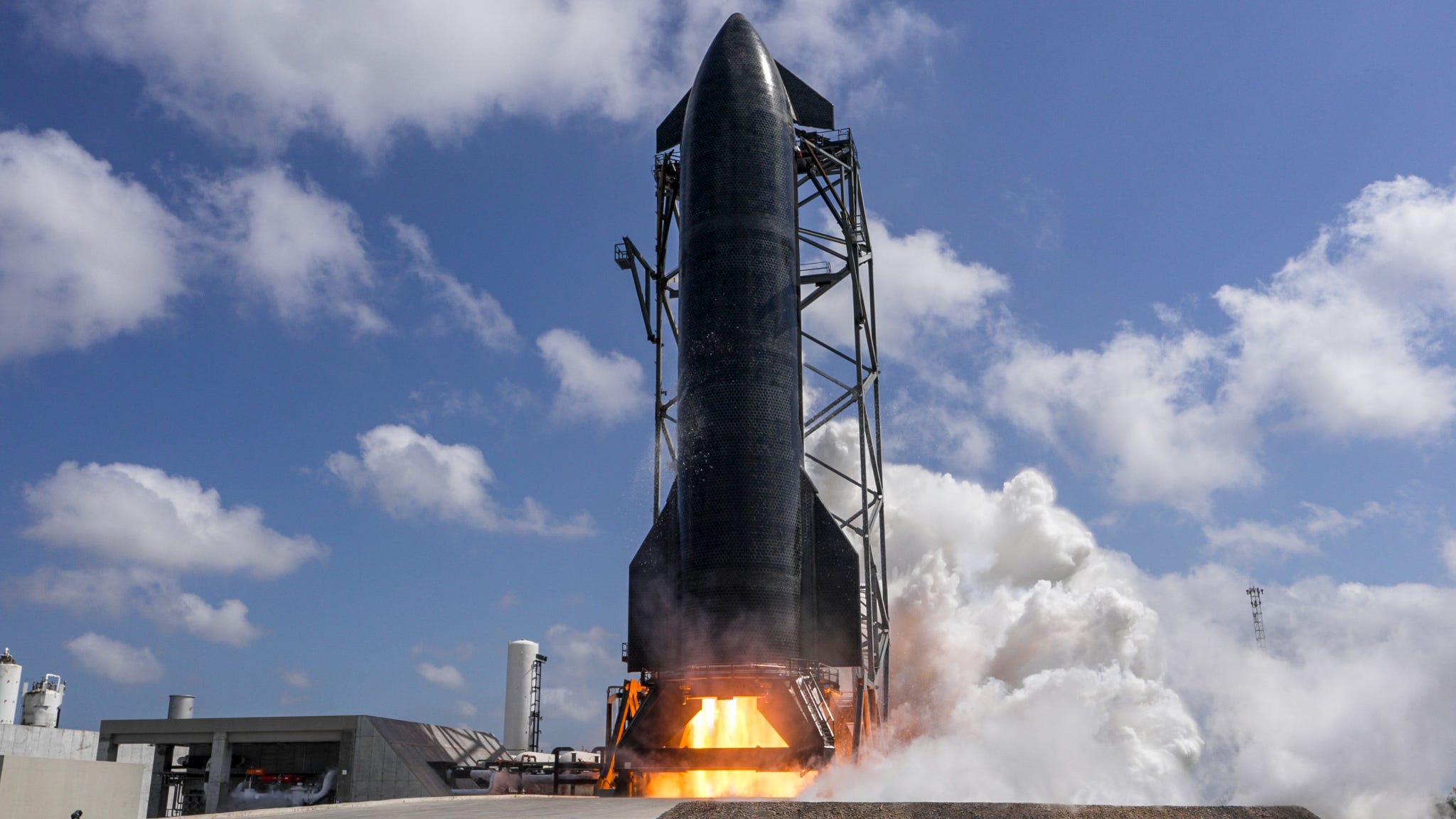
SpaceX, on the other hand, operates on a hardware-rich philosophy. They build many prototypes quickly and expect them to blow up. Their goal is to identify flaws in a design in the real world rather than in simulation. Every explosion provides a massive amount of information. In their opinion, by failing early and often, they eliminate design flaws faster than a team of scientists sitting in simulators every day. It’s often cheaper to build 10 cheap prototypes that fail than to spend 20 years building one perfect machine that might still fail on its first try.
The choice between the two methods comes down to replicability and consequences. There are scenarios where rapid iteration is better suited, and others where assurance is needed. For example, when you’re building thousands of Starlink satellites, it’s easier to rapidly iterate. If 5% fail during the learning phase, the system still survives, especially at that scale. On the other hand, when you’re sending humans to the Moon, the cost of failure (in this case, human life) is too high for a trial-and-error approach.
Interestingly, we are seeing a convergence. In 2026, NASA is increasingly adopting a rapid iteration process for its lunar lander components, while SpaceX is adopting assurance measures as it prepares to put humans on Starship.
The trick is to know which phase of a project you are in. In the research phase, break everything. In the deployment phase, don’t break anything.

Credit WIRED
Democratization of Low Earth Orbit
Historically, space was a region accessible only to national government space agencies. The famous Space Race was between Russia and the U.S. government, not between North American Aviation and Experimental Design Bureau-1.
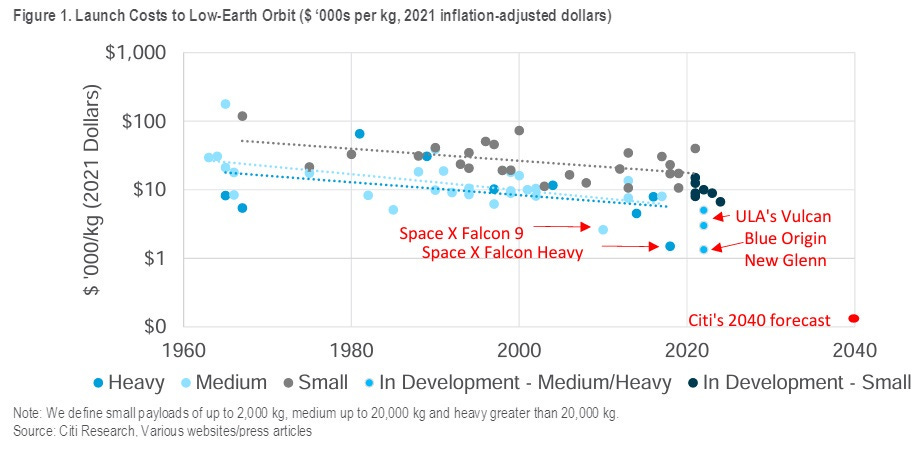
Over the past century, launch costs have decreased exponentially, following a Moore’s law trajectory. Historically, sending a kilogram into space was extremely cost-prohibitive ($10,000- $100,000/kg). Today, space commercialization efforts have significantly reduced that cost (see the graph below).
Credit American Enterprise Institute
With this decrease in costs, access to space is more widely available to a wider range of entities, including all manner of commercial companies, government entities, and more.
When launch costs were high, you only brought things back from space if they were Moon rocks or astronauts. Now, the ROI for a wide variety of physical goods becomes viable. For instance, in Earth’s gravity, crystals grow with defects. In microgravity present in space, they grow with near-perfect molecular symmetry. These purer crystals allow for higher-concentration drugs, fundamentally changing patient care.
Another example is traditional silica fiber. As it’s currently manufactured on Earth, it loses signal over distance. A new type of fluoride glass, called ZBLAN, that is theoretically 100x more efficient but is impossible to make on Earth. Manufacturing ZBLAN in LEO could create trans-oceanic cables that require almost no signal boosters, revolutionizing the speed and energy efficiency of the global internet.
Democratization brings a new risk: the Kessler Effect. As Low Earth Orbit becomes a “commercial zone”, the density of objects increases the risk of collisions. A single collision can create a cascading effect. As of now, we don’t have any effective ways to counteract this effect, which could have potentially hazardous consequences.

Credit University of Glasgow
The Scientific, Non-Business Case
We shouldn’t expect, or even want, private corporations to handle every aspect of space exploration. There’s a difference in goals between ROI (return on investment) and ROC (return on curiosity) that we need to factor in.
Private companies like SpaceX and Blue Origin are responsible to shareholders and face massive capital requirements to appease them. They need a path to revenue and profit, whether through satellite launches, space tourism, asteroid mining, or other ventures. If a mission doesn’t have a foreseeable profit margin at this point or in the future, it’s often not pursued.
Contrast that with public entities like NASA, which measure success through research data and achieving astronomical milestones. Finding a single microbial fossil on Mars has negligible immediate market value but large scientific value.
It is in pursuit of these goals that public entities can take high-risk, zero-profit gambles. Exploring the outer regions of the Solar System and beyond involves decades of planning with no guarantee of any financial reward at the end.
Private companies avoid this due to long R&D cycles and strict preservation requirements. For instance, the James Webb Space Telescope took over 30 years to realize. No private board would approve a 30-year project with no profit. Additionally, scientific missions often require “planetary protection” protocols to ensure strict preservation of foreign sites from Earth contaminants. This is an expensive add-on and slows down commercial efficiency.
Rather than being rivals, the public and private sectors function in parallel. Public agencies fund the high-risk innovation, while private companies take those proven technologies and optimize them for the mass market, driving down the cost of access to space. Lower cost inputs then allow public agencies to buy cheaper seats on private rockets, allowing the cycle to continue with lower costs for existing infrastructure.
One of the ultimate pursuits of space exploration is the search for life. This is the ultimate non-business case; if we find life on Europa or elsewhere, we can’t sell it, and we shouldn’t exploit it commercially at first. Public agencies are well-positioned to serve as custodians of human knowledge, ensuring that discoveries belong to everyone rather than remain proprietary trade secrets.
Ultimately, we need both sides of the coin. We need the non-business case to encourage scientific development and to take risks that don’t make any business sense. We need the business case to make space sustainable and accessible at a larger scale, enabling a positive feedback loop—however long the timelines may be.
That’s a wrap on this deep dive.
Found this analysis valuable? The best way to support Brainwaves is to share it with someone who’d benefit from these insights.
Drew Jackson
Founder & Writer
Refer a Friend
Building this community has been one of the most rewarding parts of writing Brainwaves. If you know someone who’d enjoy these weekly deep dives, I’d love it if you could share your unique referral link with them. You’ll earn tangible rewards for growing our community, and they’ll get content worth their time. Win-win.
Keep Exploring
Next Deep Dive: Quarterly Update / Interview - May 26/27th, 2026
This Saturday: Weekly roundup of breaking developments across energy, space, venture capital, economics, intellectual property, and philosophy
Previous Editions: View the archive here
Stay Connected
New to Brainwaves? Join hundreds of readers getting bi-weekly deep dives into the forces reshaping our world.
Sponsor This Newsletter: Reach an engaged audience of forward-thinking readers. Email us for details.
Disclaimer: Views expressed are personal opinions, not financial advice. This content is educational only. Investment decisions carry risks - always consult professionals and do your own research. All sponsorships are clearly disclosed.
© 2026 Brainwaves. All rights reserved.