


Credit FeelTheArt
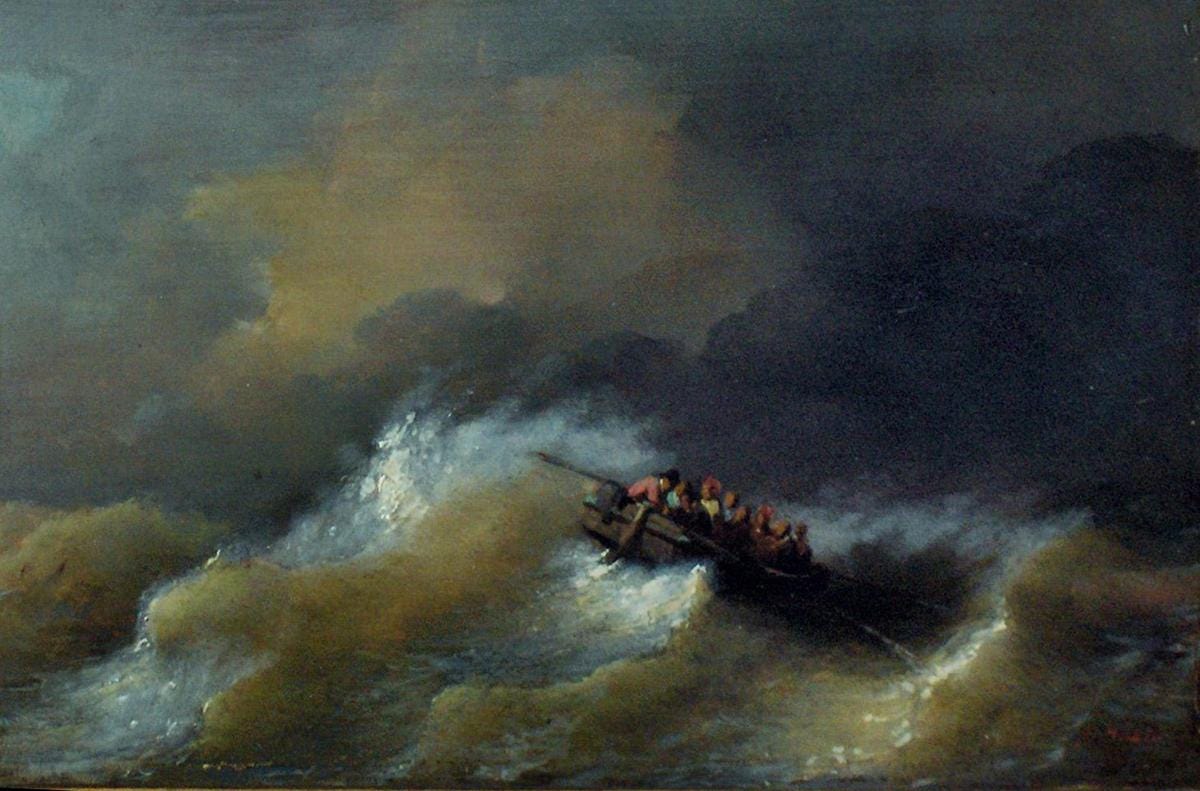
Fluctuat Nec Mergitur: The official Latin motto of Paris, translating to “She is tossed by the waves, but does not sink”.
Reading Time: 30 minutes for full analysis + key takeaways highlighted throughout
Key Question: Given the world’s fragilities and complex dynamics leading to volatility and failure, is it possible to resist these forces productively?
My Take: Resilience is an adequate methodology for insulating against the instability present throughout the world; however, it lacks key elements, making it a faulty stand-alone long-term solution. Resilience is often reactive, and its effects can wear down over time due to a lack of true adaptation to incoming stimuli. In many situations, robustness is enough, but some call for more advanced antifragile characteristics.
Refer a Friend - Earn These Rewards
Let’s dive in.
A Giant Oak stood near a brook in which grew some slender Reeds. When the wind blew, the great Oak stood proudly upright with its hundred arms uplifted to the sky. But the Reeds bowed low in the wind and sang a sad and mournful song.
“You have reason to complain,” said the Oak. “The slightest breeze that ruffles the surface of the water makes you bow your heads, while I, the mighty Oak, stand upright and firm before the howling tempest.”
“Do not worry about us,” replied the Reeds. “The winds do not harm us. We bow before them and so we do not break. You, in all your pride and strength, have so far resisted their blows. But the end is coming.”
As the Reeds spoke, a great hurricane rushed out of the north. The Oak stood proudly and fought against the storm, while the yielding Reeds bowed low. The wind redoubled in fury, and all at once the great tree fell, torn up by the roots, and lay among the pitying Reeds.
- Aesop Fable (Unknown)
The future actively shapes our lives. Historically, the way humans have thought about and approached the future has been flawed. Futures Thinking is a modern approach to the future, rethinking how humans think about and approach the future.
Rather than trying to predict specific future events, Futures Thinking encourages a shift in how we conceptualize the future itself—drawing on diverse cultural perspectives, foundational characteristics of the world, and deep reviews of modern literature, and recognizing that our present actions and narratives significantly influence future outcomes. Since most major life decisions are essentially bets on the future, adopting this framework could transform how we approach education, careers, relationships, and other essential aspects of life.
Today, our discussion focuses on how our world reacts to the natural stressors and volatility present, specifically on Futures Thinking Tenet #8: Robust and resilient systems absorb shocks through redundancy and durability, though they don’t necessarily improve from them.
Credit Wikipedia
RESILIENCE IS OUR MANUAL FOR SURVIVAL - TAIWAN BUILDINGS SHOULD HAVE BEEN DESIGNED BETTER - SUSPENSION AND SELF-HEALING CUTTING MATS ARE ALL AROUND US
The world is full of fragile systems, characterized by the fact that they suffer more downside than upside from randomness, shocks, and volatility. Naturally, the world contains a few fragile systems, however human behavior has exponentially increased these fragilities. Humans often inadvertently create fragility by over-optimizing systems for efficiency or by attempting to eliminate natural stressors, which prevents the system from learning to handle adversity.
Eventually, these fragilities, when impacted by the natural volatilities and stressors of the world (Tenet #2), lead to collapse and failures (Tenet #3). Given this, how can we mitigate the effects of these fragilities, or prevent them from forming in the first place?
Broadly, when volatilities and stressors are applied to something, one of three outcomes occurs. The first, characterized by fragilities (Tenet #7), is that the object fails or collapses (i.e., it worsens under stressors). The second, characterized by resistance and robustness (Tenet #8), is that the object remains relatively the same (i.e., it doesn’t change or isn’t majorly affected because of the stressors). The third, characterized by antifragility (Tenet #9), is that the object gets stronger (i.e., it ends up better off because of the stressors).
Often, our first reaction when encountering a stressor is to resist. We push back on our parents when they lower our curfew; we rebel, we march and protest; the rubber band snaps back into place.
Resilience describes something’s ability to absorb shock and recover without being destroyed. At its core, it’s the concept of survival and persistence in a variable context. Things that are resilient aren’t harmed or helped by volatility and disorder. Critically, resilience isn’t about the speed of the bounce back (or lack thereof) so much as the ability to get back.
In other words, resilience is the capacity for a system to undergo some change without crossing a critical threshold into a different system regime. In practice, a system’s resilience can be measured by the distance from these thresholds and the speed at which the system approaches them, given stressors and volatility.
Professor Johan Rockstrom, Director of the Potsdam Institute for Climate Impact Research, states, “Resilience is not a buzzword — it’s the operating manual for our survival on planet earth.”
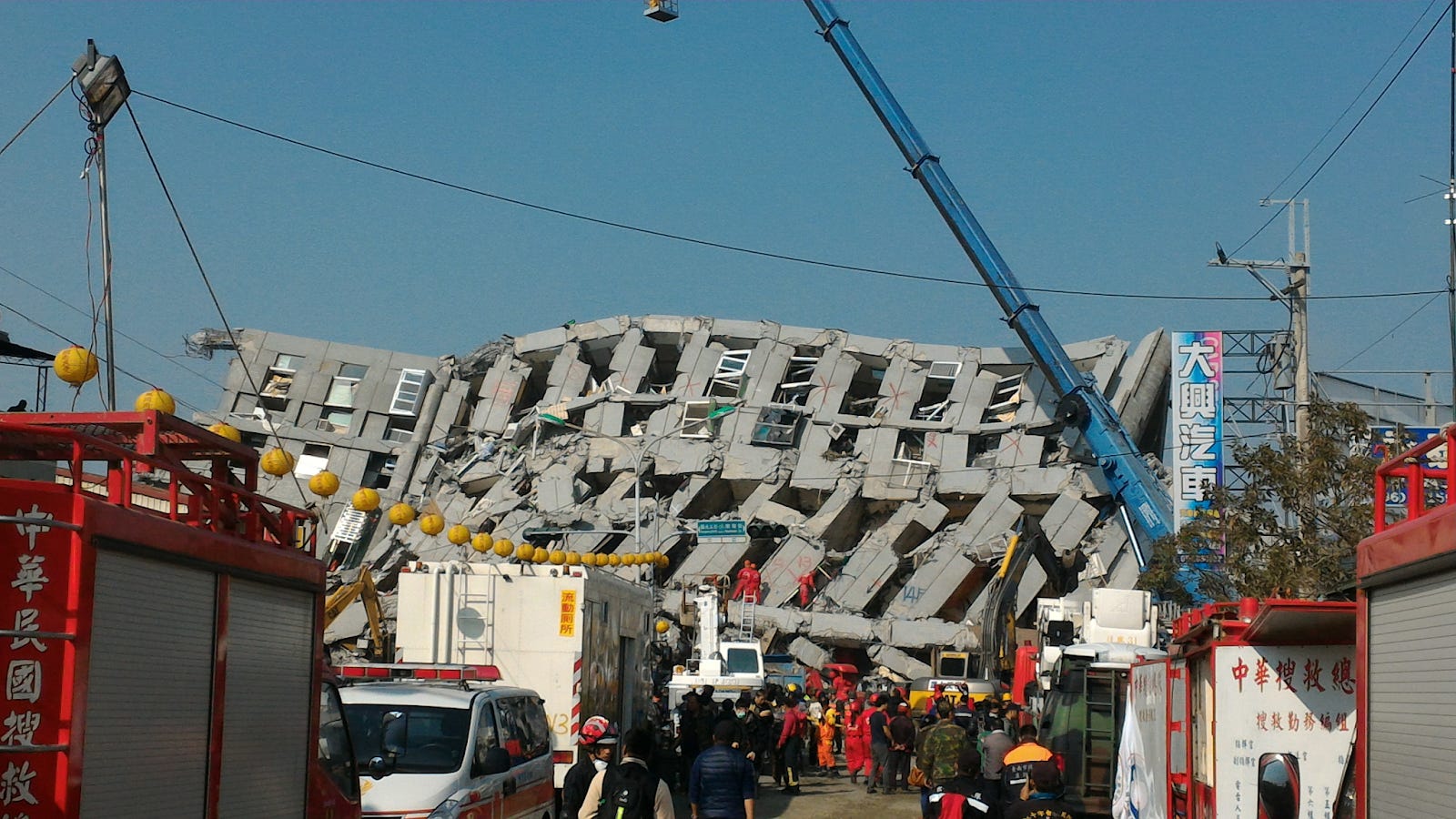
In 2016, as families and friends celebrated the Lunar New Year holiday, a massive 6.4 magnitude earthquake rocked southern Taiwan. It and its 68 aftershocks resulted in 117 deaths and are classified as the deadliest earthquake in Taiwan since 1999. Interestingly, only one key factor is the culprit for this major death toll.
Taiwan is located on the Ring of Fire, an infamous region that’s highly susceptible to earthquakes caused by tectonic plate movement. However, the 2016 earthquake was particularly destructive and deadly. Why?
Unfortunately, the death toll was highly concentrated among residents of the Weiguan Jinlong building in Tainan City, claiming 115 victims during its collapse. This is not the first, and won’t be the last, example of building collapses from earthquakes, leading to outsized death tolls. In fact, the majority of earthquake deaths are due to building damage.
As the world continues to industrialize, buildings grow taller and more dangerous to residents and nearby communities during natural disasters. Thus, the need for earthquake-resistant building designs was created.
While no structure can be entirely resistant to earthquake damage, the goal of earthquake engineering is to create structures that react better during earthquakes than conventional designs. Current innovations include base isolation and structural vibration control technologies.
These structures aren’t gaining from earthquakes, but they aren’t dramatically worse off—they’re robust.
As the world continues to change, we should promote resilience and robustness to survive. We don’t know what disruptions will come, but we know there will be disruptions.
Examples of resilience are all around us. For instance, in off-roading (and even normal driving), conditions are often unknown; you may encounter sticks, rocks, trees, animals, and many other things. Yet vehicles are designed to be resilient to these potential stressors. Ironically, these resilient devices are called shock absorbers.
In arts and crafts, genius engineers have created a “self-healing cutting mat.” They’re made of separate tiny plastic or rubber blocks pressed tightly together. When a razor blade slices across the surface, it doesn’t actually cut the material; instead, it just forces the pieces apart. Once the blade passes, the material’s pressure forces it back together, leaving the surface flat and seamless.
As Simon Ostergaard writes for the Copenhagen Institution for Futures Studies, “Building resilient societies requires preparing for a range of plausible futures rather than optimizing for a single version of it. This makes foresight and resilience an ideal match.” Brian Walker and David Salt explain this distinction in their book, Resilience Thinking: Sustaining Ecosystems and People in a Changing World:
When managing for resilience, you need to consider two types of resilience: resilience to disturbances that you are aware of (specified resilience), and resilience to disturbances that you haven’t even thought of (general resilience).
In either case, resilience is a passive, reactive condition. The defining characteristic of resilience is the ability to return to the status quo after a disturbance. If a resilient bridge is hit by strong winds, it may sway, but its goal is to return to its original, static state. It does not proactively adapt to be less affected by the next gust of wind (this would be an example of antifragility); it merely withstands the stressor.
Due to these factors, resilience is an adequate solution to most of the fragilities present in life.

Credit Southern Living
A REFRESHER FOR THOSE WHO SLEPT THROUGH BIOLOGY CLASS - YOU SHOULD SEND CHRISTMAS CARDS TO STRANGERS - TRUST IS THE BRIDGE BETWEEN THE PRESENT AND THE FUTURE
The human body is a fascinating example of a robust and resilient system. It showcases many facets and qualities of robust systems, carefully crafted over millennia by evolution. On a basic level, the body operates through a process called homeostasis, in which balancing feedback loops maintain a stable internal environment throughout changing external conditions. These loops detect deviations from “normal” and trigger a response to restore the system to equilibrium.
If your core temperature rises, the system triggers vasodilation and sweating. If it drops, it triggers shivering and vasoconstriction. In other parts of your body, there are constant adjustments of insulin and glucagon levels to keep blood sugar within a narrow, functional range, despite wildly varying nutritional intake.
The human body is built with extensive space capacity and redundancies. We have two kidneys, two lungs, and two eyes; we can maintain near-peak performance even if one of these components is significantly compromised. In the event of a minor arterial blockage, the body can often reroute blood through smaller, alternative vessels to ensure proper oxygenation.
In many ways, humans have been carefully curated to be extremely resilient systems. This enables survival from the extreme cold of Antarctica to the sweltering heat of Death Valley. It allowed us to transition from primarily hunter-gatherers to an agrarian society to an urbanized population. It ensures we can thrive when we travel to different places, even when it causes immediate disruption—our bodies take it in stride.
Resilient systems, as demonstrated by the examples above, are characterized by various attributes that enable, ensure, and expand their ability to remain robust amid volatility. These include redundancies and overcompensation; durability; contingencies, buffers, and room for error; stabilizing feedback loops, self-correction mechanisms, and thresholds; cooperation, reciprocity, and social capital; and diversity. To enhance the future lifespan of organisms, organizations, or other systems, these characteristics should be sought after and carefully fostered. Without them, it almost always results in failure and collapse, since most things are naturally fragile.
In addition to the kidneys, lungs, and eyes, many other systems are designed with redundancies to ensure robustness. For instance, modern aircraft such as the Boeing 777 and the Airbus A380 often use three independent flight computers. During operations, they all perform the same calculations. If one disagrees with the other two, the majority party wins, and the outlier is ignored. These planes generally operate with two engines and are certified for ETOPS (extended-range twin-engine operational performance standards). In the event of a single-engine failure, these planes are designed to fly for several hours on a single engine.
A system with multiple pathways and redundancies is more stable and less vulnerable to shocks than a single-point system with uniformity. As showcased throughout nature and many other systems, layers of redundancy are central to risk management.
In the logistics and supply chain management profession, a common practice is maintaining a safety stock. This “just-in-case” inventory is a form of redundancy, specifically through overcompensation. It protects a company against sudden spikes in demand or shipping delays (like a ship getting stuck in the Suez Canal).
A system that overcompensates builds in extra capacity and strength in anticipation of a worse outcome. This extra capacity or strength may become useful as the system operates, even in the absence of volatility or hazard.
However, a main argument against redundancy is that it’s usually unnecessary. Redundancy is often a black box, a great example of “if you have it, you won’t need it, and if you don’t have it, you will.” Not every person needs two kidneys, not every business needs so much excess inventory, not every family needs food storage—for many, if they had only one kidney, just enough inventory, or only got food when they absolutely needed it, they probably would have survived. Redundancy seems like a waste if nothing negative happens, but if it does, the ROI is incredible.
Many popular consumer companies are built on the promise of extreme durability. This durability is often the result of over-engineering—using materials that far exceed the minimum requirements for the task. For example, a cast-iron skillet is nearly indestructible. It can be dropped, overheated, brought on all sorts of adventures, and left to rust, yet it can easily be restored to a functional state.
While resilience is about a system’s ability to recover from the impacts of volatility, durability is about a system’s ability to resist wear, pressure, or damage over a long period without requiring significant change or repair.
Perhaps the most famous example of structural durability is Roman concrete. Modern concrete is a mix of Portland cement and aggregates such as sand or crushed stone. In saltwater, concrete rapidly degrades, with an average lifespan of around 50 years. In contrast, Roman concrete was made using volcanic ash, lime, and seawater. When exposed to seawater, lime reacts to form aluminous tobermorite. This has enabled Roman piers and breakwaters to have survived for over 2,000 years.
Continuing our water theme, imagine the difference between a large body of water and a small river. You hear about catastrophic river floods much more often than you do about catastrophic lake floods. Why?
Every system has stocks, which are amounts of buffer built into it in the form of working inputs. In finance, this would be a business’s working capital; in a hospital, this would be the number of open beds.
Stocks change in two ways: flows in (additions to the stock) and flows out (subtractions from the stock). Stocks take time to change because flows take time to flow; often, stocks change slowly. In this way, they act as delays, lags, and buffers, providing room for error in systems.
This time component provides a source of stability throughout the system. Mountains built over years rarely crumble all at once. A pianist doesn’t forget their skills immediately after stopping playing. Donella Meadows explains this interaction in great depth in her book Thinking in Systems:
The presence of stocks allows inflows and outflows to be independent of each other and temporarily out of balance with each other. It would be hard to run an oil company if gasoline had to be produced at the refinery at exactly the rate the cars were burning it. It isn’t feasible to harvest a forest at the precise rate at which the trees are growing. Gasoline in storage tanks and wood in the forest are both stocks that permit life to proceed with some certainty, continuity, and predictability, even though flows vary in the short term.
Returning to our example of lakes and rivers, you hear about more river floods than lake floods because lakes have a much larger stock, increasing the capacity to absorb a bigger inflow. This principle holds for most systems: you can increasingly stabilize a system by increasing the capacity of a stock (buffer).
Maintaining an absorptive capacity allows systems to endure shocks without systemic collapse. Farmers seek to build large water towers to provide a buffer from droughts, famines, or other unexpected events.
Likely, you know people who live with no margin for error. What happens if the paycheck is a day late? What happens if they get in a massive car accident? What if they need to pay more in taxes? Preparing for contingencies means preparing for scenarios that might not happen.
Be cautious! Bigger is not always better. If the buffer becomes too big, the system becomes inflexible, losing more than it gains from the added buffer. As noted in Goldilocks and the Three Bears, there is a “just right” level of stocks, buffers, contingencies, and room for error where you are adequately protected without overprotecting at the expense of flexibility and optionality.
In many systems, the system of stocks, inflows, and outflows creates a feedback loop in which inflows and outflows are carefully controlled to maintain a sustainable stock level.
Balancing feedback loops are a consistent characteristic of systems. Nature evolves them, and humans manually introduce them as controls to keep stocks within safe bounds. In ecosystems, multiple species hold each other in check (via the food pyramid), migrating and moving around, reproducing and dying in response to external conditions (predators, weather, food availability, etc.).
In cars, the cruise control system acts as a balancing feedback loop, always striving to keep a constant speed regardless of the incline, road conditions, or any other variables. This enables unstable processes to be stabilized and reduces sensitivity to variations.
Resilience is introduced into a system when one or more of these feedback loops exist, operating through different inputs/outputs and at different time scales, providing durability and redundancy.
Each system has a threshold, or system of thresholds, at which it operates at an optimal level. The role of balancing feedback loops is to keep the system below or between threshold levels. Donella Meadows provides important detail here, “Resilient systems can be very dynamic. Short-term oscillations, or periodic outbreaks, or long cycles of succession, climax, and collapse may in fact be the normal condition, which resilience acts to restore!”
In many scenarios, a system’s resilience may be difficult to see until you exceed its limits and cross a threshold.
In 1976, researchers Phillip Kunz and Michael Woolcott picked 578 complete strangers from the Chicago city directory and sent them Christmas cards. Some people got expensive, high-quality cards, while others got plain, white cards with “Merry Christmas” handwritten on the front. Some were signed “Dr. and Mrs. Kunz,” while others were signed “Phil and Joyce.” Their goal was to test which factors would affect response rates.
The outcomes are astonishing. Six of the strangers wrote back, asking how they were connected. But more importantly, 117 recipients (20%) responded, ranging from their own holiday cards to pictures of children and pets to long letters detailing life updates. Despite being complete strangers, these 20% felt the need to respond in kind, showcasing a powerful human characteristic: reciprocity.
Trust is a unique bond that connects humans across the globe. In any complex system, trust is the bridge between an uncertain present and an unknown future. Trust is a qualitative variable, but it is critical to the protection and cultivation of social capital.
In low-trust environments, every interaction carries a heavy tax of time and money spent on lawyers, contracts, and oversight. In high-trust systems, decisions are made in a nonlinear way: small amounts of effort yield massive, coordinated outputs because participants don’t have to protect against downside risk from peers.
Social capital isn’t just a “feel-good” metric; it is a functional infrastructure that dictates how a system survives volatility. Strong communities, trust, and shared norms act as a buffer against systemic shocks.
On a smaller level, interpersonal trust between individuals who know each other (families, small teams, friends) provides immediate physical and emotional support during a crisis. Collectively, trust in the “rules of the game” and larger organizations helps facilitate large-scale coordination and resource movement.
During a sudden crisis, formal rules often fail because they weren’t designed for that specific scenario. A high-trust community can ignore the rules and rely on shared values to improvise a solution. In this context, trust is an accumulated history of reliability.
When trust breaks down, systems enter a feedback loop of fragility: uncertainty leads to defensive maneuvers (hoarding, litigation) that reduce cooperation, making the system more vulnerable to the next shock, which compounds the uncertainty and begins the cycle again.
Cooperation and reciprocity are integral parts of fostering trust and social capital—keys to maintaining resilience and robustness in a system.
For example, one of the fascinating aspects of growing up in a smaller, tight-knit community is the concept of shared neighborhood resources and supplies. These enable communities to flexibly meet the occasional outsized demand for rare, one-time goods in a “I’ll scratch your back, you scratch mine” relationship.
When you’re halfway through making chocolate chip cookies and realize you’re a cup of flour short, it’s easier to run over to your neighbor’s house to “borrow” a cup instead of heading out to the store. In return, you’ll send over some completed cookies when done, and society is better off.
We grew up in a home with extremely high ceilings. The original designer, while crafting a decent home, created one flaw: the smoke alarms are at the very top of the ceiling, completely out of reach. Our family, naturally, didn’t invest in an incredibly tall ladder, so when (inevitably) the smoke alarm batteries ran out, and the blaring began, we ran over to the neighbor’s house to borrow their ladder. We relied on this cooperation for occasional tasks rather than investing in our own tall ladder.
These relationships require a high degree of trust and the understanding that if you borrow a ladder today, you’ll be expected to lend your pressure washer tomorrow.
Other animal communities experience similar interactions of cooperation and reciprocity. For animals that hunt, some days they may find more food than they can reasonably eat, while others they won’t find anything for weeks. In these communities, animals can trade their surplus for a loan on the day they need it.
Vampire bats will regurgitate excess blood into the mouth of an unsuccessful and unrelated peer. On the surface, this violates the pure spirit of competition. However, upon further inspection, we realize this system works perfectly to buffer against occasional shocks: these bats keep track of who has helped them in the past, and, in return, they primarily share with those bats—thereby continuing to build interpersonal trust while fostering resilience and robustness.
When it comes to resilience and robustness, a critical factor is that the unique components of each system respond differently to volatility. In relation to a system’s potential resilience, there are two key types of diversity: functional and response.
Functional diversity is the number of distinct groups in a system. For an ecosystem, this includes the different types of bugs, animals, trees, water, soil, wind, rain, heat, and many other complexly interactive variables. Each of these functional groups will exhibit a unique reaction to a shock. This range of unique responses available within a system is known as response diversity.
Resilience increases by increasing the number of functional groups within a system, thereby expanding the range of available responses.
The more variations available to respond to a shock, the greater the ability to absorb the shock resiliently. A lack of diversity reduces a system’s capacity to respond to volatility. Increasing simplification, efficiency, and human interventions often decrease a system’s natural diversity.
For centuries, without fully understanding these principles, farmers have been practicing functional and response diversity in their agricultural practices. In a practice known as polyculture, farmers plant different species together, fostering functional diversity. This works because different plants work at different levels; tall plants provide shade, deep-rooted plants pull nutrients from lower levels, and ground-cover plants prevent evaporation. If a drought hits, the deep-rooted plants survive. If a flood hits, the water-loving plants thrive. In any case, the system’s total output remains relatively stable even if individual components fail.
In contrast, in the 19th and 20th centuries, modern farmers have overturned this tradition, favoring monoculture. In monoculture, only one crop is planted in a field. This is easier for farmers—you can use the same machinery, the same fertilizer, and the same harvest timing—driving down costs and increasing short-term yields. Because there is no response diversity, a single shock (e.g., a specific pest, a mid-summer frost, or a price drop in that crop) affects 100% of the system simultaneously.
Each system will exhibit varying levels of resilience and robustness, dependent on how many of the above traits have been incorporated and fostered. In an ideal world, the perfectly robust system would exhibit all of them, drawing upon vast redundancies, contingencies, and buffers driven by stabilizing feedback loops underpinned by cooperation, reciprocity, and vast diversity.

Credit The Brand Hopper
OIL COMPANIES ARE THE BEST AT PLANNING - FINDING AND LOSING THE PLOT - DESPITE LEADERSHIP’S BEST EFFORTS, YOU CAN’T LEARN THIS IN A WORKSHOP
“To thrive in a complex and uncertain world is to engage meaningfully with what is ‘not yet’, ‘not here’, even ‘nowhere’,” stated Glaveneu, Tromp, and de Saint Laurent.
In 1948, a group of researchers left the Douglas Aircraft Company and founded a new, independent organization (RAND) to provide objective analysis of the societal, cultural, and economic challenges facing the world following World War II. RAND developed mathematical models and analytics to understand the dynamics of the war and post-war world.
Early on, the young scientist and futurist Herman Kahn joined the RAND team. He quickly became a proponent of telling brief stories to describe the many possible outcomes of an event, such as nuclear weapons development during the Cold War. He combined mathematics, systems theory, and game theory to analyze current and future events.
This approach was bolstered by the development of early IBM computers, capable of running thousands of versions of an eventuality. Over the next decade, Khan continued refining his approach, issuing dozens of forecasts for key events and adding complexity to his methodologies.
It’s estimated this method would have become siloed or otherwise antiquated had two key executives at Shell, the oil conglomerate, not taken an interest. Pierre Wack and Ted Newland introduced these techniques at Shell in the 1970s, beginning with a 1971 experiment that used various scenario-planning methods to consider the future of the oil market. The team produced four key scenarios:
A future free from significant surprises and disruptions, with large-scale growth and prosperity
A future with high taxation, low economic growth, and a depressed oil market
A future with a slowdown in international trade, increased economic nationalism, and the introduction of protective tariffs
A future with increasing demands for energy, however, coal and nuclear energy were demanded at the expense of oil
Within each scenario, Shell and its competitors would each behave differently, leading to varied outcomes. These scenarios allowed Shell’s leadership to explore new strategic angles and better understand present-day threats, opportunities, and outcomes. This approach was so successful that Shell recommended it throughout its entire organization in 1973 (only 2 years later).
Peter Schwartz, in his 1996 book The Art of the Long View: Planning for the Future in an Uncertain World, describes his experience after joining Shell in 1982 to lead its scenario-planning department.
At a basic level, scenario planning is a strategic method for managing the future by creating multiple plausible narratives of how it may evolve.
Scenario work isn’t about predicting the future; it’s about generating a large number of potential options, broadening your imagination, and developing multiple perspectives about the future. As Schwartz writes, “An old Arab proverb says that, ‘he who predicts the future lies even if he tells the truth.’ Rather, scenarios are vehicles for helping people learn. Unlike traditional business forecasting or market research, they present alternative images of the future; they do not merely extrapolate the trends of the present.”
Scenario planning is similar to piloting a flight simulator, providing decision-makers with the opportunity to inhabit multiple futures. It forces teams to develop “if-then” playbooks to ensure preparedness. If a specific scenario begins the manifest, the organization has already rehearsed its response, reducing panic and lag time. Schwartz writes, “It is this ability to act with a knowledgeable sense of risk and reward that separates both the business executive and the wise individual from a bureaucrat or a gambler.”
In contrast to Shell’s management structure at the time, scenario planning transformed strategy from a rigid affair to a dynamic process. Instead of a single 5-year plan, scenario planning acts as a wind tunnel, where strategies are tested against different environments to see if they hold up.
As Schwartz describes it, effective scenario analysis begins by uncovering our personal decision agendas, as discussed in Tenets #5 and #6. Each of us has a mindset, whether we know it or not, that shapes our decisions about the future. The object is to make this mindset visible so you can factor this in during the scenario creation process.
The best scenarios use the most information in their creation. As such, the next critical element in scenario development is gathering and analyzing key variables, including driving forces, predetermined elements, and critical uncertainties.
After each person on the scenario-building team has completed their individual research, they meet to discuss the driving forces—the forces that influence the outcome of events—each sees as significant and those they deem insignificant. Schwartz offers the following basic categories for initial review: society, technology, economics, politics, and environment. He continues, providing an expert analysis of the value of driving forces:
As individuals, or even as companies, we have little control over driving forces. Our leverage for dealing with them comes from recognizing them, and understanding their effect.
Predetermined elements are those that will come to pass, regardless of which scenario elements are realized. In other words, these elements apply to each and every eventuality. Schwartz again suggests several useful strategies for looking for predetermined elements:
Slow-Changing Phenomena: Certain shifts occur on such a massive, ponderous scale that their trajectories are visible decades in advance. This includes the gradual aging of a population, the decades-long lifespan of physical infrastructure such as dams and highways, and the multi-generational timeline required to develop new natural resource reserves.
Constrained Situations: Some entities are compelled to exhibit specific behaviors by their fundamental circumstances. For example, Singapore, being a tiny island nation, is physically constrained by clean water needs. It must invest heavily in desalination and recycled water, and maintain diplomatic stability with Malaysia to secure its water supply.
In the Pipeline: These are events that have already been set in motion and are simply awaiting maturation. A classic example is demographics: because the teenagers of the next decade are already born, their future numbers are highly predictable rather than a guess, with only minor variables like death rates left to account for.
Inevitable Collisions: This occurs when two opposing, immovable forces meet, making a specific outcome unavoidable. In politics, if a public demands high levels of government services but simultaneously refuses to pay higher taxes, a permanent budget deficit is not a “possibility”—it is a logical inevitability created by that collision of values.
While predetermined elements are the certainties you build scenarios on, critical uncertainties are the branching points that create different scenarios. These are the variables that could go in two or more radically different directions and cannot be predicted.
The combination of driving forces, predetermined elements, and critical uncertainties creates the structure with which we can begin to explore the future. Without considering all three elements, your scenario planning methodology is flawed.
If you only look at driving forces, you just have a list of trends with no sense of where they end. If you only look at predetermined elements, you are too rigid and will be blindsided by change. If you only look at critical uncertainties, you’ll be overwhelmed by possibilities and unable to make a decision.
A scenario explores a combination of these elements, described along a plotline(s). The goal of the scenario planning team is to examine converging forces and understand how and why they might intersect. Schwartz details eight common plots that he encountered repeatedly during his analysis:
Winners and Losers: This assumes the world is a finite set of resources. As my slice gets bigger, yours must get smaller. This plot is conflict-driven, protectionist, and competitive.
Challenge and Response: A sudden crisis hits (Tenet #3), forcing a response (fragility (Tenet #7), resilience (Tenet #8), or antifragility (Tenet #9).
Evolution: Change is constant, but incredibly slow. If you aren’t paying attention, you’ll miss it; if you are, you can easily stay ahead of it. This plot is predictable, steady, and manageable.
Revolution: A sudden, massive shift that makes the old rules obsolete. This plot isn’t about the before, but the new world that exists after the smoke clears.
Cycles: History doesn’t repeat, but it rhymes. This plot is seasonal, rhythmic, and inevitable.
Infinite Possibility: The opposite of winners and losers. Technology, innovation, and other factors expand the pie so everyone can have more. This plot is optimistic, high-growth, and collaborative.
The Lone Ranger: The classic David vs. Goliath, where a small player challenges a massive, stagnant system. This plot is maverick, disruptive, and hero-focused.
My Generation: Culture is driven by the collective values of a massive age cohort. As that group moves through life, their specific tastes and morals reshape the entire economy.
Ultimately, this exercise is repeated to create 2-4 key scenarios considered most likely to capture the nature of reality. Schwartz explains the iterative nature of this process: “Typically, you will find yourself moving through the scenario process several times—refining a decision, performing more research, seeking out more key elements, trying on new plots, and rehearsing the implications yet again.”
The experienced operator understands that building effective scenarios is rarely the textbook exercise as described above; rather, real-world factors outlined in Tenet #1 demand a dynamic approach.
To reiterate, reality never exactly follows these scenarios. The point of scenario planning isn’t to be prescriptive; it’s to help us broaden our view of the future, recognizing that any of them may occur. Then we can prepare for the full set of possible eventualities.
According to futurist Öystein Sande, a person who is reasonably confident in how their future will unfold will have a far better capacity for planning for it than a person living in perpetual uncertainty. Scenario planning explores multiple future pathways to facilitate decision-making amid present uncertainty and complexity.
How do you evaluate whether or not your scenario planning was beneficial? I love Schwartz’s answer: “The test is not whether you got the future right. That is fairly easy if you consider multiple scenarios. The real test is whether anyone changed their behavior because he saw the future differently. And, did he change his behavior in the right direction?” An effective scenario planning session almost always changes behavior.
Scenario planning is much more art than a science. It’s an imperfect methodology for seeing into potential futures and establishing a less biased, more informed viewpoint compared to traditional methods. It’s not without its critics, however. Oliver Burkeman, author of Four Thousand Weeks: Time Management for Mortals, provides an important caution:
The real problem isn’t planning. It’s that we take our plans to be something they aren’t. What we forget, or can’t bear to confront, is that, in the words of the American meditation teacher Joseph Goldstein, “a plan is just a thought.” We treat our plans as though they are a lasso, thrown from the present around the future, in order to bring it under our command. But all a plan is—all it could ever possibly be—is a present moment statement of intent.
2-3 scenarios are by no means an exhaustive list of all potential eventualities. Almost always, there are variables, elements, and events that haven’t been considered that impact the actual course of events. At a basic level, the goal of scenario planning is to expand imagination and perspectives, and to ensure adequate optionality and flexibility (discussed further in Tenet #9).
At Shell, executives encountered another issue. See, they could create incredibly detailed, imaginative scenarios, but they found it difficult to make effective real-world decisions based on the stories they imagined. Often, scenarios help participants understand what may lie ahead, but they naturally imply a passive experience of the future, in which our role is simply to be ready rather than to proactively address potential issues.
Despite our best efforts to simplify the process, scenario planning pays exponential dividends the more in-depth it is. A Shell member named Napier Collins described how the magic of Shell’s insights came from “years of deep research, rigorous analysis, ongoing conversations, and multiple iterations of the scenarios themselves.” Eventually, the approach lost its impact, devolving into just another short seminar. While participants feel like they’ve gained fresh perspectives, they ultimately return to their desks and fall right back into their old routines. As Art Kleiner writes for PwC:
It turns out that you can’t develop this kind of capability in a set of workshops — or even through an elite agency of analysts and internal consultants. If you truly want to create a “pack of wolves” attuned to the environment around them, then the people making decisions have to devote their careers to increasing their collective awareness of the outside world. Scenario planning, as Mr. Wack conducted it, provides precisely this kind of in-depth training over time. You research present key trends; you determine which are predictable and which are uncertain; you decide which uncertainties are most influential; you base some stories of the future on those uncertainties; you spend some time imaginatively playing out the implications of those stories; and then you use those implications to start all over again and develop a sense of the impending surprises that you cannot ignore.
When performed correctly, scenario planning is used to stress-test both robustness and resilience. It involves creating multiple plausible narratives about the future to identify where a system might fail and where it needs greater flexibility. Often, resilience is thought of in relation to a single stressor and thus remains susceptible to other volatility and inputs. Scenario planning provides a broader perspective, capturing most (and hopefully all) major sources of volatility to support optimal preparation and strategy.
Credit Zeeland
ONCE IN A LIFETIME FLOODS - THE CASE FOR EMERGENCY PREPAREDNESS - THE DOWNFALL OF RESILIENCE
Since 1200, there have been 15-20 large floods in the Netherlands every century. Local people began to see the pattern and began protecting themselves, with limited success. As a result, they continually moved inward to escape the waters’ reach.
In the 17th century, with the development of windmills and dikes, locals expanded their ability to control the water. Over the next few centuries, a series of dikes was established along the coast of the Zuiderzee, but funding was scarce. In 1916, a major flood occurred, leading to the destruction of dozens of dikes and killing over fifty people. After this, funding sources became available, and construction commenced on a new series of protective dikes.
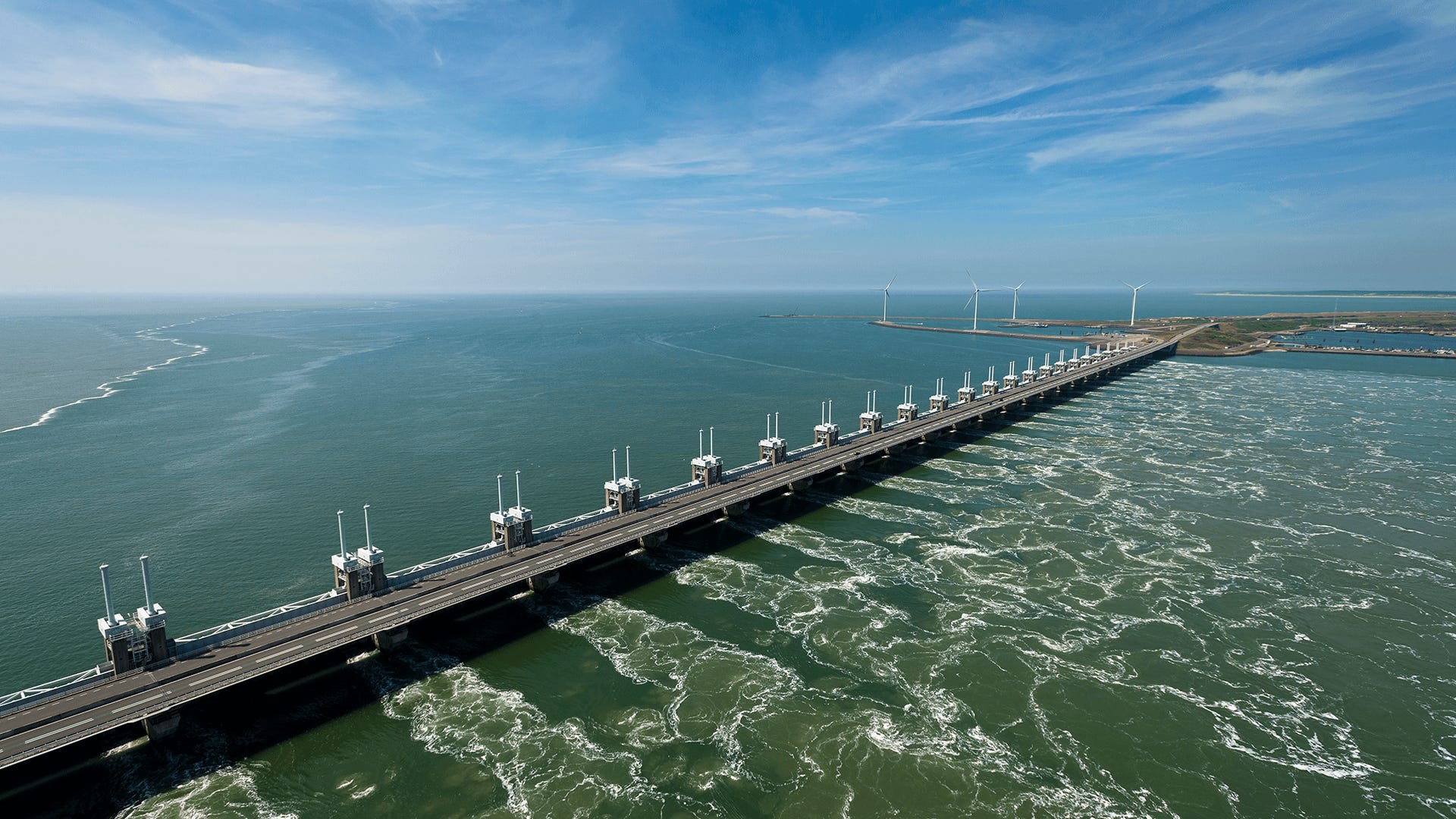
These held up relatively well until a major flood occurred in 1953, leading to hundreds of breaches in the dikes allowing seawater to flood the land, killing 1,800 people and causing massive property damage. Within 20 days, the government mobilized and formulated the plan for the Delta Works, a massive, sophisticated network of dams, sluices, and storm-surge barriers.
Societal resilience and robustness don’t simply occur overnight; they require characteristics to be fostered and nurtured to create a threshold below which society can operate seamlessly. Four factors, among many others, are paramount to ensuring resilience and robustness: preparedness, prevention, preservation, and insurance.
For instance, in areas of the world where floods are common (such as the Netherlands), flood walls are built to mitigate the damaging effects of flooding. In a very literal sense, these walls raise the water threshold that the area can withstand before it is overrun.
This isn’t the only example we could offer. Philip Tetlock writes, “If you have to plan for a future beyond the forecasting horizon, plan for surprise. That means… planning for adaptability and resilience.“ When families develop a food storage in case of an emergency, they increase their resilience to such a scenario. However, if the emergency is especially severe, they will be overwhelmed after they’ve met their threshold and potentially adversely affected.
The goal of any resilient-focused system should be to prepare for a wide array of eventualities, preserve good parts, and prevent bad ones. In the case none of these can be fully accomplished (which is almost 100% of cases), insurance should be implemented to ensure resources or other factors are available upon breach of the threshold, so the system can return to reasonable limits.
In many scenarios, resilience serves as a vital safeguard, providing the flexibility needed to absorb a shock and return back to “normal.” However, relying solely on resilience assumes that the pre-existing state is worth returning to (worth preserving) and that the external environment will remain relatively static.
In a world defined by compounding complexity and nonlinearity, merely surviving a crisis can be a trap. If a system aims only at restoration, it remains fundamentally unchanged by the stressor, leaving it equally vulnerable to the next occurrence of the same volatility. Over time, the system wears down, forcing it to work harder and harder just to stay in place, eventually collapsing under the cumulative wear of repeated shocks.
Resilience isn’t perfect. An unfortunate characteristic of resilience is that it often resides in undesirable systems—preserving the bad and preventing the good. Additionally, systems experiencing frequent shocks can become increasingly resilient to them, unknowingly increasing their fragility to rare shocks. Unfortunately, one cannot simply be robust against everything.
Establishing and maintaining resilience is costly and often moves the system away from “ideal” efficiency into a state of stability. In the short term, the Nash Equilibrium option is to sacrifice resilience for increased output/outcomes; however, in the long term, this strategy isn’t sustainable.
True long-term survival isn’t often possible through resilience alone—systems require antifragility, a state in which the system does not just resist or recover from a disorder but actually improves because of it. This, in my opinion, is the ideal solution—one that every system should be striving for, outlined in Tenet #9:
Antifragile systems grow stronger through stress, turning shocks into opportunities through adaptability, optionality, learning, and real-world feedback—via trial-and-error with real consequences, subtraction, and decentralized structures.
That’s a wrap on this deep dive.
Found this analysis valuable? The best way to support Brainwaves is to share it with someone who’d benefit from these insights.
Drew Jackson
Founder & Writer
Refer a Friend
Building this community has been one of the most rewarding parts of writing Brainwaves. If you know someone who’d enjoy these weekly deep dives, I’d love it if you could share your unique referral link with them. You’ll earn tangible rewards for growing our community, and they’ll get content worth their time. Win-win.
Keep Exploring
Next Deep Dive: The Generation That Can Only Fail Upwards - July 8th, 2026
This Saturday: Weekly roundup of breaking developments across energy, space, venture capital, economics, intellectual property, and philosophy
Previous Editions: View the archive here
Stay Connected
New to Brainwaves? Join hundreds of readers getting bi-weekly deep dives into the forces reshaping our world.
Sponsor This Newsletter: Reach an engaged audience of forward-thinking readers. Email us for details.
Disclaimer: Views expressed are personal opinions, not financial advice. This content is educational only. Investment decisions carry risks - always consult professionals and do your own research. All sponsorships are clearly disclosed.
© 2026 Brainwaves. All rights reserved.