


Today’s newsletter includes an interview Q&A brought to you by… Big Island Coffee Roasters
Credit Daily Coffee News by Roast Magazine
Big Island Coffee Roasters is a Hawaii-based producer of specialty coffee roasts based in the Puna region. Their coffee beans are known throughout Hawaii and have won many state, national, and international awards for quality and taste. By leveraging the unique aspects of the Puna region, Big Island Coffee Roasters has created a revered brand with a cult following.
The interview Q&A provides a founder’s perspective on critical business, strategy, and career decisions, drawing on decades of experience in the specialty coffee industry. Key points discussed today include:
Identifying and utilizing undervalued assets
Key sources of differentiation present and their impacts on business success
In-depth analysis of growth strategies and their effects on long-term value creation
👋 Hello friends,
Thank you for joining this week’s edition of Brainwaves. I’m Drew Jackson, and today I’m bringing you insights from a lovely conversation I had with Kelleigh Stewart, founder of Big Island Coffee Roasters.
Before we begin: Brainwaves arrives in your inbox every other Wednesday, exploring venture capital, economics, space, energy, intellectual property, philosophy, and beyond. I write as a curious explorer rather than an expert, and I value your insights and perspectives on each subject.
Time to Read: 18 minutes.
Let’s dive in!
Q: Background on Kelleigh and Her Company
Kelleigh first met her husband during her time at Pacific University in 2000, where he was majoring in Philosophy and she was majoring in Biology. Later, in 2002, after Kelleigh transferred to Portland State University, they began dating. During this time, she worked as a manager at a cafe in Portland to help pay for college and have something to do with her time.
At the cafe, they sourced directly from local farms to get fresher foods and allow the farmers to earn better profits without the costs of distributors or middlemen. At that time, they didn’t really think about quality and farmers when it came to the coffee they served; it was just coffee. This was until a little shop opened up down the street and created a buzz in the community. Something was different about the coffee. Out of curiosity, Kelleigh started going there and realized the rumors were true: their coffee was exceptional.
Shortly after, Kelleigh’s cafe switched its coffee supply program to the same supplier, which was, ironically, the first Stumptown location on Division Street in Portland (before it was big). The founder, Duane Sorenson, met with Kelleigh and explained that he was very particular about who they partnered with, as they were representing his brand and he needed the coffee to be just as good as the in-house coffee. To become a client, the baristas must undergo mandatory barista training. He explained that if they sold coffee that was over three weeks past its roast date or served espresso from a dirty espresso machine, they would pull your account access.
He explained the model: he wanted to offer better-quality coffee, meaning he needed to pay farmers more to produce higher-quality coffee. He can’t pay farmers more if consumers don’t taste a difference. If the cafe served the coffee improperly, it could tarnish the quality, consumer perception, and overall value. Unlike wine, where you can open a bottle and enjoy the flavors that the vintner intended, coffee needs to be controlled at every step. Poorly brewed coffee misrepresents the intention of the farmers and the roasters. Each person in the chain mattered.
Kelleigh recounts that this was “one of those epiphany-type moments where I first saw coffee as a specialty food product, much like the local foods we sourced. I hadn’t understood the farm-to-cup connection in the past.” This experience sparked her love for specialty coffee (and her subsequent career trajectory).
A couple of years later, Kelleigh & Brandon traveled to Oahu to visit her brother, who was attending the University of Hawaii. She was familiar with Oahu, because it was where her mother was born, but it was Brandon’s first visit to Hawaii. They came back from the trip and reminisced about how good it would be to live in Hawaii.
Soon thereafter, one night on Portland’s Craigslist, an advertisement for a Hawaiian farm popped up for sale in Puna, on the east side of Hawaii Island. It was a complex offer that included a coffee farm, a tropical floral wholesaler, a house, and a warehouse for the businesses. As Kelleigh recounts:
We felt like it was a scam because at that point, a little fixer-upper bungalow in some shady neighborhood in Portland was the same price as this owner-financed farm and business in Hawaii. But we called on it, and the farmer and his realtor were like, ‘No, this is legit, we’re just looking for the right buyer because this is partly owner-financed.’
For some background, her husband, Brandon, had been farming at a CSA in Portland at the time, and was familiar with growing fruits and vegetables. So, this opportunity was right up their alley, combining farming, coffee production, and the sciences. They flew over to meet with the owner, Bob, and ended up purchasing the coffee farm in 2010.
The farm was definitely a fixer-upper. Bob had left them all of his things, including phone books from the 80s, his clothes, his high school yearbooks, and even his dogs. It took them 2 years to “move” Bob out. The farm had 2 acres of coffee and a ½ acre of tropical fruit. Because the coffee farm was unprofitable, Bob hadn’t taken care of the trees in a couple of years.
When they moved in, Bob had given them a bag of his roasted coffee, and Kelleigh unapologetically stated it was the worst coffee they’d ever tasted - it was burnt, stale, and ashy. This wasn’t an isolated occurrence - among quality coffee lovers, Hawaiian coffee had a reputation for being bad. Most Hawaiian coffees were sold as 10% Hawaiian blends to tourists as cheap souvenirs. They were burnt, oily, and covered in fake syrup containing propylene glycol. The specialty coffee movement was utterly absent in Hawaii.
Additionally, it was assumed by both consumers and locals that the only “good” coffee grown on Hawaii Island was grown in Kona, and their new farm was in the Puna region. However, all hope wasn’t lost. In a discussion with Sprudge, team members explained more about Kelleigh’s story:
As we integrated with the community of farmers and sampled coffees from around Hawai’i, we were incredibly delighted by the unique varieties and the promising quality that went unnoticed.
Over the first three years, they put themselves through what Kelleigh refers to as “coffee college,” learning about the farm, harvesting, planting, pruning, and more. They learned that when coffee comes off the trees, it comes in this cherry form; you need to pulp the cherries, ferment them, and then dry them. There’s an extensive process that comes before you even roast it for sale.
Slowly, their efforts began to improve the quality of the plantation and the resulting coffee products. They began to realize their coffee was actually really good. Brandon handled most of the pruning and harvesting, and Kelleigh handled the processing and roasting, creating an early-stage, fully integrated coffee production business that became known as Big Island Coffee Roasters.
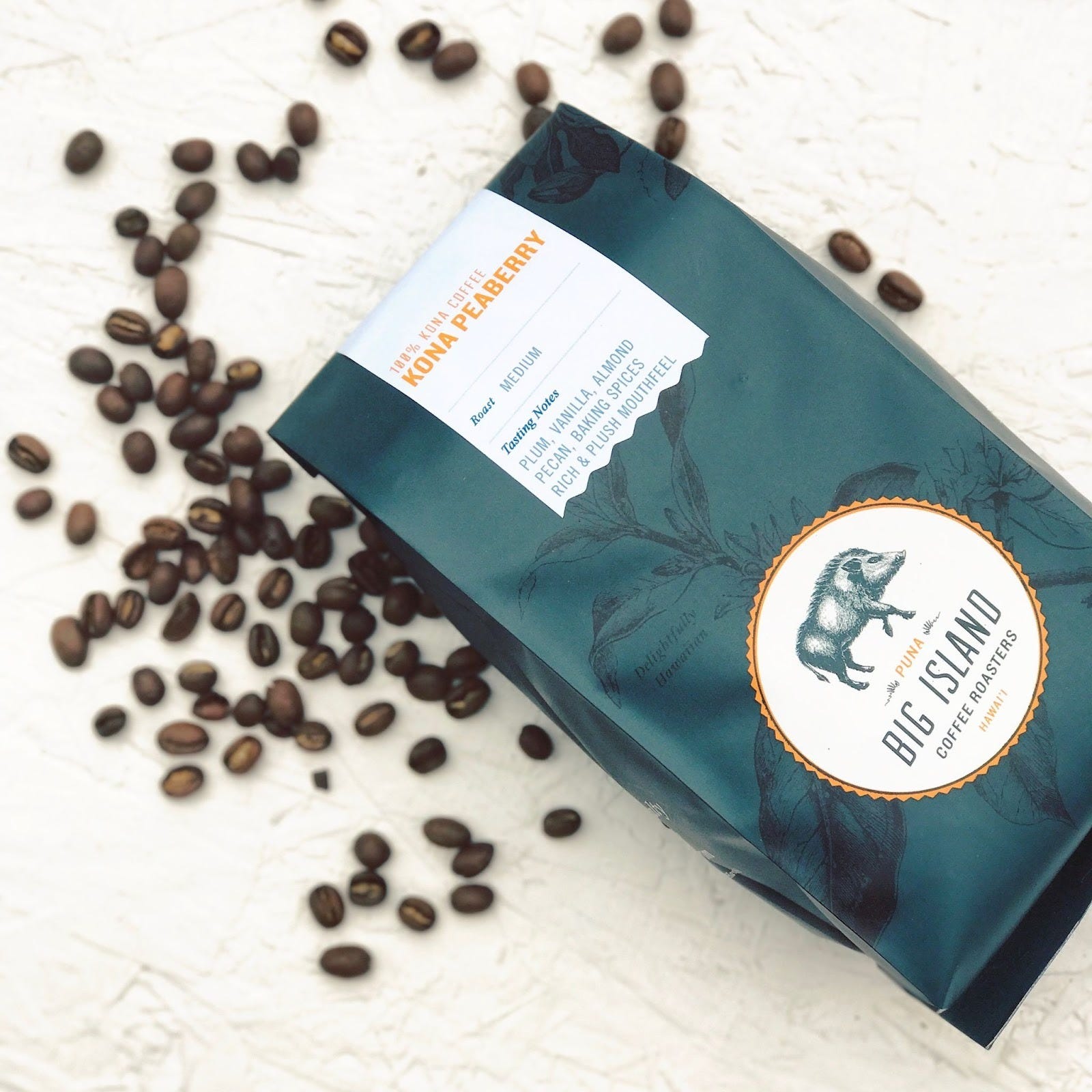
Credit Big Island Coffee Roasters
Early on, they primarily sold their products to friends and family and at local farmers’ markets. In 2013, they sent their coffee into the statewide Hawaii Association’s coffee competition. They didn’t expect much beyond a general cupping score, which provides an overall quality assessment. They submitted their coffees to get blind, objective feedback on whether their production practices and coffees were improving over time. Unbeknownst to them, they ended up winning first place: Grand Champion in the Hawaii Statewide Cupping Competition. People were shocked that good coffee could grow in Puna.
They were building something special.
As a result of this award, many farmers wanted to know what they were doing differently, so they consulted with farmers in surrounding regions to improve the quality of their products. They identified problems that made it difficult to grow and produce high-quality coffee outside Kona.
Farmers in these other regions were selling their coffee to Kona mills, and it was being counterfeited as Kona coffee.
It was difficult for these small-scale coffee farmers to make ends meet, often leading them to abandon or neglect their farms.
Neglected fields spread diseases that decreased future production and hampered new growth.
The milling and refining equipment was on the other side of the island (Kona), which meant that farmers on the east side couldn’t logistically produce higher-quality, refined coffees. This is because unrefined coffees have defects which create off-flavors. The defects need to be graded and sorted out. Without equipment on the Hilo-side of the island, farmers couldn’t produce quality coffee.
Given the volcanic terrain on Hawaii Island, all coffee there is hand-harvested. This adds 30% or more to the cost of producing coffee on Hawaii Island. Overall, this means that Hawaii Island farmers have a greater need to produce higher-quality coffees to offset production costs.
As a result of production challenges, Hawaiian coffee had been overroasted and laden with artificial syrups to mask the off-flavors that result from producing low-grade, unrefined coffee. As Kelleigh recounts it, “Imagine you have a really nice piece of bread, and then you have a really old, stale piece of bread. If you burn them both, they’ll both just taste like burnt bread. It’s harder to tell which one was stale to begin with.” Historically, roasters and producers have dealt with low- and off-grade coffee by over-roasting, as it’s harder for consumers to detect defects and off-grade flavors.
In contrast, in the specialty coffee industry, companies prefer to roast on the lighter side so that the coffee’s quality can shine through, along with the natural nuances, flavors, and aromas inherited from the terroir.
In part, the problem was due to a lack of infrastructure. Without access to nearby milling and quality-control equipment, much of the coffee produced in these districts was over-roasted, yielding coffees that tasted ashy, rubbery, even metallic. This seemed like a solvable problem.
And so Kelleigh applied for—and won—a grant to establish a coffee “refining” facility, and purchase equipment for grading and sorting out coffee defects, to elevate quality locally and strengthen Hawaiʻi’s reputation among specialty coffee buyers. With that infrastructure in place, the team began working directly with neighboring farms: consulting on harvest, processing, and roasting, then grading and sorting lots so their best coffees could present clean, refined, nuanced profiles. The goal at that time was to enable producers to market their coffees as true specialty offerings rather than generic souvenir coffees.
As a result of their work, that year (2013), the couple earned a Hawaii State Senate Certificate for improving quality, value, and recognition of regional coffees. Later that year, they were nominated and elected to the board of directors of the Hawaii Coffee Association, where the company has served in various roles and capacities ever since.
As word spread, the problem flipped: their Puna coffees began selling out. At the same time, more farmers were reaching out. And although neighboring farms were now producing cleaner, higher-quality coffees, Kelleigh and Brandon realized that neighboring farms were still stuck without the time or channels to sell them fresh. Despite quality improvements, these coffees were still being sold at a loss and funneled into the counterfeit market.
So they did what felt both practical and principled: they started buying excess lots from nearby farmers, refining them in small batches, and sending them out roasted-to-order—each coffee tied to a place, a variety, and a real producer. Customers already trusted their palate, and many were interested in tasting the “hidden gems” of Hawaiʻi coffee. That sourcing model—a combination of quality control, bespoke refinement, coffee exploration, and storytelling—became the beginning of something much bigger.
When they first bought the farm, they didn’t set out to build a company — certainly not to become the most recognized coffee company in Hawaii. Their focus was first to produce coffee they could be proud of, then to solve supply chain problems that would alleviate farm abandonment and counterfeiting, and ultimately to foster sustainable, environmentally friendly agriculture in Hawaii.
With a problem-solving mindset and insights derived from trial and error, Big Island Coffee Roasters has developed into a coffee company with global presence, employing 26 people, and serving customers through online, retail, and hospitality channels.
It’s a far cry from where the couple started out. Neither had experience in marketing, business, sales, or finance. But they leveraged their persistence, degrees, and expertise (science, farming, and the humanities) to analyze situations and build solutions over time.
For example, they started doing market feedback surveys early, leveraging Kelleigh’s data analytics background to understand what products, roasts, and packaging resonated with customers.
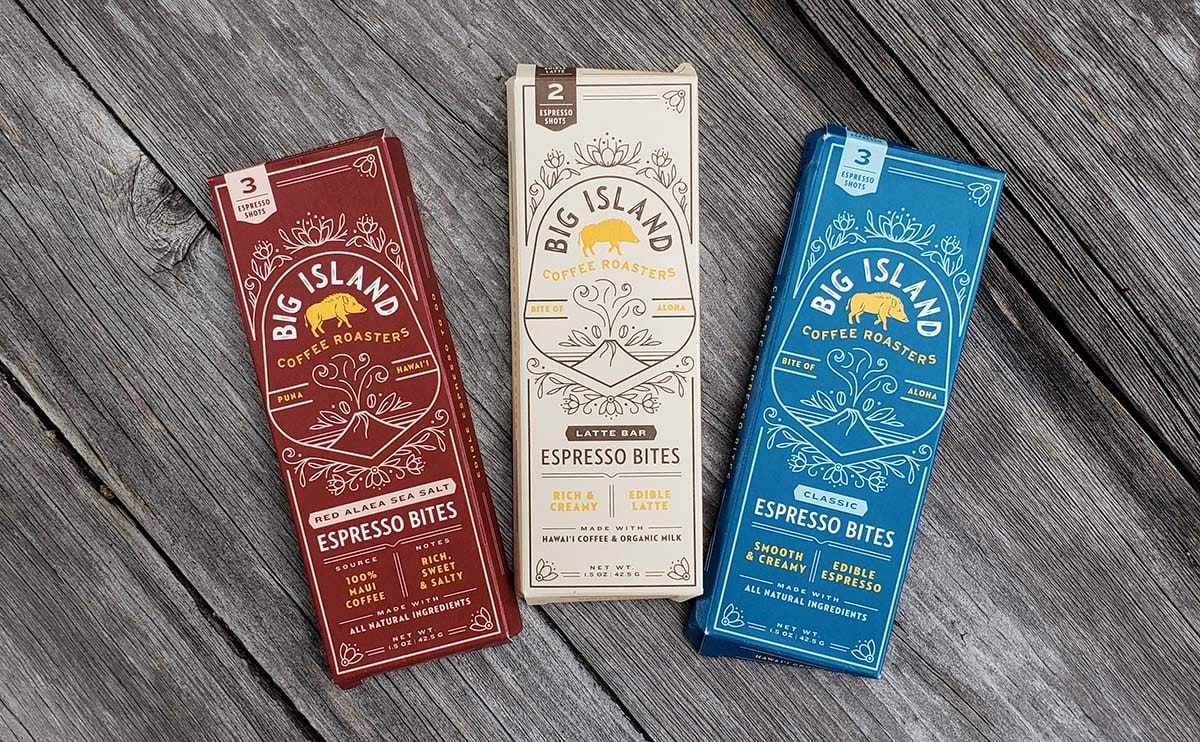
Credit Honolulu Magazine
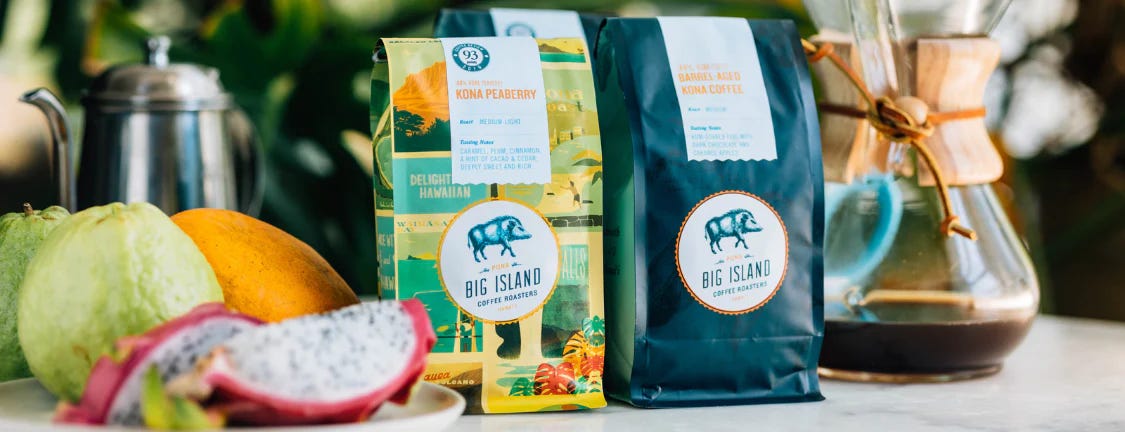
Another significant development was their logo design in 2013, which is now iconic across Hawaii. Many people tell them it feels like the real Hawaii: a picture of people working hard, passionate about their work, not afraid to get down and dirty. It’s not these touristy white-sand beaches and hibiscus flowers; it’s representative of the actual people and the region.
In 2016, the vice president at the Hualalai Four Seasons came in, loved their coffee, and switched their entire program over to Big Island. That was their first wholesale account with volume and continues to be their oldest wholesale account to this day. Now, they’re in many of the hotels on the island and several on Oahu and on other islands.
In some ways, in Kelleigh’s eyes, the business didn’t truly start until 2018, when they decided to make a concerted effort to grow this venture as a business rather than a homestead operation. From there, they kept growing, rapidly outpacing their projections. Consumers understood what the company stood for: the quality of the product, the communication, the team, and the brand. It resonated with customers and hit home with people willing to pay.
Over time, they outgrew the original farm and moved to a new facility that now includes a cafe and workspace for their 26 employees, solidifying their presence in the region. Sprudge provides further details on the space:
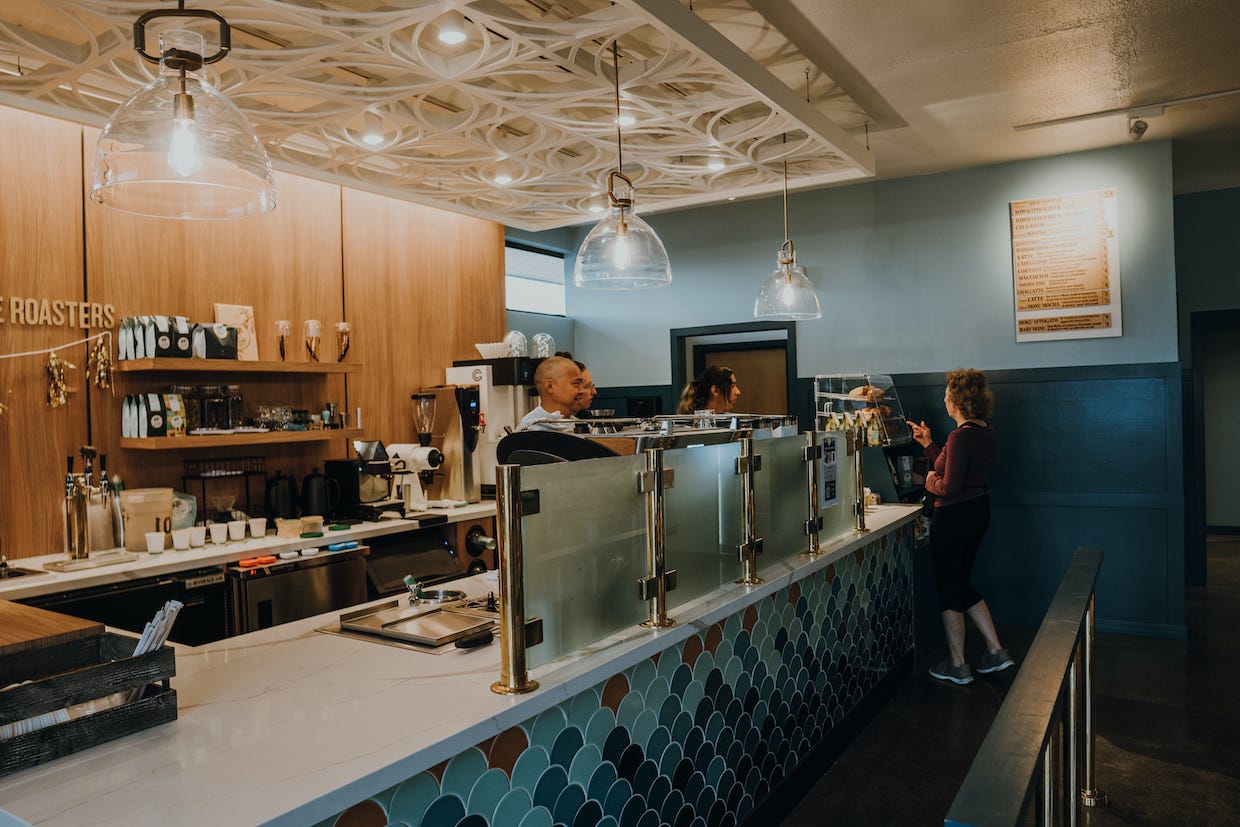
Our first-ever public facility is a 4,000-square-foot cafe and roastery located on the scenic coastline in the historic town of Hilo, HI, across the street from a hotspot simply known as “ponds”—a salt water pool infamous with locals. The cafe is also conveniently situated close to nearby hotels and cruise ship ports in the Keaukaha community.
Born of a desire to showcase specialty Hawaiian coffees served by expert baristas, visitors can also enjoy Hawaiian coffees served on nitro, iced Māmaki tea, and merchandise designed by Hawaiian artists, while viewing coffee roasting on a custom-designed, renewable energy-powered roaster.
Outside of serving quality coffees and other specialty drinks, our goal with the space is to create a place for community gatherings, as well as to serve as a centralized point for education around Hawaiian coffee and cultivation. The opening of our cafe marks a major milestone for our team and we are eager to engage directly with customers for the first time. One feature we’re really excited about sharing is our viewing window, which connects our cafe to the roastery, inviting visitors to watch the roasting process while sipping on their favorite drink.
Historically, for people with disposable income looking to purchase a top-tier Hawaiian coffee, there had never been a product on the market that filled this niche; now, these consumers can order specialty Hawaiian coffee and have it shipped worldwide.
In 2025, Big Island Coffee Roasters is prominent throughout Hawaii and nationwide, having won numerous awards and accolades for its high-quality products. For instance, in 2022, Big Island Coffee Roasters was recognized by Roast Magazine as one of the best coffee roasters in the world at their prestigious Roaster of the Year awards. To quote their article:
Roaster of the Year recognizes three micro-roasters and three large roasters annually who source superior quality coffees, show dedication to sustainability, promote employee and community education, demonstrate strong involvement in the coffee industry, and are committed to diversity and equity. Big Island Coffee Roasters is the first finalist to use exclusively Hawaii-grown coffees.
Q: How did you go from homegrown farmers’ markets to wholesale to now being majorly e-commerce?
As Kelleigh relates it, with wholesale and resale, you’re kind of stuck. It’s hard to change your price and hard to change your SKUs. Everything becomes pretty commoditized for the consumer: coffee is coffee. In many ways, Kelleigh saw her product going downstream when, instead, she wanted to be coming upstream.
For context, pre-pandemic, they were doing around 75% of their sales volume through wholesale to resorts like the Four Seasons or through grocery stores like Dean & DeLuca across Hawaii. Then the pandemic hit, and tourism in Hawaii died, dramatically impacting their revenue. At this point, they were ready to move into e-commerce.
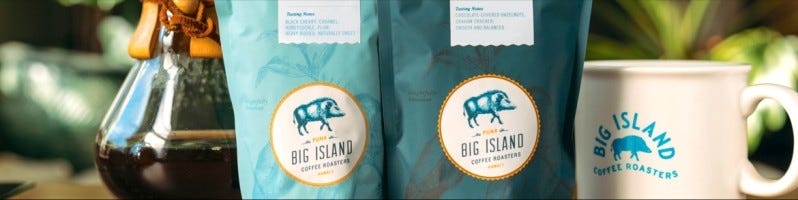
The addition of e-commerce wasn’t a fluke; it was very intentional. Firstly, given that they are on a remote island in a remote area of the island, it made sense to offer their products flexibly to consumers on the broader island and globally. More importantly, they wanted to own their story and messaging (how their coffee was presented to consumers), which is critical given that their coffee is 3x the price of competitors’. E-commerce enabled them to continue creating variety, allowing them to work with new farms, adopt more seasonal rotations, and offer a wider selection of beans and roasts.
Credit Linkedin
As Kelleigh relates in a KickoffLabs interview in September of 2020, “We dipped a little bit one month when COVID hit, but from the beginning of the year until now we’ve actually grown 460%.” With the switch to e-commerce, there are many more repeat purchasers as you’re not dealing with brokers and merchandisers who only care about profit margins and sales volume.
The e-commerce switch has been successful thus far and remains a primary focus going forward. Besides this, they still have some wholesale accounts, mainly on the hospitality side, as well as their in-house cafe at their headquarters, which is very popular.
Q: Is most of your growth through word of mouth, or are there also inorganic channels?
Many of their customers found them in stores in Hawaii, took them back to wherever they came from (Hawaii, the continental US, etc.), ended up loving the product, and continued to buy more online. Additionally, with the development of their new cafe, people have begun coming in to learn about their coffee.
In 2023, they conducted a series of customer interviews to understand why some of their top customers continued to purchase their product, and they identified three major trends.
Firstly, there is a group of wealthy boomers and philanthropic sophisticates who have connections to Hawaii, who find their coffee (probably through resorts or business ventures), and then share it with their entire network.
Secondly, there is a segment of their customers who are wealthy but only splurge on the best of the best, including good coffee, Broadway, and expensive wines. Surprisingly, in other segments of their lives, they are satisfied with the status quo. Coffee is often one of the places where they splurge on top-tier products.
Lastly, many of their customers are people who have lived in Hawaii at some point and loved their experience. Having a cup of Big Island Coffee evokes nostalgia, leading them to share it with their networks to continue connecting with their homeland.
Generally, Big Island Coffee Roasters has grown through word-of-mouth referrals, gifters, people who find them in retail stores, and now through their online presence.
Credit Big Island Coffee Roasters
Q: How do you think about future growth and next steps for the business?
They’ve grown by 25%+ over the last year and received awards in 2023 and 2024 as one of the fastest-growing companies in Hawaii. As Kelleigh puts it:
When you grow at that pace, you end up putting a lot of things in your metaphorical closet that you can’t deal with quite yet. And so a lot of those things need to be worked out.
Growth is so often thought about as adding new bells and whistles in the pursuit of achieving “growth.” You spend money on marketing agencies or on things you think the customer wants, but sometimes it’s really just about removing friction and cleaning up the things left behind from prior cycles.
That’s where most of her work has been the last year and will continue to be going forward. She wants to keep growing organically until they’re fully streamlined. Generally, she cited, if you’re growing and you’re not profitable in this business, something needs to get cleaned up.
So that’s what she’s been doing: cleaning things up, removing redundancies, updating processes, and generally making the company more efficient.
Q: What piece of advice would you offer to anyone looking to start their own business one day?
When you’re starting a business, you need to look for things that are missing in the world around you. Kelleigh loves looking for and solving problems in the world around her and has grown a very successful business through this practice. She saw the problem with poor Hawaiian coffee and found ways to innovate, bringing the best coffee in the state from her small farm to the broader region.
When you start looking for those gaps, those pain points, and identify solutions, that’s a great place to start your business. We don’t need more things in this world; we don’t need to add more meaningless junk.
What are we actually missing? Can you solve a real problem? Can you fill a gap? Can you alleviate a genuine pain point?
If you do this, growth becomes much easier. You don’t even have to do much marketing in the first place, since customers already know the pain point, are looking for solutions, and understand the value you provide.
Credit Daily Coffee News by Roast Magazine
My Takeaways
First of all, it was fantastic to chat with Kelleigh and hear more about her story. It was interesting to learn about her career trajectory and her strategies for building and growing her enterprise.
I want to thank Kelleigh again for the fantastic opportunity to chat with her!
A Quick Aside on My Rationale With This Approach:
My goal in reaching out to Kelleigh and people like her is to highlight that all businesses face strategic challenges at each step of the growth journey. In school, you traditionally only learn about the “best of the best”, those Fortune 500 businesses that have hundreds of case studies written about them.
Yet there’s value in the unique insights from small business owners who are on the ground, constantly navigating critical decisions.
How much do I price my product? Who should I hire? How should I expand my business? What do I do if my sales are down? — All are questions that small business owners face constantly.
Now onto the critical lessons I want to highlight from my conversation with Kelleigh.
Lesson #1: Identify and repurpose underutilized assets
Kelleigh is a master of identifying and repurposing underutilized assets in many circumstances. For instance, in Portland, Kelleigh found Duane Sorenson’s coffee and introduced specialty coffee into her cafe for the first time, leading to great success.
Next, Kelleigh and Brandon identified a Hawaiian farm that was incredibly undervalued and underutilized. She and her husband bought it and slowly fixed it up, turning it into a high-quality asset. Now, their business has grown to outpace the farm’s development.
Finally, through the success of their farm, they identified all the regional and small coffee roasters. They mentored them on their practices to elevate the region’s coffee, enabling them to build a large sourcing operation of high-quality coffee to meet consumer demand.
The goal of any investment is to buy low and sell high. Investors often do this with stocks, bonds, and other financial instruments, but, as Kelleigh demonstrates, this can be done across the entire business. For instance, it could be adding a new process or piece of machinery that transforms your product or service offering, or transforming your supplier relationships, etc.
Kelleigh’s story exemplifies how the right person can see the needle in a haystack and, with a bit of luck, leverage their skills and abilities to create large-scale value.
Lesson #2: There’s tremendous value in a high-quality product offering
As Kelleigh realized early on, there’s a sliding scale of quality and quantity in every business. For some companies, take your Ferraris of the world, they prioritize quality over quantity, creating a few incredibly high-quality products. In the middle, continuing our car example, would be a firm like BMW or Mercedes, which produces a good, medium-quality product, but isn’t the top of the top. They create much larger quantities of their goods. And finally, at the opposite end of the scale, we have firms like Toyota and Ford that produce a high volume of goods at lower quality.
The coffee world is the same way. There are people all over this spectrum, some who prioritize quality and others who prioritize quantity. The price of the goods also scales accordingly.
Kelleigh doesn’t play in the high-volume, low-quality segment—that’s where Hawaiian coffee traditionally played. She wanted to be different from the highly commoditized product offering that historically came from Hawaii. As such, she chose to focus on higher-quality, lower-volume segments and has since achieved great success.
If you look at her website, you’ll see coffee advertised at many different prices, each catering to a distinct segment of the market. Overall, she describes, there’s a high-quality, well-known aspect to her brand, where every customer knows the coffee they will receive will be comparable to some of the best they’ve ever had.
Lesson #3: Deeply understand your customers so you can perfectly serve them
Kelleigh discusses at length the ways understanding her customer base has helped her business, and it’s one of the top things she advises new entrepreneurs to prioritize before jumping into the depths of starting a new business.
Why is this so important?
There are so many businesspeople out there who start with the solution—they want to create the best and newest gadgets or products on the market. Usually, they’re actually quite good at this. However, they never stop to consider whether or not consumers need the product.
It doesn’t matter how revolutionary your product is if there isn’t a market for it.
Kelleigh made it her mission to understand her customer base, and because she does, she can more accurately curate a product catalogue that resonates with each one.
Granted, this isn’t the only way to create a business model. If you read business books, they’ll describe three methods of product/service development:
You start with the solution, then find the customers and the problem to solve later
You start with the problem, and find the solution and customers later
You start with the customers, and find the problem and solution later
In every case, there are pros and cons; however, in Kelleigh’s eyes, the problem-first approach is much better than the solution-first approach.
_______
I want to say another thanks to Kelleigh; it was great learning all of these things from her experience, and even better that I can share them with you.
I hope you read something valuable in the above discussion and takeaways that will influence how you approach business or even your life in general.
That’s a wrap on this deep dive.
Found this analysis valuable? The best way to support Brainwaves is to share it with someone who’d benefit from these insights.
Drew Jackson
Founder & Writer
Share This Analysis
Keep Exploring
Next Deep Dive: Special Edition Interview - January 21st, 2025
This Saturday: Weekly roundup of breaking developments across energy, space, venture capital, economics, intellectual property, and philosophy
Previous Editions: View the archive here
Stay Connected
New to Brainwaves? Join hundreds of readers getting bi-weekly deep dives into the forces reshaping our world.
Sponsor This Newsletter: Reach an engaged audience of forward-thinking readers. Email us for details.
Disclaimer: Views expressed are personal opinions, not financial advice. This content is educational only. Investment decisions carry risks - always consult professionals and do your own research. All sponsorships are clearly disclosed.
© 2026 Brainwaves. All rights reserved.