

👋 Hello friends,
Happy Thursday! This is a big one for me (well, technically yesterday was): Brainwave’s second birthday.
Instead of the traditional bi-weekly deep dive into the factors influencing tomorrow, today I will be taking a day off to write exclusively about myself, this platform, and the journey we’ve been on.
It’s been a wild year, so get cozy in your chair of choice and come along for the recap (I promise it’ll be better than an annual 10-K filing).
Firstly, I want to say a huge thank you. Nothing in this story would have happened without you reading every week, sharing, and supporting the platform. Every time I publish an article, I’m always flabbergasted by the outpouring of views, positive thoughts, and good vibes.
Before we begin: Brainwaves arrives in your inbox every other Wednesday, exploring venture capital, economics, space, energy, intellectual property, philosophy, and beyond. I write as a curious explorer rather than an expert, and I value your insights and perspectives on each subject.
Time to Read: 25 minutes.
Let’s dive in!
Dream Big Dreams
Everyone should dream big dreams.

Credit Brianne Valentino
Growing up in Utah, I remember watching the rising star Jimmer Fredette on TV and in person as he propelled his college team through tournaments with his iconic deep 3-point shooting. Since the time he was 10, Jimmer had his sights set on playing in the NBA, practicing daily in a wide variety of competitive environments, from prisons to dark hallways to early morning gyms to community centers. He inspired a new generation of kids to play basketball just like him on playgrounds across the nation. Jimmer’s dream ultimately became true when he was selected as the 10th overall pick in the 2011 NBA draft by the Milwaukee Bucks (then traded to the Sacramento Kings).
This is just one of the many dreams I was exposed to early on.
In school, we learned about the American Dream, a national ethos coined by historian James Truslow Adams in 1931. In his book, The Epic of America, he defined it as such:
The American Dream is that dream of a land in which life should be better and richer and fuller for everyone, with opportunity for each according to ability or achievement. It is a difficult dream for the European upper classes to interpret adequately, and too many of us ourselves have grown weary and mistrustful of it. It is not a dream of motor cars and high wages merely, but a dream of social order in which each man and each woman shall be able to attain to the fullest stature of which they are innately capable, and be recognized by others for what they are, regardless of the fortuitous circumstances of birth or position.
This phrase has become synonymous with the opportunity to start from nothing and grow that into something generational, an inspiring and revolutionary vision that drives economic growth, cultural change, and vast immigration.
Similarly, I remember learning how the world, since almost the beginning of time, had been dreaming of one day reaching the moon. Fast forward to the 20th century, powered by the technological growth of the Industrial Revolution in Europe and the Americas, and this was becoming much more of a possibility. I remember watching Apollo 13 during a summer camp and truly feeling like I understood that raw passion of discovery and adventure.
As a child, one of my main dreams was to go to college. One year, our elementary school’s theme was “I’m going to college, no excuses.” I remember my parents advocating this view, as they believed it would help set me up for future success. Somehow, and I’m pretty sure it was just because I had a great 3rd-grade teacher who went there, I set my sights on Stanford as the goal.
That idea was always in the back of my mind throughout school: I needed to do well so I could go to Stanford one day. My parents signed me up for ACT prep courses in 8th grade to help fulfill this dream. I spent hundreds of hours on scholarship essays, extracurriculars, and other activities that helped me develop as a well-rounded human, while also looking well for college applications. I remember visiting my grandparents in the Bay Area and walking the campus, and buying a plaque from the bookstore, envisioning this as my future home.
In retrospect, I don’t think I would have put in close to that amount of effort if I hadn’t been pursuing that ambitious, big goal.
My parents played soccer growing up, so naturally, when I was 3, they signed me up for a local recreation league. I continued to play in these local leagues until they thought I was “ready” to graduate to club soccer. Our team was called the Raptors, we wore a hideous shade of bright green, and I remember a Kodak moment when I kicked my first banana corner (and missed every subsequent attempt to recreate it) and celebrated like crazy—I was hooked.
In retrospect, I think my parents will agree they dreamed a bit too big too early for me, signing me up for a U11 team that I was not good enough to play on (and was subsequently dropped at the end of the season). Over the next couple of seasons, I struggled to succeed as my heart really wasn’t in it. Up until this point, I was playing because my parents wanted me to play, not because I wanted to.
After 4 different team moves, I was playing for a local team in the 5th or 6th division (the “B team”)—and to this day I don’t remember what sparked it—but one day I adopted the dream that I could play for our club’s “A team” (which was in the 3rd division at the time). My parents thought it was ambitious, but they supported me, encouraging me to call the coach and let him know I was interested in trying out.
I ended up making that team and helped propel us to the 2nd division (and at one point, we were the 8th best team in the state). This goal also began my mindset shift to playing for me and not for anyone else, which was refreshing and made the whole experience much more meaningful.
My dreaming mindset continued throughout my college experience. Once I had identified the sector I wanted to have my career in, I set my sights high on the “best of the best” subcategory within it. It wasn’t easy, involving managing a full course load while working multiple jobs at a time and juggling my other life responsibilities.
I remember coming back from my time in South Africa and having to recruit for internships right as school started that semester, with no prior preparation. During that time, I felt out of my depth and underqualified for each opportunity I was pursuing. Luckily, some people saw large potential in me and decided to give me a shot. I landed a fabulous internship and worked hard to receive a return offer.
Before starting my job post-college, I had the chance to read two poignant letters from parents to their children: Randy Pausch’s The Last Lecture and Ta-Nehisi Coates’s Between the World and Me.
These fathers express their perspectives on the world and provide wisdom for their children. In many instances, the core message is similar to the following: dream big dreams, don’t let anything stop you, and here is some guidance on how to position yourself in the world to accomplish them.
Similarly, my parents always had big dreams for me as a child. They wanted me to succeed and thrive in sports, gain a broad perspective of the world, understand and own my spiritual journey, pay attention and do well in school so I could succeed in life, and broadly, they wanted me to be happy (and still do).
I think, as humans and especially driven by Western mindsets, we’re ingrained to dream. For better or worse, we’re never satisfied with the status quo and always have something we’re chasing after.
My advice is to dream big.
To use a practical example, Google has a division anecdotally known as the “Moonshot Factory” where their entire goal is to chase impossibly large dreams. Their criteria involve finding a huge problem where the solution could affect millions or billions of people, proposing a radical solution to solve it, and then developing the breakthroughs necessary to bring this to pass.
This isn’t just advice for a corporate setting. Dream big in your personal life. Add big aspirations to your bucket list, to your yearly goals, then see what happens. You probably won’t make it all of the way there, but you’ll be way better off than where you started. Many times, the value comes through the journey; many of the dreams we think are outlandish or impossible are actually achievable with dedication and intent.
Lesson: Dream big dreams, the sky truly is the limit.
Developing Pride in My Articles
You’ve probably heard of the 10,000 hours rule, popularized by Malcolm Gladwell. It states that with 10,000 hours of practice in a particular field, you will become exceptional at it. Unfortunately, this catchphrase doesn’t entirely track with modern science.
A recent online forum I was reading argued that when you’re trying to get good at something, focus on repetition rather than results. The thought is that consistency drives performance.
In other words, if you’re looking to make a new music album, success isn’t measured by how many failures you’ve had but how many times you’ve succeeded. As such, it may take you 1000 songs to get 12 you like for the album. In their words, “a thousand failures are made irrelevant by a single win.”
To add some color from modern research, this approach isn’t entirely misguided; however, there’s a critical element missing: feedback. You aren’t just doing the same thing 1000 times; you’re welcoming feedback each time to do it better the next time. Then, each attempt gets better and better over time.
This could also be known as “deliberate practice,” where you actively work on your weaknesses and shortcomings, finding ways to expand your skills over time.
To be clear, when you’re first starting out, getting any sort of repetition is beneficial, but once you’ve got the initial steps down, you won’t become good or great without feedback and fine-tuning throughout the rest of the process.
I’ve experienced this with my writings in this newsletter. When I look back at some of the initial writings, I can easily see this idea present; they’re very initial, introductory, and lack the depth that I’ve brought into my writing over time.
For the first 3 or so months, my goal was entirely consistency. I needed to keep the platform alive, keep myself involved, and build this as a habit into my workstreams.
Once the baseline was established, my focus shifted to getting better ideas to write about, more detailed outlines for those ideas, and a wider variety of perspectives on those ideas to be more educated and informed on each topic.
A main way this manifested was the creation of documents for each article idea where I could aggregate any quotes, interesting articles, thoughts, and more on that topic over time from readings, conversations, other article writings, and a variety of other sources.
Now, instead of starting from a 1-5 sentence idea, I sometimes have 10+ pages of resources to work with, adding depth to each article while counterintuitively making them easier to write than before.
I can’t say I’ve put in anywhere near 10,000 hours yet. I’d guess that my experience running a newsletter is around 1,000 hours total so far across 150+ articles, 300k+ words, and much more.
Although I’m not there yet, I can already see early signs of success. One of my New Year’s goals going into 2025 was to look back on the year and have 5 articles I was proud of (around 15% of the total articles in a year). I’m happy to say that over time, I’m able to look back and be proud of more and more articles I’m producing.
The new Futures Thinking series is a perfect example of this: high-quality content I look back on with pride. We’ll dive into this further down in this piece.
In my mind, this is one of the main drivers of long-term consistency: positive experiences. If you don’t have positive experiences with whatever you’re doing, it’s hard to put consistent hours in.
That’s just one development that’s happened in my life this year. Here’s a bit more:
I graduated from the University of Utah with a bachelor’s degree in Qualitative Analysis of Markets & Organizations
I hit a new record for my Spotify Wrapped of 80,572 minutes listened
I consistently hit the gym 2-3+ times a week all year
I moved to Seattle for work, now my longest time living somewhere outside of Utah
I traveled the world (London, Montana, Colorado, Bahamas, DC, California)
I dove deep into my spiritual niche and found many things that resonate with me
I hit the 100 and 200 subscriber marks for the newsletter
I got my car hit (still a spotless driving record, thank you very much)
I made a ton of new food (highlights include bbq pork ribs, tons of salmon, and elite brussel sprouts)
I turned 22 - only ~43 years to retirement
I was able to see Messi play in a cup final (and lose to Seattle in Seattle, which sweetened the pie)
I was featured in a digital interview publication (it’s semi-fake but still notable)
I’ve read 32 books (way more than my yearly goal of 12)
I was awarded the Student Employee of the Year, ironically, for my second job
Lesson: Enjoy each and every day, try new things, experience the world as it was meant to be lived
Brainwaves: 2 Years In
The first year running Brainwaves was a steep but fulfilling learning curve. Quick highlights include launching the platform, identifying the subjects I wanted to write about, developing my marketing, rebranding to Brainwaves, achieving new milestones (1,000 monthly views, 50 subscribers, etc.), and generally expanding the platform from an idea into a developed product.
If the first year was good, the second year was even better!
Today, I want to share the second year of the Brainwaves story as honestly as possible, as it often looks way easier from the outside. I’ll add in lessons I’ve learned on writing, growth, content creation, philosophy, and the world around us. We’ll cover:
Calculated, Consistent Content Creation
A Fresh February
Reassessing Marketing - The Next Chapter
A Profound Summer
Professionalizing and Personalizing
Broadening, Deepening, and Impacting
Calculated, Consistent Content Creation
A major part of the rebrand to Brainwaves a year ago was the creation of The Saturday Morning Newsletter. This week will mark issue #66 being published.
I’ve been impressed by my consistency and the response from my readers. You like short, more concise content. Views and open rates are very similar to the longer-form content, but click-through rates and other engagement rates are much higher.
Given that there hasn’t been a large advertising effort towards this content, these results are heartwarming.
I’ve loved writing the weekly wrap-up because it’s been a great way to stay up to date on current events, learn more about fun companies, and dissect the interesting thought of the week.
I’m super excited to continue the consistency this upcoming year. My secret bet is that people will join the platform based on a long-form article that resonates with them, but will stay because of The Saturday Morning Newsletter. We’ll have to see how that hypothesis plays out over time.
Since I added The Saturday Morning Newsletter and switched the regular Brainwaves content to be every other week, I’ve written significantly longer articles. Prior to this event, my longest article was Nuclear is Not a Viable Solution, at around 8,300 words (around 39 pages).
During the holiday break, I had the goal to finish my space commercialization series all in one article. After finishing it, I realized that it was way too long to be just one post, around 9,900 words. Luckily, I caught that early and smartly separated it into three separate articles (parts 4-6).
Once I started the Futures Thinking series, the length spiraled out of control. I completed hopefully the longest article I’ll ever write at 15,600 words (around 57 pages). It takes a full hour to read. Is that reasonable for my readers? Absolutely not.
To add some data, here is the word count of my articles before and after switching:
Minimum: 576 words > 1,902 words
1st Quartile of Length: 1,808 words > 2,592 words
Median: 2,227 words > 3,258 words
3rd Quartile of Length: 2,781 words > 4,577 words
Max: 8,318 words > 15,600 words
Normally, I would be worried by this trend. But three factors assuage my fears. First, I’m working full-time in investment banking now, so the amount of free time I have to write has significantly decreased. Second, I’ve switched to every other week, so each article can reasonably increase in length as they aren’t published as frequently. Third, The Saturday Morning Newsletter provides a quick and easy digest, with the minimum and maximum ranging from 950 to 2000 words, a better fit for many readers’ complicated schedules.
One of the main drivers of the length of Brainwaves articles is my preparedness. It’s a double-edged sword. For each new idea, I begin a document that houses each and every thought, quote, book, article, and more related to that concept. As such, whenever I begin writing, I usually have 3-25+ pages of reference materials to bolster my content.
This causes content to be much more built out, easier to write, and generally higher quality; however, it does naturally lead to more content to include, driving underlying length trends.
In my opinion, I think this trend isn’t something to be worried about. I like the output that’s being produced and the subjects I’m working with, so I think this might be here to stay. I’m always open to learning differently, but as of now, this seems to be the long-term vision for the bi-weekly content.
Lesson: Consistent output and results speak for themselves. Preparation drives consistency.
A Fresh February
Over the holiday break, I had time to begin laying the groundwork for two big content changes.
Firstly, I began reaching out to CEOs and founders of small- and medium-sized businesses to ask if I could interview them for the newsletter.
Traditional business case studies are written on Fortune 500 companies—big companies with unique problems that are very different from the average business. My goal through this new series is to highlight and showcase lessons learned from small business leaders for other small business leaders.
In all honesty, it’s been difficult to reach these CEOs. I’ve sent out 922 emails and received 11 responses (1.2% response rate). I’m not exactly surprised; an interview with a small newsletter isn’t high on the priority list of these business leaders, but I do believe there are ways to better optimize my approach for a higher engagement rate.
Luckily, I’ve been able to meet and publish interviews on three amazing individuals so far, detailed below:
Arnon Oren: Owner of Anaviv Catering, Ta’yeem, the Sailing Goat, and More
Allen Kaplun: Owner of GDS Platforms
Maria Abi Hanna: Owner of Food Label Maker
With 2 more already completed, coming soon…
I’ve learned a lot from these interviews and hope to continue growing my pipeline over the next year.
If you know a business leader who would be interested in an interview for Brainwaves, please share this opportunity with them. I’m happy to discuss specific details of the opportunity further.
In addition to interviews, I’ve also added another content segment, which I call “Futures Thinking.”
It’s the product of my economic background, philosophical interests, books I’ve read, and general interests in how I want to view the world going forward. I would highly recommend it.
I began by introducing the subject, laying out the 10 Tenets of Futures Thinking that I would subsequently dive deeper into in future articles. Over the last year, I’ve written 5 of these highly targeted, action-oriented articles, comprising some of the largest articles I’ve ever written.
Looking back on that introductory article, I thought I knew which topics I wanted to discuss and in what order, but in hindsight, I’ve made a couple of big changes now that I’m more educated in the space.
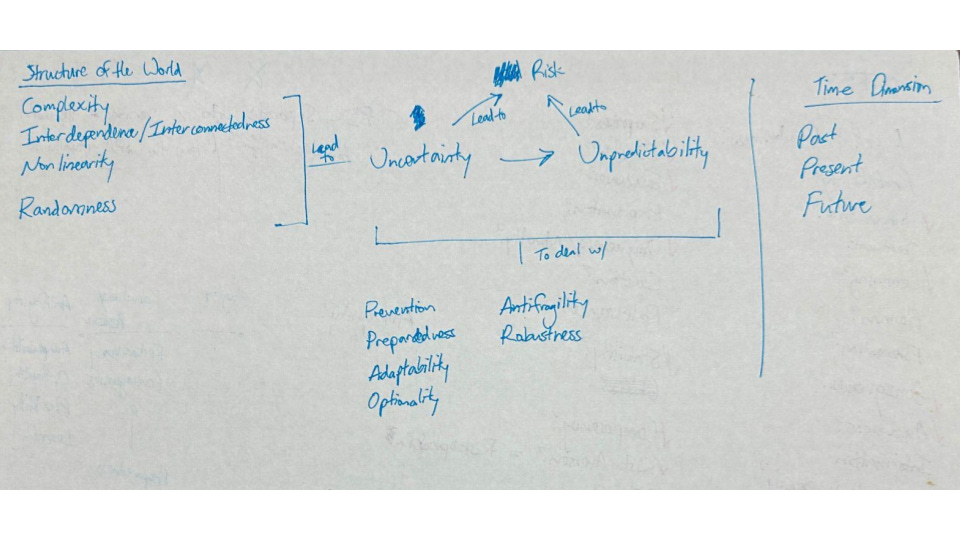
For instance, a major development was the formalization of the Dynamic Futures Thinking Framework in August.
It started very simple, with only the few elements I had identified going into the introductory article.
It quickly steamrolled out of control, expanding to be an all-inclusive framework for how the world works, as shown below:
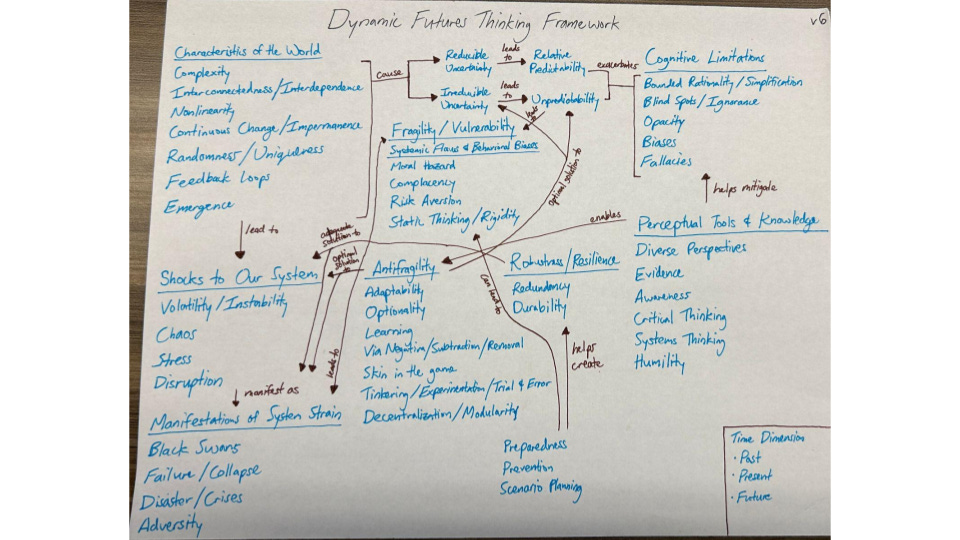
Besides the development of the framework, I’ve been working on the backend to design potential book materials to eventually wrap up this framework into one entity in the future. If everything works out well, you’ll see more on this in the future.
To summarize, in addition to the subjects defined in year 1 (intellectual property, energy, venture capital, philosophy, economics, and space), I’ve added two more: Futures Thinking and interviews with business leaders.
Lesson: Don’t get complacent in your traditional routines, look for ways to add uniqueness and differentiated perspectives—you don’t know what you don’t know.
Reassessing Marketing - The Next Chapter
There wasn’t a monthly or quarterly update in the first year without some goal related to improving my marketing efforts.
The trend was so bad that I wrote an extensive section on it in the rebrand article, headed by this bleak statement: “If you’ve been following this journey from day 1, you will know that my performance on social media thus far has been relatively mediocre.”
I isolated what I believed were the reasons behind the performance: I didn’t feel true pressure to make sure the outreach was performing well, I wasn’t spending enough time marketing, and I hadn’t researched marketing enough to know how to fully optimize my approach.
Within the article, I articulated my new marketing strategy:
Invest a little more time into marketing. By this, I don’t mean investing outrageous amounts of time that don’t make sense for the rest of my life, but I’m going to try to make marketing more of a priority.
Extend the reach of my content. Broadening the audience channels of this platform is critical to reach new heights, yet extremely difficult. The hope is that this updated marketing strategy will enable this growth, specifically through the following actions: reaching out to other content creators for guest post opportunities, soliciting subscribers through a variety of channels, potentially launching a referral program, and creating lead magnets, infographics, and more.
Provide differentiated content. The worst thing you can do as a content creator is to provide exactly what mass content is providing. This only works if you are one of the best mass content providers. To grow as a content platform, you have to offer differentiated, unique content that entices readers and makes them want to stick around for more. As this is a lofty goal, I’m not exactly sure at this point what the marketing strategy will be around this, but I can tell you that it’ll include reaching out to some people in the various industries I talk about for interviews to provide personalized viewpoints on the subject matter that you won’t give anywhere else.
Over the subsequent 5 quarters, significant progress was made on this aspect, and I’m proud to say our marketing has never been better (in my opinion).
It wasn’t instantaneous success.
I started by starting an Instagram account in October 2024, complete with a much-needed redesign of my marketing:
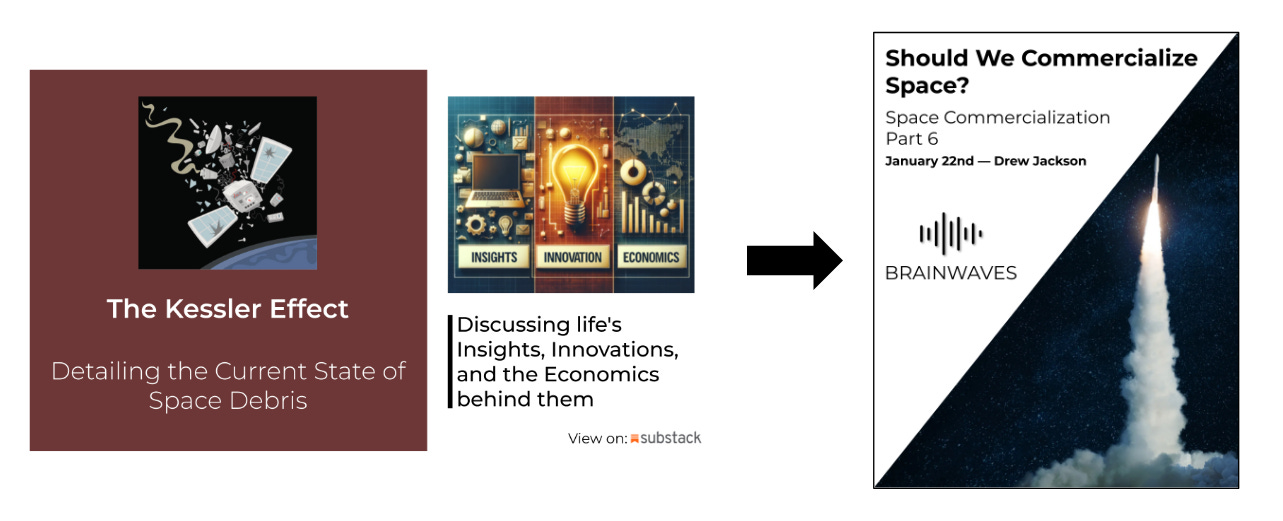
This helped boost performance a little, but it was far from perfect. Besides this minor upgrade, in the first two quarters of the year, I didn’t properly execute on my strategy, and the platform suffered.
The day after I published the Quarterly Update in May, detailing how I missed my subscriber goal, I received the following message from my friend Abbey:
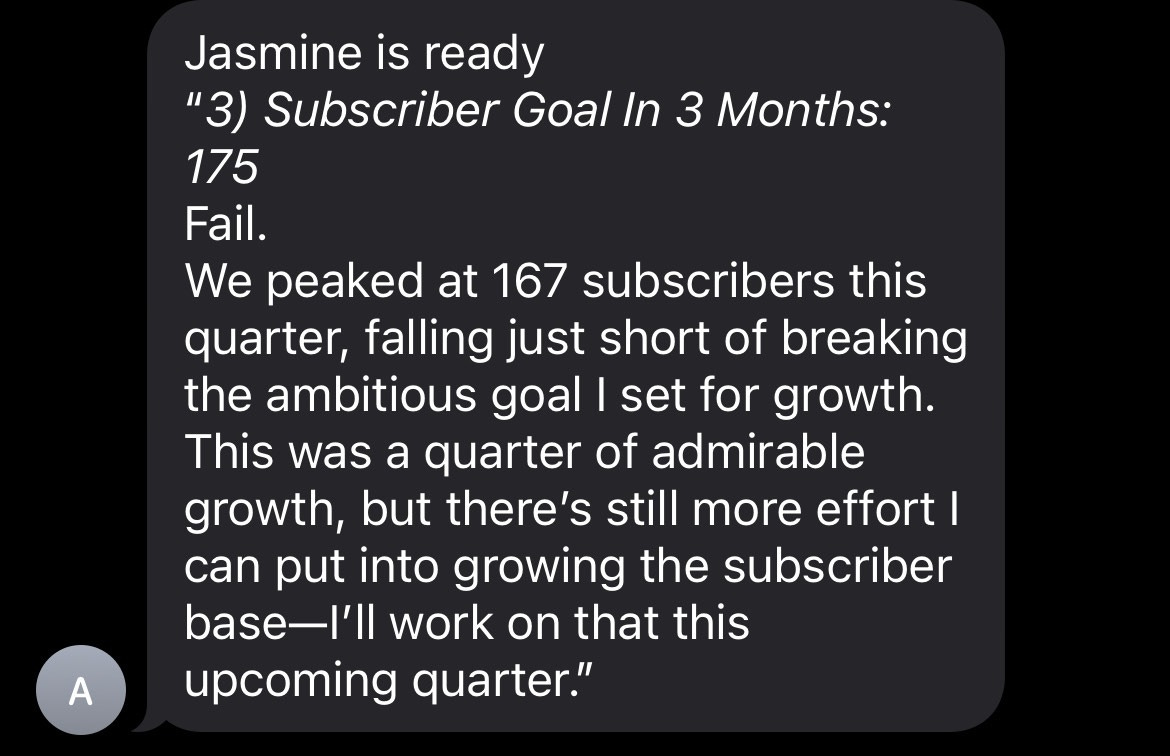
To use a sports analogy, coach was putting her in. Within 24 hours, I had hired Jasmine Salamera as the Chief Marketing Officer of Brainwaves. Following this, our marketing efforts dramatically improved.
Jasmine has had time to invest more into learning about, diving deep into, and testing out various marketing approaches to optimize our content.
Together, we’ve learned a lot. Here are some of the top lessons learned:
Twitter technically works, but it has lower engagement, views, and a large quantity of work for the output
Reddit works great, but our model isn’t compatible with the community aspect, so for the time being, this isn’t an avenue we’re pursuing
Instagram works great, and we’ve expanded our presence on the app, continually improving our approach and messaging to optimize our views, engagement, and conversion
LinkedIn works well, but we still need to refine our approach, which is a goal for the upcoming period
To give a quick preview (for a more in-depth look, hop over to any one of the platforms linked above), here’s how our content has improved:
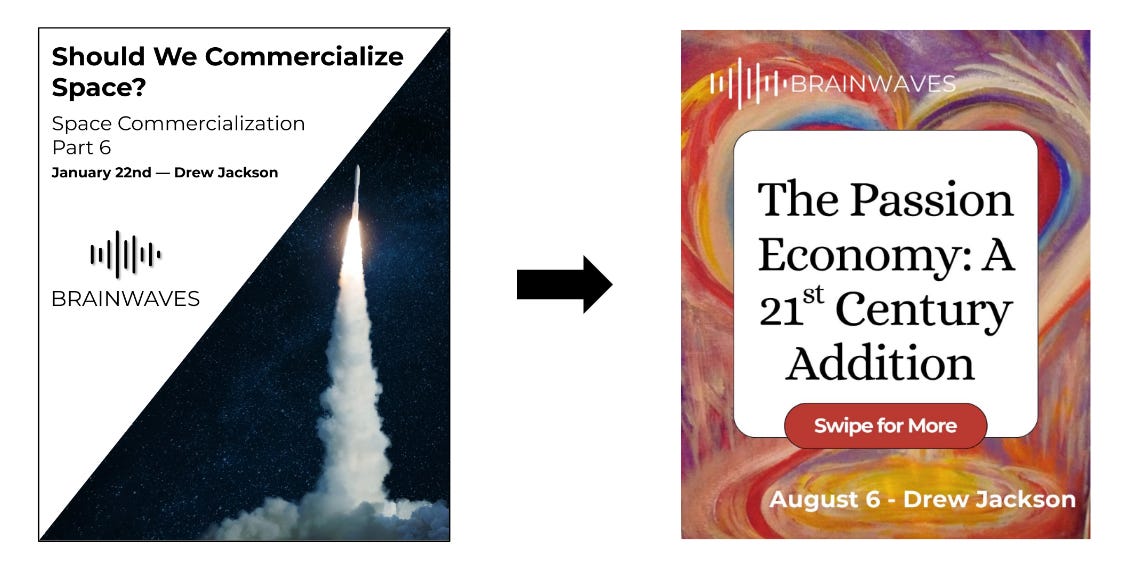
Besides looking better, our content actively performs better. For instance, here are the average stats on Instagram before and after Jasmine was hired:
Average Views: 43 > 246
Average Accounts Reached: 6 > 92
Average Accounts Engaged: 3 > 60
Average Profile Activities: 0.1 > 3.3
Overall, I couldn’t say enough good things about how our marketing has progressed this year. We’re continuing to broaden our reach and will hopefully begin conversion into subscribers. All to come in the next year.
Lesson: Just because you don’t succeed on the first try doesn’t mean you need to give up; instead, you should try different approaches until something lands
A Profound Summer
Last summer, I had the wonderful opportunity to intern with Meridian Capital in our Utah office, and loved every minute. When they asked me to join the team full-time after I graduated, it was an easy yes.
They wanted me to start in July 2025 (which was pushed to August), but I was graduating the first week in May, so I had around 2 months of “free time” on my hands that I needed to fill.
A significant portion of people in my life highly advised me to use that time to travel and enjoy the most out of life because there probably won’t be a time like that for a long period.
So I scheduled a ton of trips, spending a week in London, a week in Colorado, two weeks in Montana, and two more weeks in Colorado. Honestly, these were some of the best periods of my life as I was able to appreciate nature, have no responsibilities weighing on me, and enjoy reflecting on my life thus far.
I wrote a ton of articles during this period, with many of them exceeding my traditional word length (apologies). There wasn’t a ton more I wished were in my life during this period; it was pretty ideal.
During this time, I had lengthy periods of time to think about some of the deeper life aspects that I traditionally avoided and write my thoughts on them. You saw a portion of this in the recent article, Life’s Biggest Questions.
Another key aspect of this period was that I read all the time. To give a quick highlight reel, I read Taleb’s Antifragile, Wright’s Why Buddhism is True, Pausch’s The Last Lecture, Thiel’s Zero to One, and many more books. I’ve used many of the insights gained in recent articles and plan to continue building on these foundations in the year to come.
Lesson: Take time every now and then to pause and reconsider the fundamental parts of your life and everything in it.
Professionalizing and Personalizing
If you haven’t noticed already, the platform has a new face. Well, maybe to be more specific, we have a new front-end.
One of the most important developments when I rebranded to Brainwaves last year was the development of a website, and we’ve added another iteration on that process recently.
When I started this newsletter, it was and continues to be on the Substack platform. Initially, I used the Substack home page as the main place to direct readers (looks like this), and it worked well, enabling me to grow the platform over the first 9 months. However, it’s a very simple interface and doesn’t have the true functionality I’m looking for. In addition, Substack owns all of the search engine optimization for the platform, and that was something I was looking to bring in-house.
With this in mind, I worked with my little brother, Tyler, to create and build a website design that would be the new front end of the newsletter (while email subscriptions continued to use Substack, and technically their front end still worked as a backup). Here was our first iteration:
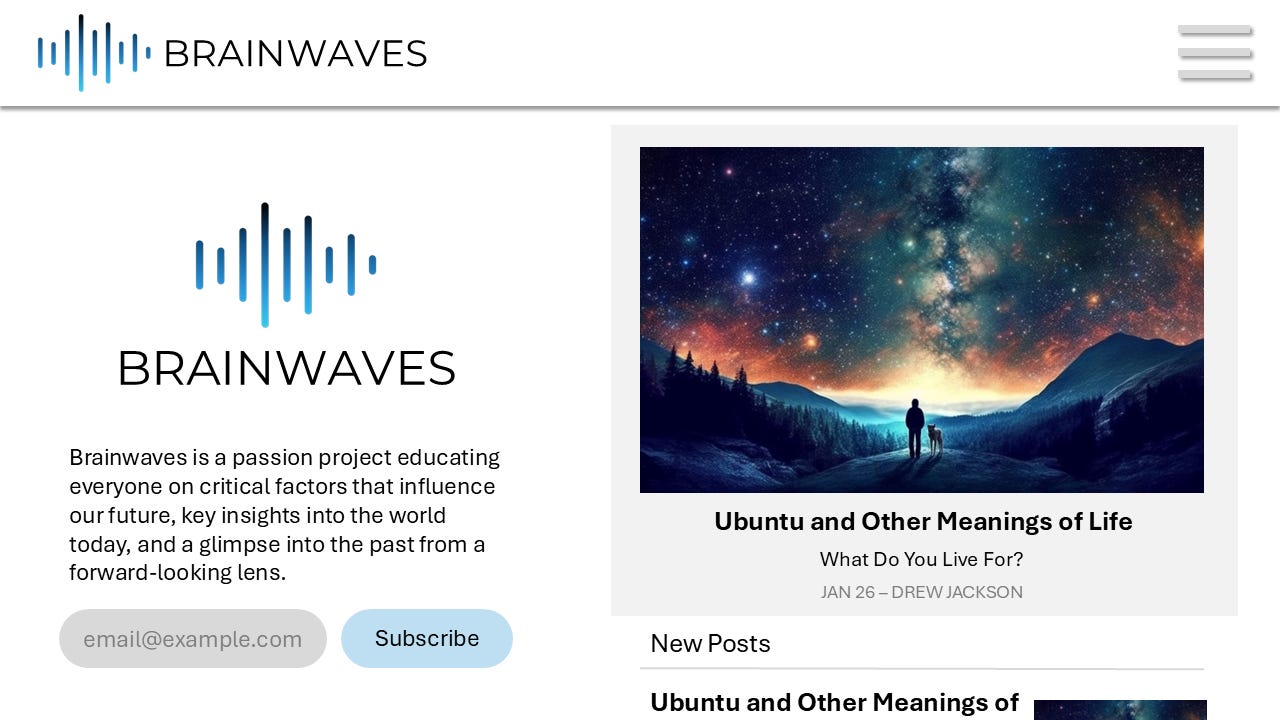
I wrote then: “So now I have my own website, fully customized to the branding and experience I’m looking for. I also control all of the search engine traffic associated with my website and brand, meaning I can begin driving traffic through search engines and use all of that data to further refine my approach.”
In hindsight, it was a very good step in the right direction, but it was far from perfect. It was just the featured article on the left and a scroll of historical articles on the right, with a similar archive function. In essence, it simply showed historical articles, but failed to tell the readers about the platform and drive subscriptions.
Almost exactly a year later, in August 2025, I launched the website redesign, shown below:
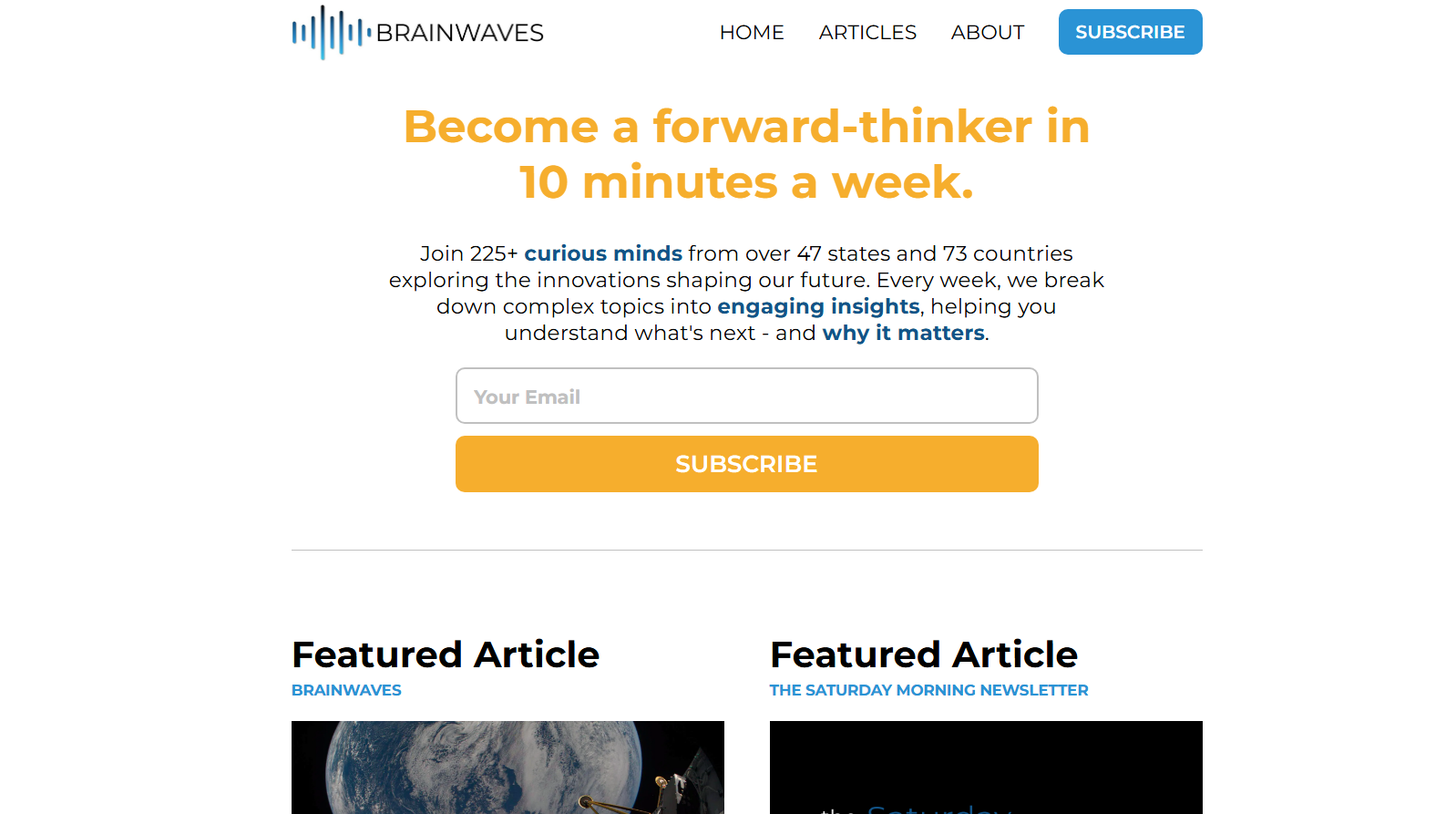
To my knowledge as of this moment, there’s very little I think it still needs (and those portions are already under development). It’s complete with better subscribe functionality, a more modern design and UI/UX, a better articles segmentation page, and honestly, it makes me happier to use and promote.
Overall, the new design is something I’m proud of (referencing our discussion above) and want to share with people I interact with as well as on our social media feeds. It’s professional, sleek, and has all the functionality I’ve craved.
During the rebrand, another one of my initiatives was to create an infographic for the new platform that could be broadly shared on social media and other channels to give a high-level overview of the platform and the rebrand.
After a couple of iterations, I designed the infographic you might have seen on our About page or social media:
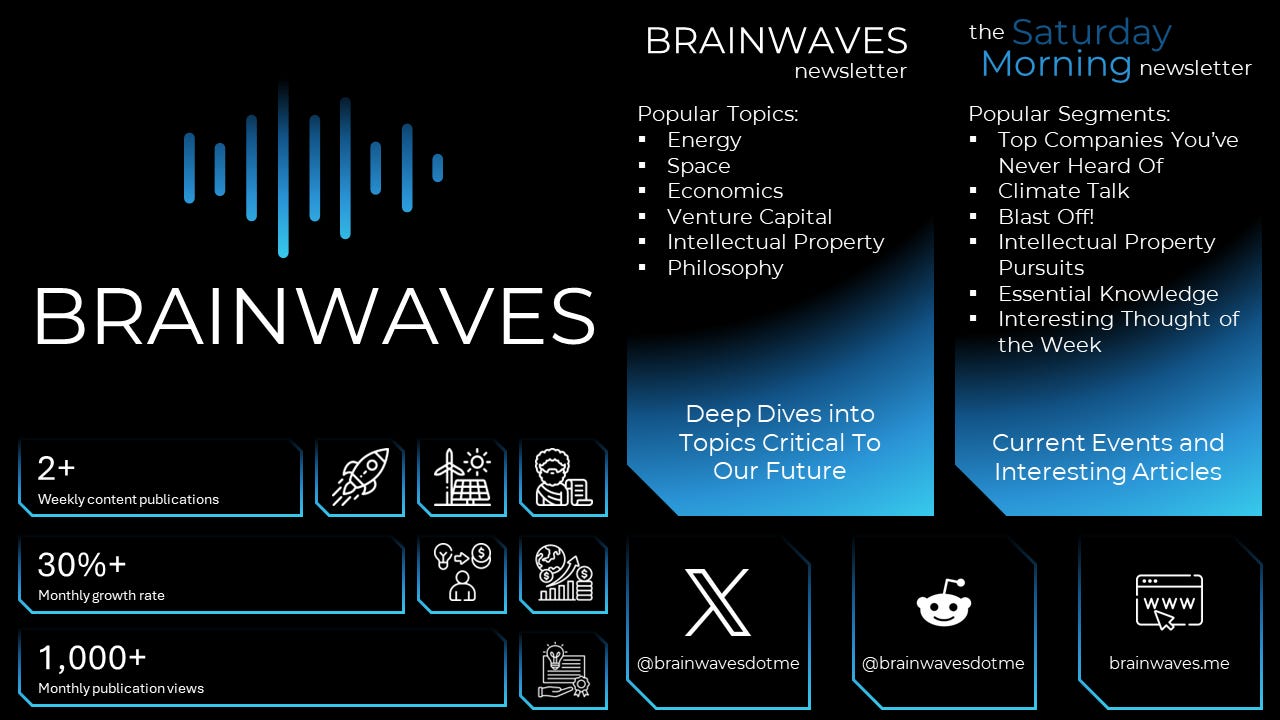
It’s not bad, but it’s a bit cluttered and looks more fitting for a tech startup than a professional newsletter, so I decided it needed a rework and slowly started chipping away at a new design.
After trying a couple of different designs for a new infographic, I realized the quantity of content I was trying to include wasn’t conducive to that format, so I switched to an 8.5x11 page, and that’s been incredibly helpful for the production.
I’ve added further detail on a value proposition, my background, and high-level overviews of each of the newsletters, while keeping a large portion of the existing information in the infographic.
See the new design:
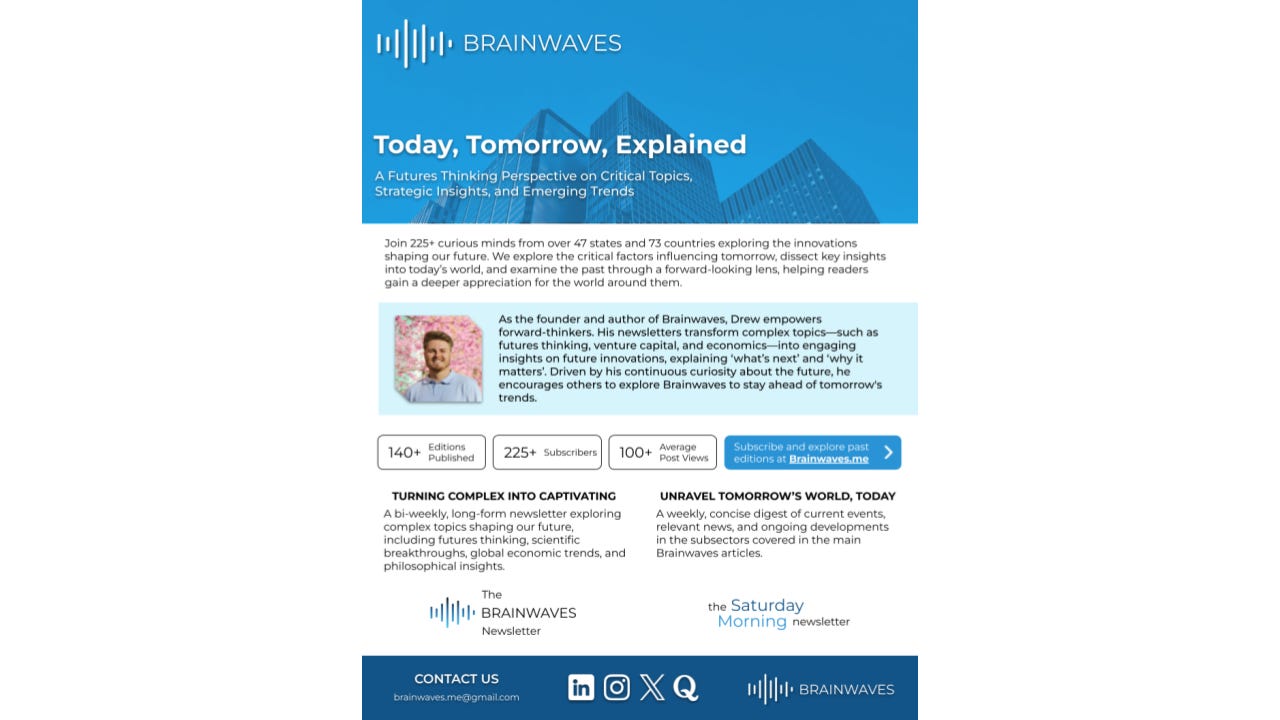
Again, I feel it is more professional and personalized to everyone’s needs, showcasing the platform in a curated, positive light that will help draw in readers interested in the subjects I cover.
Lesson: Build and test approaches until you know what works, then work tirelessly to refine that until it is perfect
Broadening, Deepening, and Impacting
To put the last year in perspective, I’ve:
Had my content read over 9,500 times
Written and sent 205,000 words. For reference, that’s around 2.7 Harry Potter books.
Grown from 81 subscribers to over 235
Published 85+ posts on an extensive list of subject matter
Had the website viewed over 6,500 times
Expanded my audience to 47 states and 73 countries
The best is yet to come!
I’ve had so much fun writing content and publishing it over the last two years. Uncontrollable events aside, I hope to continue writing and publishing content as long as it remains fun and insightful (and as long as my schedule permits).
As I’m writing this, there are over 250 ideas in my list for potential topics in the pipeline, so I could potentially sustain this platform for at least 5 years to come.
The future, while uncertain, certainly holds broadening, deepening, and impacting.
I plan to continue expanding the newsletter with the goal of someday going out to 1,000 subscribers. It’s a lofty goal, but with consistency and quality content, I believe I can get there eventually.
I’ll continue reiterating it until I quit: My goal is, and always will be, to impact at least 1 person meaningfully through my content each week. Meaningful impacts are critical to this journey—impacts upon myself and upon the readers. I hope you’ve enjoyed this last year (or however much of it you were here for), and I can’t wait for another!
To go full circle (after a brief 24-page tangent), I believe this quote from Harriet Tubman summarizes the journey so far and the future vision of the platform going into this next year:
“Every great dream begins with a dreamer. Always remember, you have within you the strength, the patience, and the passion to reach for the stars, to change the world.”
Lesson: Dare to live the life you have dreamed for yourself, you never know what’s around the next bend
Thank You
As we wrap up this fantastic year, I want to express my sincere gratitude to each and every one of you. Your consistent support, thoughtful feedback, and willingness to share the newsletter with your network have meant the world to me.
Whenever you open one of the emails, leave a comment, view the website, or forward an essay to a colleague, you help build this community.
I’m especially grateful for the following individuals who have been integral to this journey over the past year:
Tyler, my brother, for creating the new website (and updating it each week with new articles)
Jasmine, for crushing our social media outreach and helping us reach our goals
My dad, for great advice on websites, life, and business concepts
My mom, who’s too busy to read everything now but occasionally likes a post
My friends, for always hyping up the content whenever it releases
Packy at Not Boring for continual motivation and inspiration
Noah at the Secular Buddhism Podcast for inspiration
The following creators for their inspiration and content: Ash @ Lean Newsletter, Danny @ Innovate Disrupt or Die, Tina He @ Fakepixels, Patrick Tanguay @ Sentiers, Simon Hoher @ Permutations, Michael Tefula @ VC Mastery, and many more
Whether you’ve been here since day one or joined us recently, thank you for being part of this journey.
So what’s next for Brainwaves?
The answer is, just like a year ago, I have no idea. I have a ton of ideas and interesting pieces of content planned for you to enjoy. I’m excited to see where the journey leads us over the next 365.
Thanks for reading,
Drew Jackson
Stay Connected
Website: brainwaves.me
Twitter: @brainwavesdotme
Email: brainwaves.me@gmail.com
Thank you for reading the Brainwaves newsletter. Please ask your friends, colleagues, and family members to sign up.
Brainwaves is a passion project educating everyone on critical topics that influence our future, key insights into the world today, and a glimpse into the past from a forward-looking lens.
To view previous editions of Brainwaves, go here.
Want to sponsor a post or advertise with us? Reach out to us via email.
Disclaimer: The views expressed here are my personal opinions and do not represent any current or former employers. This content is for informational and educational purposes only, not financial advice. Investments carry risks—please conduct thorough research and consult financial professionals before making investment decisions. Any sponsorships or endorsements are clearly disclosed and do not influence editorial content.
Regarding the personal journey described, it's truly inspiring to read about your dedicaton and the platform's growth. What if, beyond personal achievement, we considered 'big dreams' for how AI could fundamentally reshape societal access to education or opportunity?